
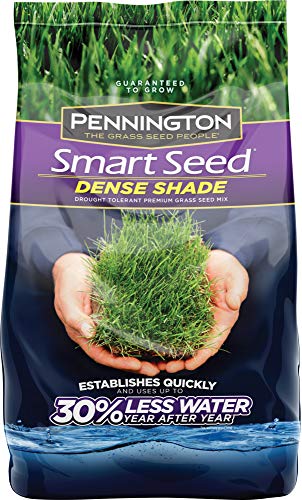
Pennington Smart Seed Dense Shade Grass Mix
Consider this for a suitably lit shady lawn only after checking the actual seed tag and package rate; the public descriptions do not establish one consistent formula.
- A good fit for
- A shady cool-season seeding project receiving the stated two to six hours of sunlight, with the delivered bag’s composition checked against local needs.
- The tradeoff
- The seven-pound package artwork lists twelve pounds per 1,000 square feet for new lawns, while the webpage lists eight; the grass descriptions differ too.
We may earn a commission from purchases through our links. How this works
Buy on AmazonResearch-based review · Updated
Treat the species disagreement as a buying question
The current product page describes tall fescue, perennial ryegrass and Kentucky bluegrass. The seven-pound manufacturer artwork instead describes tall fescue and fine fescues. That is a meaningful difference in the grasses being offered, not simply a different way of spelling the same mixture.
Neither source is a current lot analysis for the bag you will receive. We cannot use the package artwork to promise a particular proportion of fine fescue, or use the webpage to rule it out. Inspect the actual seed tag before deciding that the mix matches your site. If the composition is essential to your project, resolve it before buying a large quantity.
Minnesota's renovation guidance distinguishes shade-oriented fine-fescue choices from other lawn mixes and warns that some commercial shade mixtures contain less suitable species. That is regional species guidance, not a test of this Pennington product. It explains why the disagreement matters; it does not let us decide which formula is inside an unseen bag.[6][7][3][2]
Measure the light before trusting the shade label
- Repeated seeding failures
- Diagnose the site before assuming that another seed purchase is the missing step.[2]
Read the site-fit checks
Both the current webpage and the seven-pound artwork specify two to six hours of sunlight. Dense Shade is therefore a product name with a stated light requirement, not evidence that grass will succeed in a site with effectively no usable light.
Look at the whole problem area rather than the brightest patch near its edge. A lawn can contain sites with different light, traffic and moisture conditions. Minnesota Extension recommends diagnosing why turf is declining before renovation; repeatedly sowing a shady area without changing an unsuitable site can repeat the same failure.
Also separate shade from wear. A side yard beneath trees may be both dark and the main walking route to the gate. The traffic problem remains relevant even if the seed is more shade-tolerant. If local guidance suggests that turf is unsuitable, changing the use or planting in that area can be more sensible than continuing to search for a bag whose name sounds stronger.[6][7][2][5]
Calculate the seven-pound quantity from the bag instructions
- 7 lb, package new-lawn rate
- About 583 sq ft: 7 ÷ 12 × 1,000.[7]
Read the package-rate comparison
The seven-pound artwork specifies twelve pounds per 1,000 square feet for a new lawn and four pounds for overseeding. Those rates give roughly 583 square feet of new lawn or 1,750 square feet of overseeding from this bag. The larger number printed on the front therefore belongs to the overseeding application.
The current webpage agrees on the four-pound overseeding rate but lists eight pounds for a new lawn. Using that number would yield 875 square feet from seven pounds. The same page's three-pound example says 250 square feet new, which instead corresponds to twelve pounds per 1,000. These public instructions are not fully consistent.
For buying, use the instructions on the actual package being offered and keep bare-soil and overseeding areas separate. We use the seven-pound artwork's more conservative new-lawn figure here, while making the disagreement visible. On 1,000 square feet of bare ground, that package rate calls for twelve pounds; one seven-pound bag is not enough.[6][7]
Keep the coating and water-saving claims in proportion
This is sold as grass seed plus fertilizer, and the artwork identifies coated seed. The total package weight should not be mistaken for an equal weight of uncoated, pure seed. UMass's label guidance explains why purity, inert material and germination information belong in a careful seed comparison.
Pennington markets established Smart Seed turf as using up to thirty percent less water than ordinary grass. That is a manufacturer comparison, not a measurement of your yard or an instruction to reduce seedbed watering by thirty percent. We have not independently tested this bag, its coating or that saving.
The practical question at planting is whether moisture reaches the seed and remains adequate through emergence. An established-lawn claim does not remove that requirement. Follow the delivered product's fertilizer directions as well, rather than assuming that every seed project needs the same extra starter application on top of a seed-and-fertilizer product.[6][7][3][2]
Plan the early care separately from mature-lawn maintenance
The artwork and webpage give eight to sixteen days to visible results, a quarter-inch planting depth and a three-inch mowing height. They instruct users to keep the soil moist until the grass sprouts and reaches about three inches. These are establishment directions, not proof of a fully mature lawn at the first mowing.
Make soil contact and watering access part of the project before sowing. Remove debris, prepare the surface appropriately and inspect moisture rather than relying only on a timer setting. Repeated footsteps, runoff or dry patches can interfere with the result even when the selected species suit the available light.
Longer-term care should follow the grasses actually present. Minnesota's fine-fescue guidance is relevant if the delivered mixture includes those grasses, but it does not justify calling every bag a pure fine-fescue blend. Let the analysis tag and local advice guide the maintenance plan as the stand develops, especially when deciding how much fertilizer and traffic the lawn should receive.[6][7][2][5][4][3]
Compare an explicitly fine-fescue option when that is your goal
Outsidepride Legacy is a useful comparison for buyers specifically seeking a fine-fescue mixture. Its manufacturer identifies hard, Chewings and creeping red fescues. That is a clearer species direction than inferring an all-fine-fescue product from the Dense Shade name here.
It is still a separate product with its own rates, packaging and local suitability questions. Fine fescues are not a universal answer for heavy traffic or every climate, and a species list does not establish a current-lot performance ranking. Compare the actual seed analysis and the level of care the site can support.
Our reason to pause before buying Smart Seed Dense Shade is concrete: two manufacturer sources disagree on details that influence both fit and quantity. A suitable, correctly identified bag may still be worth considering. The decision becomes much stronger once the actual tag and directions replace assumptions drawn from the front-of-bag name.[1][4][6][7][3]
When to choose something else
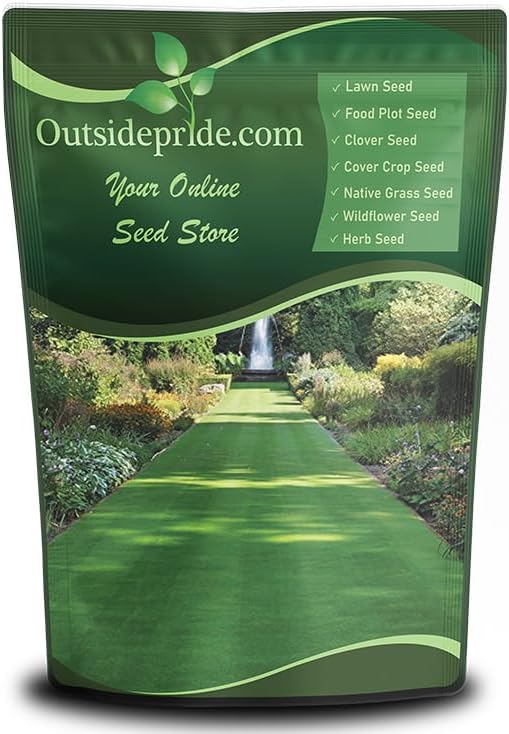
Outsidepride Legacy Fine Fescue Mix
Compare Legacy when you specifically want the manufacturer’s hard, Chewings and creeping-red fine-fescue mixture. It has different rates and local-care requirements; no head-to-head performance winner is established.
Sources & research notes
This review draws on published product information and grass-selection guidance. We have not conducted a hands-on trial of this product. Species guidance helps explain the choice; it is not a trial of the bag you buy.
- Outsidepride: Legacy Fine Fescue product and planting guide
Read 2026-09-23
- University of Minnesota Extension: renovating a lawn
Read 2026-09-23
- UMass Extension: understanding the turfgrass seed label
Read 2026-09-23
- University of Minnesota Extension: Planting and maintaining a fine fescue lawn
Read 2026-09-23
- University of Minnesota Turfgrass Science: Does your lawn struggle?
Read 2026-09-23
- Pennington: Smart Seed Dense Shade product and planting guide
Read 2026-09-23
- Pennington: Smart Seed Dense Shade seven-pound package artwork, model 100543703
Read 2026-09-23
Ready to compare the bag?
Check the package size and seed tag before ordering.