
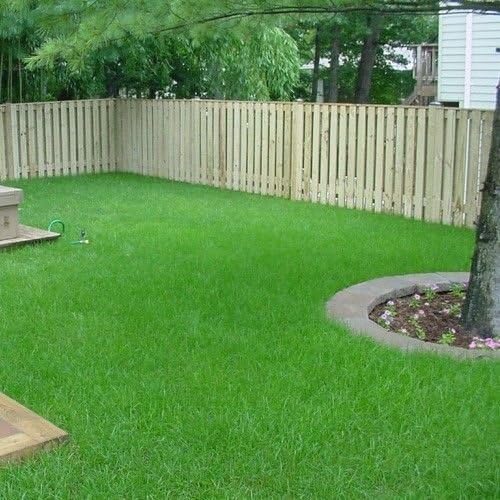
Argentine Bahia Grass Seed
Consider Argentine for a suitable low-input Florida lawn if you accept coarse foliage, visible seed heads and brown color during extended drought.
- A good fit for
- Florida homeowners with suitable acidic, sandy soil who value a resilient lawn more than a closely groomed carpet.
- The tradeoff
- Lower water and fertilizer needs do not eliminate mowing: tough seed heads need attention, and seed establishes more slowly than sod.
We may earn a commission from purchases through our links. How this works
Buy on AmazonResearch-based review · Updated
Start with the lawn you want to live with
Argentine bahiagrass is a practical choice for the right Florida property, especially where sandy soil and limited irrigation make a more demanding lawn difficult to sustain. UF/IFAS describes bahiagrass as having a deep, extensive root system and modest water and fertilizer requirements. It also makes clear that the available varieties do not produce the dense, carpet-like surface associated with some other warm-season grasses.
That tradeoff should drive the purchase. A homeowner who accepts a more open lawn and seasonal changes in color may value Bahia's persistence. Someone expecting an always-green, closely groomed surface may be disappointed even if the seed establishes successfully. Drought tolerance describes the plant's ability to survive stress, not a guarantee of green leaves throughout a dry spell.
The strongest guidance used here is written for Florida. Treat broader regional suitability as a local decision rather than extending a Florida recommendation across every warm climate. Check the soil and the kind of lawn you need before using a hardiness-zone number as the deciding factor.[1][3]
Argentine is wider-leaved than Pensacola
- Argentine foliage
- Darker color and wider blades, with relatively dense sod.[1]
- Seed heads
- Somewhat shorter and fewer than Pensacola, but still a mowing consideration.[1]
- Cool-weather color
- Argentine loses color sooner; Pensacola has a longer growing season.[1]
Read the cultivar and package distinctions
UF/IFAS distinguishes Argentine by its darker green color, relatively dense sod and wider leaf blades compared with Pensacola. The wider blades are important: Argentine should not be bought on the assumption that it is a finer-bladed version of Pensacola. It remains a Bahia lawn with the species' characteristic texture.
Argentine's seed heads are somewhat shorter and less numerous than Pensacola's, but they are still tall. Its growing season is shorter, and it loses color sooner when cooler weather arrives. Pensacola holds color longer under those conditions. These are useful cultivar differences, not a reason to promise that one is best for every property.
The linked listing identifies a two-pound package of Argentine seed. We have not verified its current purity, germination percentage, seed treatment or lot analysis. Check the seed tag before purchase and sowing. A cultivar name or the phrase “premium grade” cannot replace that information, and an illustrative lawn photograph cannot show what is in the bag.[1][5][4]
A two-pound package is a small planting quantity
- 1,000 sq ft of lawn
- 5–10 lb at the UF/IFAS planning range.[4]
Read the quantity assumptions
UF/IFAS's Florida lawn establishment table gives a general bahiagrass seeding range of five to ten pounds per 1,000 square feet. Applied as planning arithmetic, two pounds would cover roughly 200 to 400 square feet. A 1,000-square-foot project would require five to ten pounds at that range.
These calculations describe a species-level planning range, not verified coverage for this exact retail bag. Its treatment, purity and germination analysis need checking before you convert bag weight into a final application. Do not assume every pound in a coated product is equivalent to a pound of uncoated seed, or use a pasture planting rate as lawn guidance.
Measure the planting area before comparing packages. For an entire yard, the small bag size can mean buying several packages, so compare the cost of the required quantity rather than the price of one bag. We do not have a verified separate overseeding rate for this listing. Use its actual directions and local guidance for a thin existing lawn instead of inventing a universal half-rate.[4][5]
Give seed time and steady moisture
Bahiagrass seed germinates slowly and takes longer to form uniform cover than sod. UF/IFAS recommends scarified seed when available to improve germination, but we have not confirmed that this package is scarified. Avoid treating a general recommendation as a feature of the bag.
In north Florida, spring or early summer gives young grass time to grow before cooler weather reduces growth. Other parts of Florida offer a longer establishment season. Choose a window when you can maintain moisture, rather than assuming Bahia's eventual drought tolerance applies to seed on dry soil.
Prepare a level seedbed, distribute the seed evenly and follow planting directions that provide soil contact. UF/IFAS's establishment guide emphasizes light watering that keeps the seedbed moist without washing seed away or saturating the soil. As seedlings mature, watering becomes less frequent and reaches deeper roots. Do not borrow a three-to-four-week establishment timetable for sod and present it as a seed guarantee. Plan for gradual coverage and the possibility of weeds while the stand develops.[1][4][5]
Low input still includes real mowing work
During active growth, UF/IFAS recommends maintaining bahiagrass at three to four inches, commonly mowing every seven to fourteen days. Seed-head production can determine when the lawn needs cutting even if the leaves do not look especially tall. Remove no more than one-third of the leaf height at a mowing.
The leaves and seed-head stems are tough, so a sharp, heavy-duty rotary mower blade matters. A dull blade tears foliage and leaves a ragged appearance. This is the central maintenance tradeoff: Bahia can need comparatively modest water and fertilizer inputs while still requiring regular mowing and blade care.
Established Bahia may turn brown and stop growing during extended drought, then recover when water returns. If maintaining green growth is the goal, it still needs water when stress appears. If irrigation is unavailable, UF/IFAS advises leaving drought-stressed grass alone rather than mowing too low or adding fertilizer and pesticides. Decide which appearance you can accept before interpreting drought survival as a promise of effortless green turf.[2][1]
Use soil information instead of a fixed feeding calendar
Bahia prefers acidic soil. UF/IFAS warns that high-pH soil can cause iron deficiency and is a poor fit for this grass. A soil test is therefore more useful than automatically adding lime or buying a generic lawn treatment. Nutrient decisions should reflect the site and applicable local guidance, not a fixed number of fertilizer applications copied from a product summary.
Relatively few pest and disease problems does not mean none. Diagnose thinning or yellowing before treating it; a soil problem and an insect problem call for different responses. UF/IFAS also warns that some popular weed-and-feed products contain herbicides that injure bahiagrass. Check the actual product label for the grass species and establishment stage before applying anything.
Pensacola is the most useful cultivar comparison when cooler-season color retention matters, though it brings more seed heads and a different appearance. For this two-pound Argentine listing, the buying decision remains conditional on a suitable site, enough seed for the measured area and an acceptable current seed tag. There is no hands-on performance test behind this review.
TifBlair centipede is another low-maintenance warm-season option to investigate where local guidance supports it. It has separate soil requirements and application rates, and slow establishment remains part of the decision. This is a species-and-site comparison, not evidence that one brand outperforms the other.[3][2][1][4][5][6][7]
When to choose something else
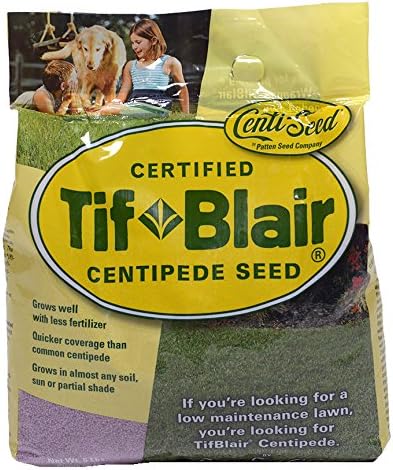
TifBlair Centipede Grass Seed
Compare TifBlair centipede for another low-maintenance warm-season lawn option where local guidance supports it. It has its own acidic-soil requirements, planting directions and slow establishment; do not transfer Bahia rates or assume identical regional fit.
Sources & research notes
This review draws on published product information and grass-selection guidance. We have not conducted a hands-on trial of this product. Species guidance helps explain the choice; it is not a trial of the bag you buy.
- UF/IFAS: Bahiagrass for Florida Lawns
Read 2026-09-23
- UF/IFAS: Bahiagrass nutrition, mowing, watering and pest management
Read 2026-09-23
- UF/IFAS: Bahiagrass soil and nutrient guidance
Read 2026-09-23
- UF/IFAS: Establishing Your Florida Lawn
Read 2026-09-23
Amazon product identity: Argentine Bahia Grass Seed, two pounds
Commerce identity only; not evidence of product performance.
Buy on AmazonRead 2026-09-23
- Super-Sod: TifBlair Centipede Grass Seed
Read 2026-09-23
- Clemson Extension: centipedegrass maintenance calendar
Read 2026-09-23
Ready to compare the bag?
Check the package size and seed tag before ordering.