
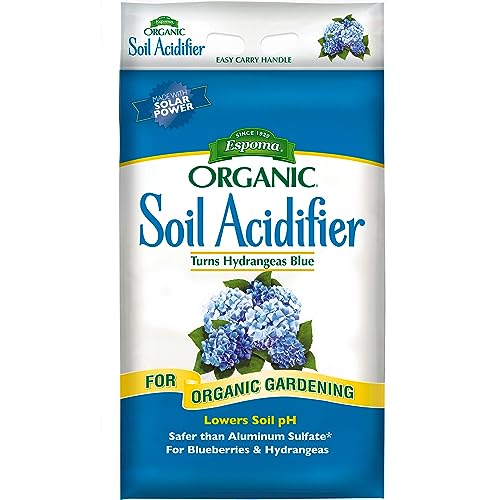
Espoma Organic Soil Acidifier
A garden acidifier to consider for a diagnosed plant-and-soil need, with a clear limit for lawn shoppers: do not transplant its garden broadcast rate onto established turf. Obtain suitable turf guidance before considering lawn use.
- A good fit for
- A gardener managing a confirmed pH mismatch for acid-loving plants and following the corresponding directions; a lawn owner should first obtain a turf-specific soil recommendation.
- The tradeoff
- The product is not pure elemental sulfur and does not supply the potassium previously attributed to it in this catalog. The reviewed label does not establish lawn coverage or a fixed correction timeline.
We may earn a commission from purchases through our links. How this works
Buy on AmazonProduct profile · Updated
Read the sulfur analysis accurately
The linked package is Espoma Organic Soil Acidifier in the 30-pound size. The manufacturer factsheet identifies elemental sulfur and gypsum as its source materials. Its guaranteed analysis lists 30% total sulfur, divided into 18% free sulfur and 12% combined sulfur. It does not list a potassium guarantee.
Those distinctions matter when comparing amendment quantities. A pound of this blended product is not a pound of elemental sulfur, and the total sulfur percentage should not be treated as though all of it has the same acidifying role. The product also should not be described as a potash fertilizer.
The maker presents it primarily around hydrangeas, blueberries and other acid-loving plants. That is the useful context for the directions. A lawn catalog can explain the product without turning a garden amendment into a universal recommendation for every soil above a chosen pH.[1][5][4]
Garden broadcast directions are not lawn instructions
- Garden product directions
- Espoma provides plant-specific and garden broadcast directions; these do not establish a lawn rate.[5]
Read why lawn coverage is withheld
Espoma’s factsheet gives a garden broadcast rate of twelve pounds per hundred square feet for a desired one-point pH reduction, with a higher rate for heavy clay. It does not identify that as an established-turf rate. This review therefore does not convert it into a lawn coverage promise or a spreader prescription.
The scale difference is important. Oregon State’s Fertilizing Lawns publication discusses much smaller annual sulfur quantities for Oregon turf and warns that excessive sulfur-containing fertilizer can drive the soil too acidic. Its regional guidance is independent context, not a replacement label or a nationwide rate for Espoma.
For a lawn, ask a suitable local adviser to interpret the soil test, grass species and proposed material before use. The missing turf direction is a reason to resolve the application plan, not to copy a hydrangea treatment across the yard. The previous catalog’s 5,500-square-foot lawn claim was not supported by the reviewed manufacturer evidence.[5][8]
Test before deciding that the soil needs acidifying
Oregon State’s guidance for blueberries and ornamental plants advises laboratory testing when a pH problem is suspected. Yellowing can have several causes, so symptoms alone do not establish that lowering pH is the right treatment. The same publication distinguishes the needs of acid-loving shrubs from those of lawns and other garden plants.
Its regional context is western Oregon and Washington. It explains that most gardens there more commonly need acidity reduced, while certain acid-loving plants may need the opposite treatment. That does not diagnose a lawn in another region, but it shows why geography and the intended plant matter.
MySoil is one available mail-in service for nutrient and pH information. A result is a starting point for interpretation, not an automatic instruction to buy acidifier. For turf, request guidance that accounts for the grass and the actual amendment rather than pursuing a generic pH target shared with blueberries.[7][8][2]
Expect a soil process, not an instant color change
Elemental sulfur acidifies soil through microbial oxidation. Oregon State explains that the reaction and the soil’s response take time; it recommends gradual correction and repeated measurement rather than one oversized application. Soil texture and organic matter influence how much material is needed.
For its ornamental-plant context, the extension publication says reactions may take a year or more and advises checking pH at the same time each year because measurements vary seasonally. This does not supply a fixed timeline for this Espoma package or for a particular lawn. It does show why a blanket six-to-twelve-week correction promise would be misleading.
Espoma’s hydrangea and blueberry directions mention repeating at sixty-day intervals until the desired pH or bloom color is reached. Do not turn that interval into an automatic lawn schedule. Track the intended treatment and measured response; adding more because the effect is not immediately visible can overshoot the plant’s suitable range.[7][5]
Handle and store it as the label requires
The Espoma safety sheet reviewed for this product identifies skin irritation as a hazard. It calls for protective gloves, washing after handling and avoiding contact, with storage in a cool, dry, ventilated place and the container kept closed. Organic labeling does not remove those precautions.
The application factsheet has separate instructions for new and established hydrangeas and blueberries, plus container plants. These are different use cases, not convenient interchangeable measuring shortcuts. Confirm the actual plant and current package directions before measuring product.
For a homeowner arriving here from a lawn-seeding project, the most useful decision may be to pause the amendment purchase until soil guidance is clear. Lime raises pH; an acidifying program aims to lower it. Buying both without a plan is not a soil-care routine. Choose the direction and material from the diagnosed need, then follow the appropriate instructions.[6][5][7][3]
When to choose something else
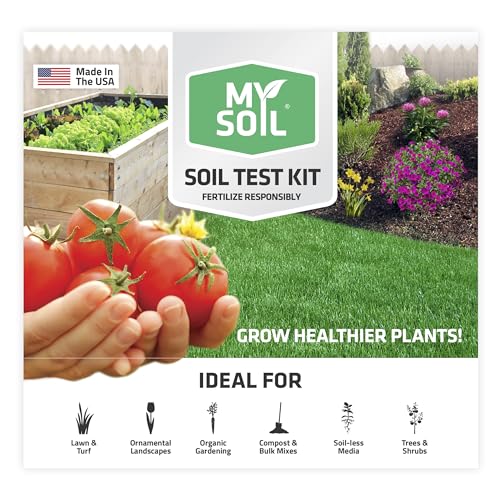
MySoil Soil Test Kit
For laboratory nutrient and pH information before deciding whether an amendment is needed. Ask for suitable interpretation before planning turf acidification.
Sources & research notes
This profile draws on published product information and relevant care or operating guidance. We have not conducted a hands-on trial of this product. General guidance explains the intended task; it does not establish this product’s performance.
Amazon: linked product identity, verified through Creators API
Commerce identity only; not evidence of product performance.
Buy on AmazonRead 2026-09-23
- MySoil: mail-in laboratory soil test kit
Read 2026-09-23
- Penn State Extension: Liming Turfgrass Areas
Read 2026-09-23
- Manufacturer: acidifier product information
Read 2026-09-23
- Manufacturer: acidifier factsheet or package label
Read 2026-09-23
- Espoma: acidifier safety data sheet
Read 2026-09-23
- Oregon State Extension: Acidifying Soil for Blueberries and Ornamentals; reviewed2026
Read 2026-09-23
- Oregon State Extension: Fertilizing Lawns, EC1278 (2005), page5
Read 2026-09-23
Check the product before ordering
Check the package size, formulation and current label directions.