
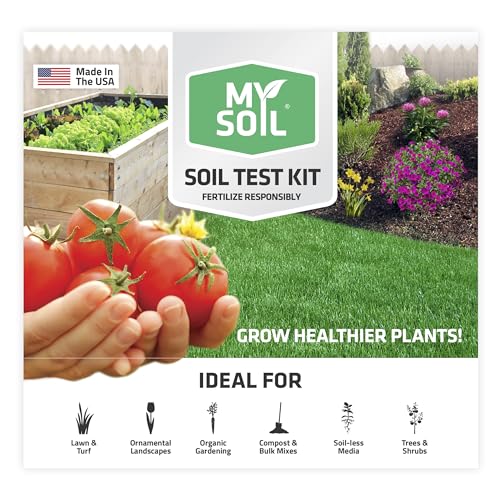
MySoil Soil Test Kit
Consider it before choosing amendments for a renovation, especially when you want a packaged collection-and-mailing workflow.
- A good fit for
- A homeowner who wants laboratory nutrient guidance and can collect, register and promptly mail a composite sample.
- The tradeoff
- One kit analyzes one submitted sample. Mixing unlike areas hides their differences, and the advertised nutrient panel is not a complete test of every soil problem.
We may earn a commission from purchases through our links. How this works
Buy on AmazonResearch-based review · Updated
Buy the test for a defined decision
MySoil pairs home sample collection with laboratory analysis. The linked ASIN is a single-use kit, not an electronic probe or a reusable meter. Its advertised panel covers pH and thirteen plant-available nutrient measurements, including two forms of nitrogen. Results and fertilizer recommendations are accessed through an online account.
That combination makes sense when your next decision is what nutrients or pH amendments a particular lawn area needs. It is less useful to order a test without defining the area and what you intend to grow there. Maryland Extension recommends testing before starting or renovating a lawn; the important purchase is suitable analysis and interpretation, rather than the largest number on a box.
The kit does not perform the renovation. Its results can inform a nutrient plan, while seed choice, surface preparation and moisture management still need their own decisions. We have reviewed the documented service and workflow, not conducted a comparative laboratory accuracy trial.[2][1][4]
Understand what thirteen measurements include
- Nutrients and pH
- Thirteen advertised nutrient forms plus pH support fertilizer planning.[2]
- A different laboratory scope
- Organic matter, texture or lime requirement may be part of another lab’s regular package; compare actual services.[5]
- A separate concern
- Contaminants need an appropriate test; a nutrient report does not establish that soil is free of them.[4]
Compare the test scopes
The advertised nutrient panel includes nitrate and ammonium nitrogen, phosphorus, potassium, calcium, magnesium, sulfur, iron, manganese, boron, copper, zinc and sodium, alongside pH. Counting the two nitrogen forms separately explains the headline total; it does not mean thirteen distinct chemical elements.
Compare the scope with the question you need answered. Minnesota's regular lawn-and-garden laboratory test includes pH, phosphorus, potassium, lime requirement, organic matter and estimated texture; other analyses have separate options. MySoil's stated nutrient list should not be read as a promise to provide all those same measurements.
A broad nutrient panel also should not be treated as a contamination clearance. Maryland notes that some labs offer lead or other heavy-metal tests, while ordinary soil labs generally do not test human pathogens or pesticides. Ask for the relevant analysis when that is the concern; a fertilizer recommendation cannot answer it.[2][5][4]
Collect one useful composite sample
First define a reasonably consistent testing area. Do not combine a garden bed and a lawn simply to fit both into one jar. Distinct soil histories or conditions may justify separate samples. MySoil's basic instructions call for collection from five to seven spots, from the surface down to six inches, with a shallower sample allowed where soil is too hard.
Use a clean sampling tool and thoroughly combine the collected soil, breaking clods and removing large plant material and rocks. The maker's longer sampling article favors a larger number of subsamples for representation and discusses contamination from unsuitable tools. These are collection details worth reading before you start.
Follow the selected laboratory's protocol. Minnesota, for example, specifies a different depth for an existing lawn than for new establishment. That does not authorize replacing MySoil's instructions with a depth borrowed from another service. Consistent sampling is necessary if later results are to be meaningfully compared.[6][7][8][4]
Register
Associate the kit with your online account before sending the sample.[6]
Fill correctly
Add one level scoop; retain the jar’s water and capsule, then secure the lid.[6]
Mail promptly
Use the prepaid USPS mailer within one day of adding soil.[6]
Read the sampling workflow
Create or use the MySoil account and register the kit before relying on email status updates. After combining the soil, transfer one level scoop to the supplied jar and close it tightly. Leave the liquid and capsule in place: the instructions explicitly say not to empty them. This is not the same preparation as mailing a dry bag of soil to another laboratory.
The supplied return mailer is postage-paid for USPS. MySoil directs users to mail within one day of adding soil to the jar. Plan collection around that step instead of filling the jar and leaving it on a shelf until convenient.
The maker advertises results and progress notifications over six to eight days. Treat that as its service estimate, not a guaranteed seeding deadline. The useful workflow is to collect early enough that the report can guide the amendment purchase, then read the recommended amounts and timing before buying fertilizer.[6][2]
Read the recommendation in its own units
The report offers organic and non-organic fertilizer recommendations tailored to the sample. Keep the sampled area, intended plants and report together so that a recommendation for one zone does not become a treatment for the whole property.
Maryland Extension advises using the same lab for repeat testing because extraction methods, units and nutrient reporting conventions can differ. A number reported by one service is not automatically comparable with another service's number. The same caution applies when converting recommendations into a quantity of a particular fertilizer.
Nitrogen deserves context. Many conventional lawn-and-garden programs base nitrogen guidance on the crop because soil nitrogen changes with weather and biological processes. MySoil's inclusion of measured nitrogen forms is a documented feature, not proof that every lab omitting that measurement is inferior. Choose interpretation you can use, and seek help with a confusing result.[2][4]
Compare services before comparing boxes
Soil Savvy is a relevant alternative if you want a mail-in kit with pH, fourteen nutrient forms and recommendations delivered by email and online. Its stated collection process uses three to six locations and its own supplied components. Neither the extra measurement nor a different collection protocol establishes a more accurate service in this review.
An extension-associated laboratory may be the more appropriate route when you specifically need lime requirement, organic matter, texture or an additional analysis. Compare the actual service list and submission instructions before purchasing either mail-in kit.
MySoil's practical appeal is the integrated kit, registration and report workflow. Buy it when that workflow and panel fit your decision, with enough time to act on the result. Skip the assumption that a test can diagnose every reason a lawn looks poor or replace observation of the site.[3][5][2][4]
When to choose something else
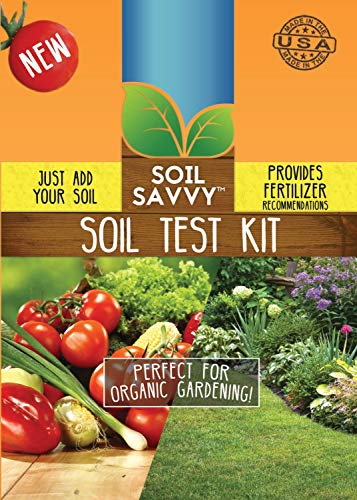
Soil Savvy Soil Test Kit
Another mail-in laboratory option with pH, fourteen nutrient forms and email/online reporting; use its own collection instructions.
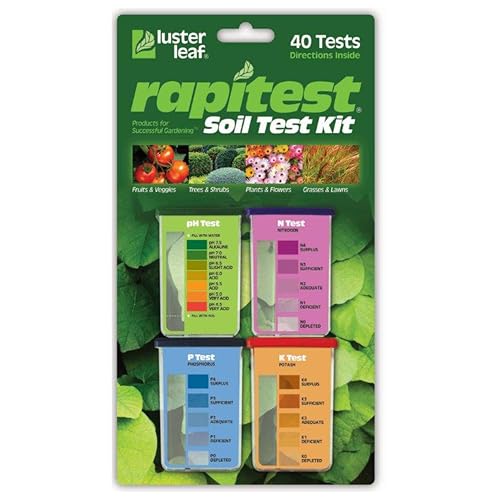
Luster Leaf Rapitest 1601 Soil Test Kit
Consider a color-comparison kit only when limited screening fits the job; laboratory analysis is the stronger basis for a major amendment decision.
Sources & research notes
This review draws on published product information and relevant care or operating guidance. We have not conducted a hands-on trial of this product. General guidance explains the intended task; it does not establish this product’s performance.
Amazon: linked product identity and features
Commerce identity only; not evidence of product performance.
Buy on AmazonRead 2026-09-23
- MySoil: current kit and analysis scope
Read 2026-09-23
- Soil Savvy: sampling, report access and test scope
Read 2026-09-23
- University of Maryland: choosing and using a soil-testing laboratory
Read 2026-09-23
- University of Minnesota: lawn and garden laboratory services
Read 2026-09-23
- MySoil: register, collect and mail the sample
Read 2026-09-23
- MySoil: detailed sample collection guidance
Read 2026-09-23
- University of Minnesota: laboratory-specific sampling depths
Read 2026-09-23
- Luster Leaf: model 1601 manufacturer instructions
Read 2026-09-23
Check the product before ordering
Check the exact model, included parts and compatibility.