
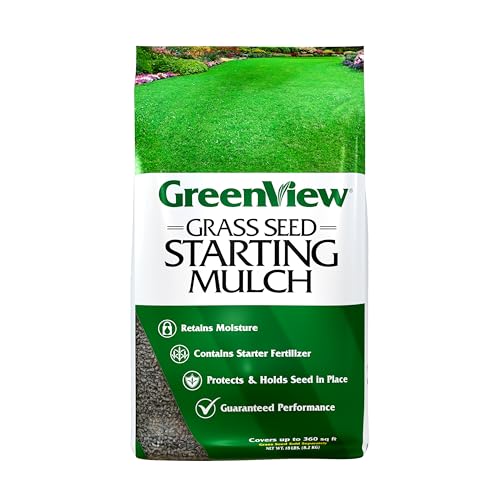
GreenView Grass Seed Starting Mulch (18 lb)
Consider it for a measured bare patch where you want a scattered mulch cover and its included fertilizer fits your seeding plan.
- A good fit for
- Small newly seeded areas where you can prepare the soil, apply a light cover and keep checking moisture.
- The tradeoff
- It contains fertilizer but no grass seed. Water-retention claims do not remove the watering job, and the larger bag’s coverage does not apply to this size.
We may earn a commission from purchases through our links. How this works
Buy on AmazonResearch-based review · Updated
Buy the cover, then choose the seed
GreenView Grass Seed Starting Mulch is a paper-pellet covering, not a bag of grass seed. The current linked identity is the eighteen-pound bag, model 2329908. Its photograph shows a green-and-white mulch bag rather than a Pure Grass Seed blend. Seed is purchased separately, so choose the species and quantity for the lawn before treating this mulch as the final item in the project.
The included starter fertilizer is another meaningful distinction. This is not an inert covering to add automatically on top of every existing fertilizer plan. Account for what the mulch already supplies and check the actual package directions alongside any separate fertilizer. The reviewed evidence does not establish that every soil needs the same nutrient addition.[1][3][4]
Separate advertised absorption from a watering result
GreenView describes the pellets as absorbing three times their weight in water and helping keep seed in place. Its current artwork also advertises weed-free and biodegradable material. These are useful manufacturer descriptions of the product’s intended function; we have not measured water retention, runoff resistance or weed contamination against competing covers.
Absorbing water is not the same as keeping every seed moist through any weather. Minnesota’s lawn-establishment guidance still calls for attention to moisture during germination, followed by a changing routine as roots develop. A mulch layer can be part of that routine, but it cannot compensate for missed watering, an unsuitable seed choice or poor preparation. Inspect the actual patch instead of scheduling fewer visits solely because the bag advertises moisture retention.[1][4][6]
- Linked bag
- The eighteen-pound bag advertises up to 360 square feet.[4]
- Larger selection
- The reviewed thirty-eight-pound selection displays 760 square feet.[4]
Read the practical details
The current bag and its coverage artwork say up to 360 square feet for eighteen pounds. GreenView’s online store also offers a thirty-eight-pound selection, and the reviewed page and linked label display 760 square feet for that larger size. That is a package-size difference, not permission to stretch this smaller bag across the larger area.
Measure the seeded section itself, excluding surfaces that are not being planted. As a planning example, a twenty-by-eighteen-foot rectangle is 360 square feet: the advertised upper area of one eighteen-pound bag. A larger or irregular patch needs its own measurement. This arithmetic is a shopping check, not a substitute for the package’s application density or a guarantee of establishment.[4][3]
Prepare and seed
Loosen the surface and sow the chosen seed according to its directions.[3]
Scatter the mulch
Apply the pellets over the seed at the package’s stated density.[3]
Water and observe
Water thoroughly, then monitor the cover and seedbed during establishment.[3][6]
Read the practical details
The manufacturer’s sequence starts with prepared soil and separately applied seed. It then calls for scattering pellets by hand or a suitable spreader so they cover about one quarter of exposed soil, followed by thorough watering. More material is not automatically better: the instructions describe a partial initial covering rather than burying the entire seedbed under dry pellets.
Use the wetting step to observe whether the patch is being watered evenly. GreenView says to water again when pellets become light in color. Treat that as a product cue within a broader seedbed check, not proof that all soil below every pellet has identical moisture. The actual planting conditions and the needs of the chosen seed still determine how closely the area must be watched.[3][6]
Choose a cover for the problem you actually have
This pellet format makes the most sense when a small measured patch needs a scattered covering and the fertilizer component is appropriate. If the main problem is soil moving down a slope, compare a suitable anchored erosion blanket and its installation requirements instead of assuming loose pellets solve every runoff problem.
The Hanes single-net straw blanket in this catalog is a different physical format, but its current listing leaves important netting and coverage questions unresolved. It is a comparison to investigate, not an unconditional upgrade. GreenView’s biodegradable claim also does not establish a precise breakdown date in every lawn. Continue tending the new planting as grass establishes; this page does not promise a fixed germination date or a measured reduction in watering.[1][4][2][5][6]
When to choose something else
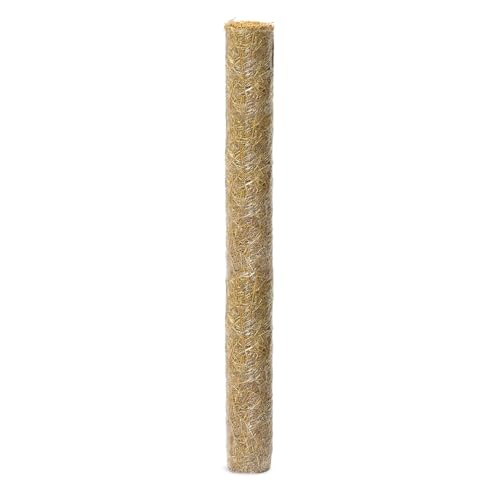
Hanes Geo Single Net Erosion Control Blanket (4' x 112.5')
Compare an anchored straw-blanket format when slope erosion is the main problem; confirm its netting, true coverage and installation requirements first.
Sources & research notes
This review draws on published product information and relevant care or operating guidance. We have not conducted a hands-on trial of this product. General guidance explains the intended task; it does not establish this product’s performance.
Amazon: current GreenView Grass Seed Starting Mulch (18 lb) identity
Commerce identity only; not evidence of product performance.
Buy on AmazonRead 2026-09-23
Amazon: current Hanes Geo Single Net Erosion Control Blanket (4' x 112.5') identity
Commerce identity only; not evidence of product performance.
Buy on AmazonRead 2026-09-23
- GreenView: mulch application and separate seed
Read 2026-09-23
- GreenView: actual 18-pound coverage artwork
Read 2026-09-23
- Minnesota DNR: choosing erosion fabrics and installation scope
Read 2026-09-23
- University of Minnesota: establishing seed, reviewed2024
Read 2026-09-23
Check the product before ordering
Check the exact model, included parts and compatibility.