
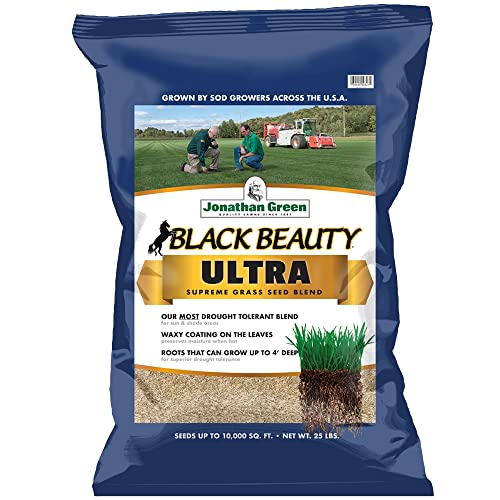
Jonathan Green Black Beauty Ultra
A practical choice for a sunny cool-season lawn when you want tall fescue with spreading bluegrass and quicker-starting ryegrass.
- A good fit for
- New lawns or overseeding with six-plus hours of sun and moderate traffic, following Jonathan Green’s guidance.
- The tradeoff
- Introduces three species. For substantial shade or a tall-fescue-only lawn, compare the alternatives below.
We may earn a commission from purchases through our links. How this works
Buy on AmazonResearch-based review · Updated
Three grasses, three contributions
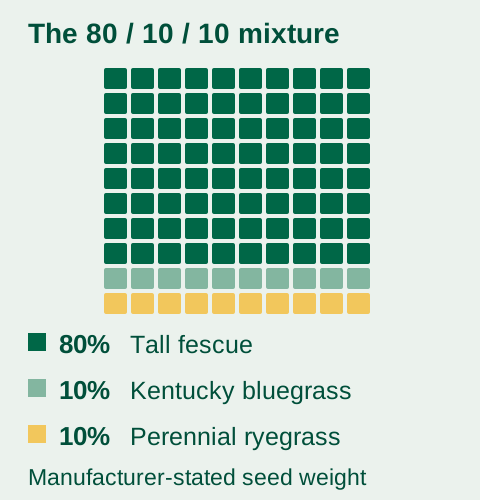
Tall fescue forms the core. Kentucky bluegrass brings rhizomes; perennial ryegrass brings quicker establishment. The diagram shows the manufacturer’s stated formula by weight.[2]
Understand the mix and what percentages mean
Ultra’s appeal is the combination, rather than any one headline trait. Jonathan Green describes an 80% tall fescue, 10% Kentucky bluegrass and 10% perennial ryegrass formula by weight. Tall fescue is the foundation; bluegrass adds spreading growth, and ryegrass gets started quickly while the other grasses establish.
That makes Ultra a mixture. A tall-fescue blend, by contrast, combines varieties of one species. Overseeding Ultra introduces all three species into the existing lawn; choose a different product if your objective is to maintain a tall-fescue-only stand.
The proportions describe seed weight, not a measured percentage of the eventual lawn. UMass explains that purity on a seed tag is a weight measure and germination is a separate laboratory result. Neither is a guarantee that every seed becomes an established plant. Read this graphic as the manufacturer’s recipe, not a prediction of the finished turf.[2][4][3]
Start with your lawn, not the bag
- Sunlight
- Plan around six or more hours a day, as listed in Jonathan Green’s specifications. For less light, compare shade-focused seed.[1][8]
- Existing grass
- A good match when adding tall fescue, bluegrass and ryegrass is intentional. Skip it when you want to preserve a single-species lawn.[2][4]
Read the sunlight and regional tradeoffs
The manufacturer’s own wording needs interpretation: the page and PDF describe some shade tolerance, but the product specification gives a concrete six-plus-hours sunlight requirement. We use that stricter screen when recommending Ultra. A lawn beneath a dense tree canopy should start with a shade-focused comparison, not an assumption that “sun and shade” covers every site.
Local climate matters too. Maryland Extension favors tall fescue for many of its residential lawns but notes brown-patch vulnerability and seasonal stress. Minnesota Extension warns about ryegrass winter hardiness and tall fescue in areas that hold winter ice. These regional cautions explain why a national mixture can be a sensible shortlist without being the automatic choice everywhere.
Before buying another bag for a repeatedly thin area, identify the cause. Soil compaction, increasing shade, disease or poor mowing can undermine reseeding. Seed changes the plants you introduce; it does not remove the conditions that made the previous lawn struggle.[1][5][6][4][7]
How much seed will you need?
Use the published coverage for your project: up to 200 sq ft per pound for new lawns, or 400 for overseeding. The estimate below uses those figures directly.[5]
5 lb of seed
At the published maximum coverage of 200 sq ft per pound. Amounts round up to the next 0.01 lb.
Planning estimate, not a bag count. Follow your current package directions; actual coverage depends on your site and application.
Read the coverage and seed-tag guidance
Choose the project before choosing a bag size. The manufacturer’s coverage table and downloadable directions agree: each pound covers up to 200 square feet of new lawn or 400 square feet of overseeding. A 1,000-square-foot job therefore works out to 5 lb or 2.5 lb respectively at that published maximum coverage.
Measure the grass area you will actually sow, excluding paths and beds. Use the new-lawn setting for bare ground; existing grass and bare patches may need separate estimates. The calculator uses these product-specific coverage figures, without silently adding a buffer or guessing which retailer’s package you will buy.
Coverage is useful for budgeting quantity, but the bag’s analysis still matters. Purity, germination and inert material describe different things. Compare the current seed tag before treating two equal-weight packages as equivalent purchases. Follow the directions on the package delivered to you if they differ from this published planning basis.[1][5][3]
A good start takes more than fast germination
Prepare the seedbed
Find the cause of thinning. Rake debris away and loosen the surface so seed reaches soil. Address compaction when needed.[7][5]
Measure, then spread
Calculate the amount first. Splitting the measured seed into two perpendicular passes can improve distribution; lightly incorporate it afterward.[7][5]
Keep caring after sprouts
Keep the surface moist through germination of the slower grasses. Avoid both drying out and waterlogging. Green shoots are the beginning.[7]
Read the timing and establishment guide
The package PDF gives 10–14 days for germination and notes that spring sowing can take longer; the product page lists 7–14. Neither is a deadline for a fully established lawn. In its renovation guidance, Minnesota Extension notes that Kentucky bluegrass can take two to three weeks and advises keeping the area moist until all varieties germinate. Early ryegrass growth is a reason to keep caring for the seedbed, not to stop.
For timing, use your local cool-season seeding window. Minnesota’s renovation guide prefers mid-August through mid-September; that is regional advice, not a nationwide calendar. Leave enough season for establishment rather than shopping only around the earliest possible sprout date.
Prepare the area before spreading. Remove debris, loosen the surface and deal with compaction where it is a problem. The Ultra PDF calls for shallow incorporation, no deeper than a quarter inch. In the first weeks, water to maintain a slightly damp seedbed without puddles or runoff. If you cannot provide that care, postponing the project is a more realistic plan than relying on the brand to compensate.[5][1][7]
Know the maintenance tradeoff
- Water
- During establishment, keep the surface moist. Later care should follow the season and site rather than continuing a seedling watering schedule indefinitely.[7][1]
Read the care guidance and source differences
The tall-fescue foundation is a reason to consider Ultra, but adding bluegrass and ryegrass does not create a maintenance-free lawn. Minnesota Extension describes higher care requirements for those two species than for many other cool-season choices. The benefit of a mixture comes with managing the lawn you actually establish.
Plan for seasonal change rather than perpetual dark green. Maryland Extension describes slowed growth or dormancy under summer and winter stress. It also identifies brown patch as a tall-fescue vulnerability and greater drought sensitivity in bluegrass. Those are reasons to match care and expectations to climate, not predictions that your particular bag will fail.
For mowing, take modest cuts with sharp blades and avoid scalping. The Ultra PDF starts mowing at 2½–3 inches, while the current product page says 3–4 inches; follow your package’s directions and remove no more than a third of the blade. We do not turn either first-mow threshold into an independently established ideal maintenance height for every Ultra lawn.[4][6][1][5][7]
What to check on the actual seed tag
Look for the variety names, purity, germination percentage, test date, weed seed and inert matter. The downloadable package directions explain how to sow Ultra; they do not replace the seed-analysis tag attached to your lot.
UMass distinguishes purity—the weight of seed components—from germination, a laboratory result under favorable conditions. Save a photo of the tag and lot number. That gives you a useful record for a future order or a question about the seed, rather than relying on the package design alone.
Where local extension publishes recommended cultivar lists, compare the names on the tag. Maryland’s annually updated recommendations illustrate the value of location-specific trials. Without matching cultivar names, we would not assign this retail mixture a trial score or promise a numerical drought or disease advantage. The research supports understanding the choice; your current tag supplies the missing lot detail.[3][6]
When to choose something else
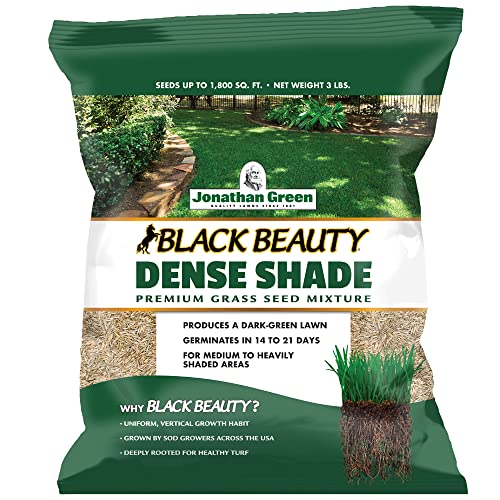
Jonathan Green Black Beauty Dense Shade Grass Seed
For a lower-light lawn, compare Black Beauty Dense Shade. Its manufacturer lists fine fescues alongside tall fescue and ryegrass, and a four-plus-hours sunlight requirement. It still needs light; the name is not a promise for a sunless site.
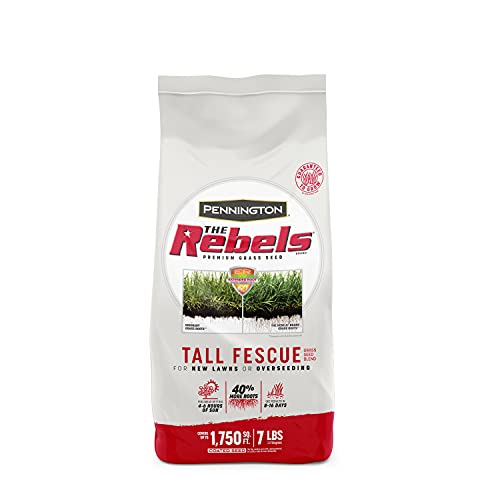
Pennington The Rebels Tall Fescue Mix
For a tall-fescue-only lawn, compare The Rebels. Pennington describes a blend of turf-type tall fescue varieties, without Ultra’s added bluegrass and ryegrass. Choose it when maintaining that species mix is the priority.
Sources & research notes
This review draws on published product information and grass-selection guidance. We have not conducted a hands-on trial of this product. Species guidance helps explain the choice; it is not a trial of the bag you buy.
- Jonathan Green: Black Beauty Ultra
Read 2026-09-22
- Jonathan Green: the grasses in Black Beauty Ultra
Read 2026-09-22
- UMass Extension: understanding a seed label
Read 2026-09-22
- University of Minnesota Extension: choosing lawn seed
Read 2026-09-22
- Jonathan Green: Black Beauty Ultra package directions
Read 2026-09-22
- Maryland Extension: choosing lawn grasses
Read 2026-09-22
- Minnesota Extension: renovating a lawn
Read 2026-09-22
- Jonathan Green: Black Beauty Dense Shade
Read 2026-09-22
- Pennington: The Rebels Tall Fescue blend
Read 2026-09-22
Ready to compare the bag?
Check the package size and seed tag before ordering.