
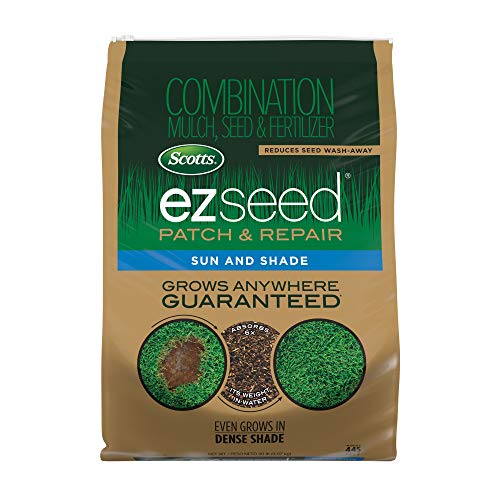
Scotts EZ Seed Patch & Repair Sun & Shade
A practical patch-repair format when the grass mixture suits your lawn and you can keep the area moist. Use a whole-lawn seeding product for a broader overseeding project.
- A good fit for
- Repairing bare spots with a combined seed, mulch and fertilizer product applied by hand.
- The tradeoff
- The 20-pound weight includes mulch and fertilizer. This Sun and Shade mixture is not a tall-fescue-only or warm-season seed, and it is not intended for whole-lawn overseeding.
We may earn a commission from purchases through our links. How this works
Buy on AmazonResearch-based review · Updated
Match the repair mixture to the lawn
The current Scotts page identifies Kentucky bluegrass, perennial ryegrass, creeping red fescue and Chewings fescue. These are cool-season grasses. “Sun and Shade” describes the mixture’s intended range of conditions; it does not mean the resulting patch will be an exact species or texture match for every existing lawn.
Penn State explains why mixtures use different grasses: perennial ryegrass establishes quickly, Kentucky bluegrass develops rhizomes, and fine fescues tolerate more shade. Those general traits help explain the combination, but they are not measurements of this retail bag. Exact cultivar percentages and tested germination require the seed tag for the lot being sold.
This is a bare-spot product, not Scotts’ recommendation for overseeding an entire lawn. It is also a different grass mixture from tall-fescue-only seed and from the separate EZ Seed Bermudagrass product. Identify what is growing around the damaged area before choosing the repair mix, particularly when a uniform lawn is the priority.[5][4][2]
Treat the cause of the patch as part of the job
- Discrete bare spot
- The manufacturer’s intended repair use, with hand application and a mulch layer.[5]
- Whole-lawn overseeding
- Scotts recommends a different whole-lawn seeding product for this task.[5]
- Repeatedly failing area
- Diagnose the growing conditions before assuming another seeding will solve it.[1]
Read the repair-fit guidance
Scotts promotes EZ Seed for sun, dense shade, traffic and slopes, subject to proper care. Those claims describe intended use; they do not establish that a patched area will thrive if the condition that killed the grass remains. University of Minnesota renovation guidance starts with evaluating the lawn and correcting the cause of poor growth.
There are also species limits behind the marketing. Penn State describes perennial ryegrass as quick to establish but relatively limited in spreading recovery, while fine fescues have weaknesses under heavy traffic and hot, humid conditions. A mixture broadens the range of traits present without making every component ideal for every location.
For a repair that repeatedly fails, changing the bag may be less useful than addressing the site. For a suitable cool-season lawn with a discrete bare area, the one-bag mulch-and-seed format is a reasonable convenience. Reserve expectations about permanent recovery until the underlying problem and establishment care are addressed.[5][4][1]
The 20-pound bag covers up to 445 square feet
- 100 sq ft of repairs
- About 4.49 lb of combined product, calculated from 20 lb covering 445 sq ft.[6]
Read the repair quantity calculation
The matching 20-pound package states up to 445 square feet of repair coverage. It includes the mulch and fertilizer as well as seed, so the weight should not be compared directly with a bag of plain grass seed. Nor should the coverage be used as a whole-lawn overseeding recommendation.
At that stated coverage, a 100-square-foot repair represents about 4.49 pounds of combined product, calculated as 20 multiplied by 100 divided by 445. This is a planning estimate, not a reason to pile material onto a patch until a target weight is reached. Scotts’ application instructions still require a light, even treatment with some bare ground visible.
Measure the actual damaged areas rather than buying for the whole yard. Then compare current package cost against the repair area and the format you want. Without current prices and a like-for-like project comparison, the sources do not establish that a particular package or separate seed-and-mulch approach is always cheaper.[5][6][7]
Let the mulch expand after a light application
Prepare
Apply lightly
Spread by hand, leaving a little bare ground visible for the expanding mulch.[5][6]
Soak and monitor
Saturate gently without pooling; water again when the mulch turns light brown.[5][6]
Read the mulch and watering details
Remove dead grass and loosen the surface with a rake. Then apply EZ Seed evenly by hand so the area is mostly covered but some bare soil remains visible. The package warns against overapplication. More dry product is not automatically a better repair because the mulch expands after watering.
The first watering should be a deep, gentle soak until the mulch is saturated and no more water is being absorbed. Avoid pooling and runoff. After that, the mulch’s color provides a practical cue: dark brown indicates moisture, while light brown means it is time to water again. Continue checking the patch rather than assuming the mulch eliminates follow-up care.
Scotts says the mulch holds six times its weight in water; the artwork separately describes expansion to four times its dry size upon watering. These are different manufacturer measurements. Neither is an independent comparison of lawn recovery, nor a reason to rank it over a product using another mulch system.[5][6]
Protect the patch beyond the first shoots
The current directions recommend spring or fall when daytime temperatures are consistently 60–80°F; the package also calls for avoiding frost. Scotts’ FAQ says the first seedlings may appear in five to seven days. In a mixture containing grasses with different establishment speeds, that should not be read as complete germination or a finished repair.
Keep foot traffic, pets and the mower off the new patch until the grass reaches at least three inches, following the product directions. Reopening the area because a few green shoots appeared would skip the growth milestone the manufacturer actually specifies. Continue checking moisture as the patch develops.
The original manufacturer artwork identifies mefenoxam-treated seed. It is not for food, feed or oil, and storage should keep it away from food and out of reach of children and pets. The convenience of a mixed repair product does not remove the need to follow the current bag’s handling and use directions.[5][6][4]
Compare another patch product by how it is used
PatchMaster Sun + Shade is a relevant alternative because it also combines seed, mulch and fertilizer for bare or thin areas. Scotts describes a recycled pelletized mulch and a different application method: an even thin layer that completely covers the area. Do not carry EZ Seed’s visible-ground instruction across without reading the other package.
The packages also have different coverage. The linked 4.75-pound PatchMaster bag is a different quantity from this 20-pound EZ Seed, so comparing bag weights or front-label absorption claims does not establish project value. Measure the repair and check the directions for the exact size offered.
For whole-lawn work, step back from patch mixes and choose an appropriate lawn seed product instead. For discrete repairs, the worthwhile comparison is the grass mixture, amount needed, application method and care you can provide. These sources support those practical differences, not a head-to-head winner for germination or lasting lawn quality.[5][8][6][2][9]
When to choose something else
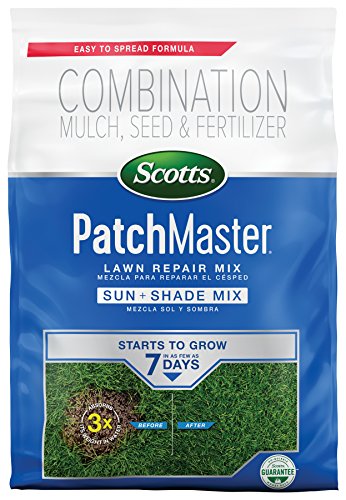
Scotts PatchMaster Lawn Repair Mix Sun + Shade
Compare another seed, mulch and fertilizer repair mix, with a recycled pelletized mulch and different coverage and application directions.
Sources & research notes
This review draws on published product information and grass-selection guidance. We have not conducted a hands-on trial of this product. Species guidance helps explain the choice; it is not a trial of the bag you buy.
- University of Minnesota Extension: renovating a lawn
Read 2026-09-23
- UMass Extension: understanding the turfgrass seed label
Read 2026-09-23
- Pennington: The Rebels Tall Fescue Grass Seed Blend
Read 2026-09-23
- Penn State Extension: turfgrass species for Pennsylvania, bluegrass and fescues
Read 2026-09-23
- Scotts: package-specific product description and directions
Read 2026-09-23
- Scotts: manufacturer package artwork
Read 2026-09-23
Amazon product identity: Scotts EZ Seed Patch & Repair Sun and Shade, 20 lbs.
Commerce identity only; not evidence of product performance.
Buy on AmazonRead 2026-09-23
- Scotts: current PatchMaster family directions; selected 10 lb size
Read 2026-09-23
Amazon: PatchMaster 4.75 lb identity
Commerce identity only; not evidence of product performance.
Buy on AmazonRead 2026-09-23
Ready to compare the bag?
Check the package size and seed tag before ordering.