
Seed zoning system
The Yard Microclimate Map
Most lawn failures are not whole-yard failures. They are microclimate failures: the north strip is too shaded, the driveway edge is too hot and salty, the slope dries before the seed roots, the tree canopy steals water, and the dog path never gets a recovery window. A premium seeding plan treats the lawn like a map, not a single rectangle.
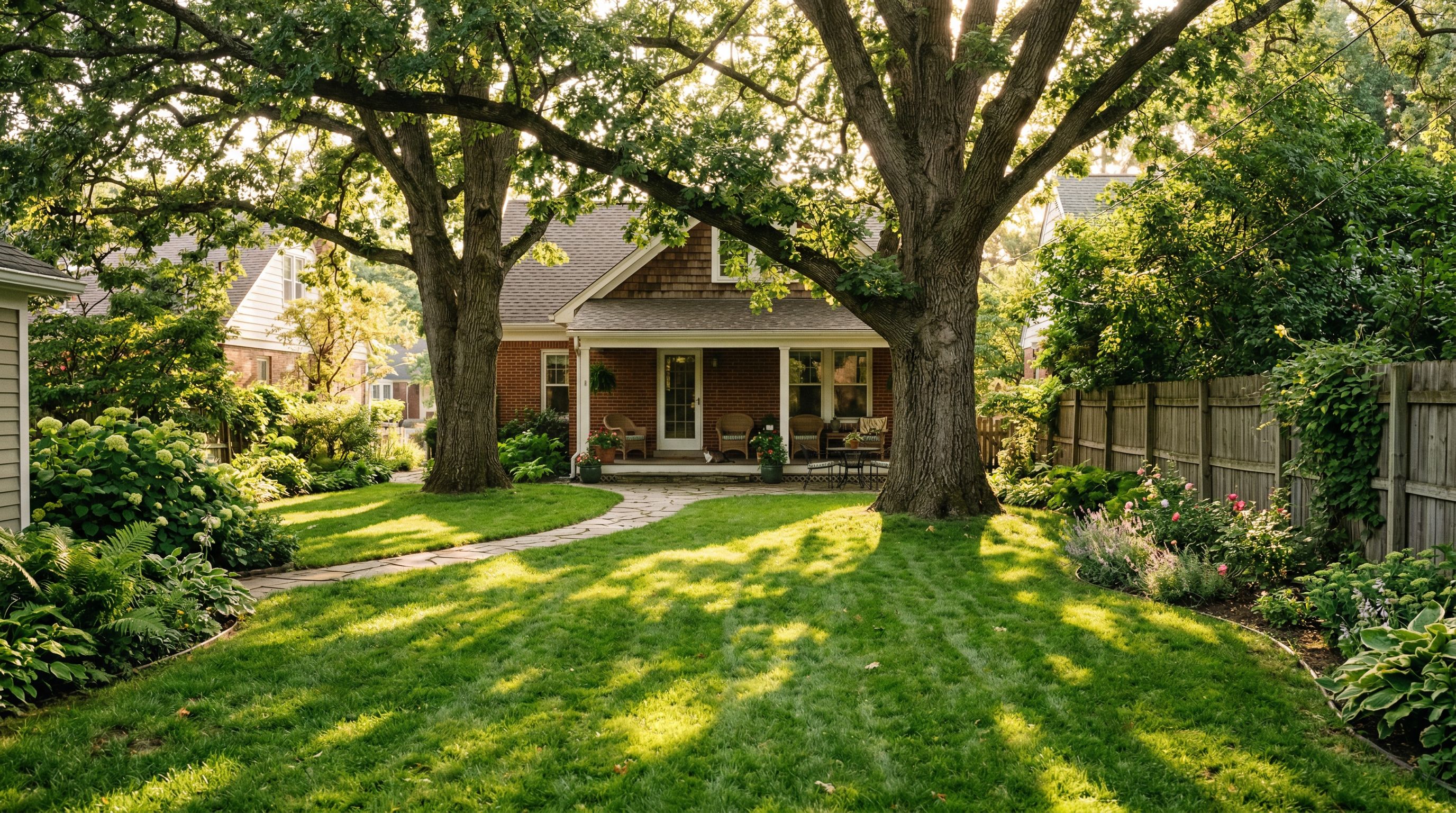
The upgrade
Buy seed by zone, then manage each zone like it has its own climate.
A premium seeding plan starts with the yard map: light, water, soil, heat, salt, and wear. The right bag changes when the growing environment changes.
Read the field in order
Layer one
Light and shade
Layer two
Water and soil
Layer three
Wear and heat
Observation window
3 walks
Morning, solar noon, and late afternoon show shade and heat patterns a single glance misses.
Shade threshold
2-4 hours
Fine fescue becomes the serious turf candidate when useful light is limited and traffic stays low.
Soil testing
Sample by symptom
A front-lawn composite can hide pH, salt, compaction, or organic-matter differences by zone.
Premium answer
Do not seed every zone
Deep shade, wet corners, and traffic cuts may need mulch, drainage, or path design instead of more seed.
Field map
One lawn, four climates
Sketch the yard by stress, not by property lines. Seed choice changes where light, water, heat, and wear change.
The Fast Answer
The premium rule
The best seed is the one that fits the worst zone.
If a yard has full sun, deep shade, dog traffic, and a wet corner, one bag will not solve all four. Map the lawn into microclimates, seed each zone separately, and stop trying to force turf where light, roots, water, or wear make grass a losing groundcover.
Light
How many useful hours reach the grass surface, not the roofline?
Water
Does the zone dry first, pond first, or crust after irrigation?
Wear
Will seedlings get 30 days of protection, or is traffic constant?
The Mapping Method
Walk the yard three times on a clear day: morning, solar noon, and late afternoon. Mark where the grass is thin, where soil stays damp, where pavement radiates heat, where tree roots surface, and where people or pets actually move. The goal is not a pretty drawing. The goal is to stop treating different growing environments as if they are the same lawn.
Zone diagnosis
Map the stress before selecting seed
| Signal | Likely diagnosis | Field proof | Next move |
|---|---|---|---|
| North wall strip | Low light, cold spring soil, and poor drying slow establishment. | Compare morning, noon, and late-day light at the grass surface. | Use fine fescue or tall fescue only if useful light clears the threshold. |
| Under mature trees | Shade combines with root competition for water and nutrients. | Look for exposed roots, leaf litter, thin turf, and dry soil under the canopy. | Thin canopy carefully, mulch the trunk zone, and seed only realistic turf edges. |
| Driveway edge | Reflected heat, deicing salt, plow load, and runoff create a stress corridor. | Check for winter kill lines, crusting, salty runoff paths, and fast summer drying. | Flush salts, repair drainage, and use durable tall fescue where the climate fits. |
| Dog and kid lane | Wear, compaction, urine concentration, and turning pressure block recovery. | Map the repeated path rather than the whole lawn. The damage usually repeats exactly. | Use tall fescue for recoverable traffic and hardscape or mulch where traffic never stops. |
| Low wet corner | Saturated roots, moss, algae, and slow warmup keep seedlings oxygen-starved. | Inspect after irrigation or rain. If water sits, the seed choice is not the first fix. | Fix drainage before seeding, then choose turf only after water moves through the profile. |
| South-facing slope | Fast drying, runoff, heat, and shallow rooting punish young seedlings. | Watch whether water soaks in or sheets down during the first minutes of irrigation. | Use drought-tolerant tall fescue, light cover, and gentle cycles that soak instead of run off. |
North wall strip
- Likely diagnosis
- Low light, cold spring soil, and poor drying slow establishment.
- Field proof
- Compare morning, noon, and late-day light at the grass surface.
- Next move
- Use fine fescue or tall fescue only if useful light clears the threshold.
Under mature trees
- Likely diagnosis
- Shade combines with root competition for water and nutrients.
- Field proof
- Look for exposed roots, leaf litter, thin turf, and dry soil under the canopy.
- Next move
- Thin canopy carefully, mulch the trunk zone, and seed only realistic turf edges.
Driveway edge
- Likely diagnosis
- Reflected heat, deicing salt, plow load, and runoff create a stress corridor.
- Field proof
- Check for winter kill lines, crusting, salty runoff paths, and fast summer drying.
- Next move
- Flush salts, repair drainage, and use durable tall fescue where the climate fits.
Dog and kid lane
- Likely diagnosis
- Wear, compaction, urine concentration, and turning pressure block recovery.
- Field proof
- Map the repeated path rather than the whole lawn. The damage usually repeats exactly.
- Next move
- Use tall fescue for recoverable traffic and hardscape or mulch where traffic never stops.
Low wet corner
- Likely diagnosis
- Saturated roots, moss, algae, and slow warmup keep seedlings oxygen-starved.
- Field proof
- Inspect after irrigation or rain. If water sits, the seed choice is not the first fix.
- Next move
- Fix drainage before seeding, then choose turf only after water moves through the profile.
South-facing slope
- Likely diagnosis
- Fast drying, runoff, heat, and shallow rooting punish young seedlings.
- Field proof
- Watch whether water soaks in or sheets down during the first minutes of irrigation.
- Next move
- Use drought-tolerant tall fescue, light cover, and gentle cycles that soak instead of run off.
Light and Shade Zones
Shade is not just less light. Under trees, grass also competes with shallow feeder roots for water and nutrients. Penn State notes that shade reduces root growth, shoot density, vigor, wear tolerance, and disease resistance. University of Maryland is even more direct: turfgrasses are full-sun plants, and many shaded tree areas are better mulched than seeded.
Shade grading scale
6+ hours direct sun
Use the best seed for climate, traffic, and soil. Shade seed is not required.
4-6 hours direct sun
Tall fescue and shade-tolerant blends can work well with careful watering.
2-4 hours filtered or direct sun
Fine fescue becomes the serious candidate, but traffic must be low.
Less than 2 hours useful light
Treat turf as experimental. Mulch, groundcover, or bed conversion may be the premium answer.
Pro tip
Heat, Salt, and Pavement Zones
Driveway edges, sidewalks, curb strips, and south-facing walls can be hotter and drier than the rest of the yard. They also collect deicing salts, plow piles, and runoff. If that strip dies every year, do not just overseed it every year. Treat it as a stress corridor.
Heat edge
Choose tall fescue or warm-season turf where climate allows, seed in the correct season, and keep irrigation gentle enough to soak instead of run off.
Salt edge
Flush salts, improve drainage, use tolerant seed where appropriate, and stop piling contaminated snow on the same strip if you want the repair to last.
Water and Soil Zones
A low corner, compacted clay strip, sandy slope, and irrigated flower-bed edge can all sit within 30 feet of each other and still require different seeding tactics. Soil testing is useful, but a single sample can hide zone-level problems. Test where the symptoms change.
Microclimate soil rule
Microclimate soil rule
If a zone looks different, drains different, or fails different, sample it separately. The front lawn composite is not proof that the shaded side yard has the same pH, organic matter, compaction, or salt pressure.
Traffic Zones
Grass seed does not establish under constant traffic. If dogs, kids, hoses, trash cans, delivery paths, or mower turns cross the same strip every day, build the traffic into the design. Tall fescue is usually the cool-season base for durability, but even durable turf needs recovery time.
Warning
Seed Prescriptions by Zone
| Zone | Best seed direction | Management note |
|---|---|---|
| Dense shade under trees | Fine fescue-heavy shade blend | Mow higher, reduce traffic, overseed in fall, and consider mulch inside the dripline. |
| Moderate shade with morning or late-day sun | Tall fescue plus fine fescue shade blend | Avoid heavy nitrogen, keep leaves off seedlings, and do not scalp. |
| Hot sunny dog yard | Turf-type tall fescue blend with optional ryegrass for fast cover | Core aerate compacted lanes, water deeply after establishment, and patch concentrated damage quickly. |
| Bluegrass lawn with small bare areas | Kentucky bluegrass for matching, ryegrass only for temporary speed | Plan a longer establishment window and keep traffic off until coverage thickens. |
| Southern full-sun lawn | Bermuda seed or plugs, depending on the existing stand | Plant during active warm-season growth and avoid cool-season patch products. |
When the Premium Move Is Not Seeding
Some lawn areas are asking for a different groundcover. Deep shade under mature trees, muddy dog gates, utility paths, and permanently wet corners can absorb seed money every season without ever becoming good turf.
Mulch ring
Best for tree-root zones where turf competes directly with the tree.
Stepping path
Best for repeated foot traffic that cuts through the same lawn corner.
Gravel or kennel surface
Best for concentrated dog traffic near gates and runs.
Rain garden or drainage fix
Best for low wet corners where roots stay oxygen-starved.
Products by Zone
These are not universal picks. They are examples of matching a bag to a mapped condition.
Filtered shade repair
Pennington Smart Seed Dense Shade Grass Mix
Pennington
- Use when
- The mapped zone gets limited useful light and traffic can be kept low during establishment.
- Avoid when
- The area gets less than two useful hours of light or sits under heavy tree-root competition.
Premium shade blend
Jonathan Green Black Beauty Dense Shade Grass Seed
Jonathan Green
- Use when
- A shaded front or side yard still has enough light to justify turf instead of mulch.
- Avoid when
- The problem is traffic, compaction, or standing water rather than low light.
Recoverable traffic lane
Jonathan Green Black Beauty Heavy Traffic Grass Seed
Jonathan Green
- Use when
- Dogs, kids, or footpaths cross the zone but the area can still get rest after seeding.
- Avoid when
- The path is constant and should become stepping stones, mulch, gravel, or a defined route.
Dry slope or heat edge
Scotts Grass Seed Drought Tolerant Mix
Scotts
- Use when
- The map shows fast-drying soil, water restrictions, or sunny cool-season stress.
- Avoid when
- The main constraint is deep shade, standing water, or a warm-season lawn that needs bermuda.
Warm-season full sun
Scotts Turf Builder Grass Seed Bermudagrass with Fertilizer
Scotts
- Use when
- The zone is southern, sunny, hot, and compatible with active warm-season establishment.
- Avoid when
- You are repairing a cool-season lawn or seeding outside bermuda growing weather.
Zone-level proof
MySoil Soil Test Kit
MySoil
- Use when
- Two adjacent zones behave differently and you need pH, nutrient, or salt evidence before buying seed.
- Avoid when
- The map already shows a physical blocker like deep shade, ponding, or continuous traffic.
Research Sources
This guide uses university extension research on shaded turf, fine fescue management, new lawn establishment, salt stress, and site-specific lawn failure.
- University of Maryland Extension - Growing Grass in the Shade
- Penn State Extension - Growing Turf Under Shaded Conditions
- University of Minnesota Extension - Fine fescue lawn establishment and management
- University of Minnesota Extension - Seeding and sodding home lawns
- University of Maryland Extension - Starting a New Lawn
- University of Minnesota Extension - Effects of deicing salts on landscapes
Related Guides