
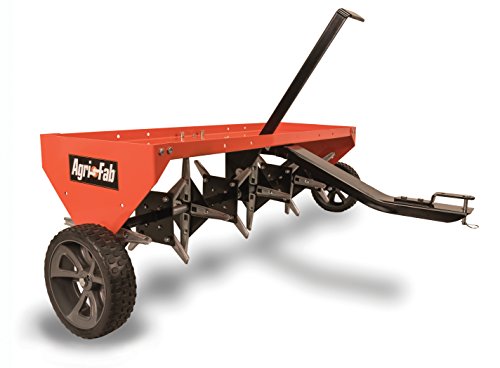
Agri-Fab 48-Inch Tow-Behind Plug Aerator
Consider it for a larger area needing core aeration when you have suitable towing equipment, storage space and a plan to verify the exact attachment instructions.
- A good fit for
- A lawn-tractor owner addressing soil compaction over an area with room for controlled towing passes.
- The tradeoff
- The retail listing permits up to 175 pounds of ballast, while the linked 45-02993 manual says 140. Resolve the model-specific limit before loading; three-inch plugs are an upper capability, not a guaranteed result.
We may earn a commission from purchases through our links. How this works
Buy on AmazonResearch-based review · Updated
Buy it for coring, not for every renovation step
The current retail identity is Agri-Fab 45-0299, a forty-eight-inch tow-behind plug aerator with thirty-two galvanized knives. The manufacturer describes plugs up to three inches deep and a transport mechanism for raising the working points. This is a different operation from a spring-tine dethatcher.
Maryland Extension explains that core aeration removes soil plugs, creating channels that help air and water move through compacted soil. It also distinguishes the operation from removing an excessive thatch layer. A core aerator can pass through that layer without removing enough of it to solve a thatch problem.
Choose the attachment because soil compaction is part of the diagnosis. The presence of an overseeding project does not automatically make every aerator necessary, nor does a wide implement establish a guaranteed improvement in seed germination or root depth.[1][8][9][2]
Check the towing and storage fit
The manufacturer's current page gives assembled dimensions of approximately thirty-five by sixty by thirty-six inches and a ninety-four-pound weight. The working width is forty-eight inches, so the overall storage and maneuvering envelope is wider than the name alone suggests.
The retail listing describes a universal hitch for most lawn and garden tractors. Check the actual hitch arrangement and the towing vehicle's instructions; that wording does not verify every riding mower. The owner's manual makes vehicle stability and braking part of the operating considerations.
Plan entry to the lawn, turning room and crossings over hard surfaces before loading the tray. The manual says to raise the aerator for walks and drives and avoid extremely sharp turns while the points are engaged. A large open area is a different fit from a confined lawn with frequent tight turns.[1][8][9]
Resolve the ballast limit before adding weight
- Current retail claim
- The linked offer advertises up to 175 pounds of ballast.[1]
- Linked owner manual
- The manufacturer-linked 45-02993 manual specifies up to 140 pounds.[9]
Read the ballast and lifting limits
The current linked listing advertises a tray supporting up to 175 pounds of added weight. The manufacturer page links a September 2021 manual for model 45-02993, which specifies up to 140 pounds. The older archived 45-0299 manual also gives 140 pounds. Those documents do not support silently choosing the larger number for every unit.
Identify the exact attachment and follow the applicable instructions, seeking manufacturer clarification if they disagree with the offer. Do not load to the retail headline while assuming the manual is irrelevant. The model suffix and actual hardware matter.
The linked manual explains securing ballast with straps kept clear of rotating parts. It also says to dismount from the tractor to raise or lower the aerator when weight has been added. That qualification limits the listing's convenient-from-the-seat language.[1][9][10]
Let soil conditions determine penetration
The advertised three-inch plug length is an upper capability. The manual describes adding permitted weight to increase penetration and recommends moistening extremely hard, dry ground before aerating. It also says not to operate in muddy conditions. More weight is not a substitute for suitable soil moisture.
Maryland advises aerating during active growth rather than dormancy and moistening dry soil so the corer can work. Local grass type and recovery conditions should guide the timing. A calendar reminder alone does not establish that the ground is ready.
Use a low starting speed and controlled, mostly straight passes. The manual calls for overlapping passes to increase the coring pattern. It directs travel up and down slopes rather than across them, while the vehicle's own slope limits still apply. This is not permission to tow on every slope.[8][9][2]
Include plugs and maintenance in the plan
Prepare and start
Mow, clear loose clippings and begin at low speed in suitable soil conditions.[9]
Control the path
Avoid sharp engaged turns and raise the points for walks and drives.[9]
Finish and maintain
Assess plug debris, clean the attachment and lubricate the specified areas.[9][2]
Read the coring workflow
The manual recommends mowing and removing loose clippings before the job. Start in the lowest forward speed and lower the points as instructed. Raise them before crossing hard surfaces, and avoid sharp turns while engaged. With ballast on the tray, follow the dismounting instruction for raising or lowering.
After coring, the treatment of the plugs needs some judgment. Maryland notes that plugs normally break down over time, while Agri-Fab recommends raking where stones or gravel in the plugs could damage mower blades, particularly reel mowers. Do not convert either statement into an unconditional rule for every lawn.
For storage, clean the attachment and lightly oil exposed metal. The manual also calls for oiling spool assemblies, the shaft and wheel hubs as needed, and describes servicing the sharp points. Galvanized knives do not eliminate the maintenance routine.[9][2]
Choose a different tool when the problem is different
The Greenworks dethatcher and scarifier is relevant when the target is surface thatch or shallow surface work rather than extracting cores. It uses an electric cord and interchangeable cylinders, so it is not a like-for-like tow-behind alternative.
The Landzie rake is relevant when the next job is spreading suitable topdressing into shallow low spots. It moves supplied material across the surface and does not relieve compaction by pulling plugs.
Choose this Agri-Fab attachment when core aeration, a compatible tractor and a workable towing route all fit the project. A wide implement and large tray can be useful, but neither establishes a universal cost advantage, a fixed number of passes or a guaranteed three-inch result on hard soil.[7][4][9][2][3]
When to choose something else
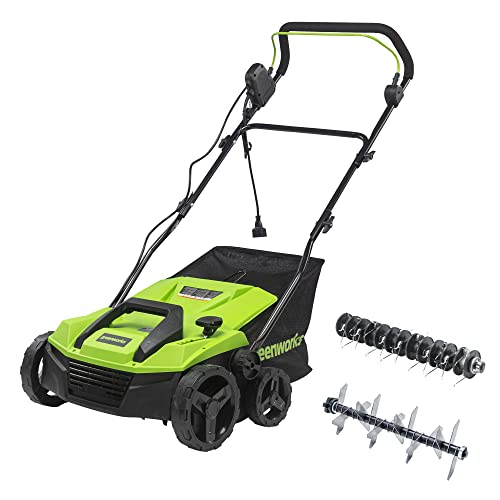
Greenworks 14-Inch Corded Dethatcher & Scarifier
For surface thatch removal or scarifying rather than extracting soil cores.
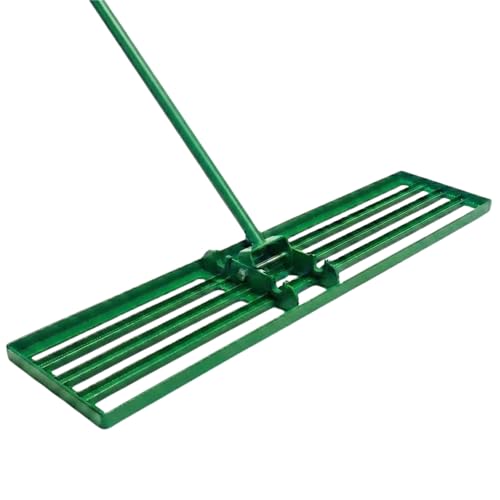
Landzie 36-Inch Lawn Leveling Rake
For spreading topdressing into shallow uneven areas after diagnosing the separate soil and surface needs.
Sources & research notes
This review draws on published product information and relevant care or operating guidance. We have not conducted a hands-on trial of this product. General guidance explains the intended task; it does not establish this product’s performance.
Amazon: current linked product identity and photograph
Commerce identity only; not evidence of product performance.
Buy on AmazonRead 2026-09-23
- University of Maryland: established-lawn aeration and thatch guidance
Read 2026-09-23
- Clemson: topdressing a home lawn, September2020
Read 2026-09-23
- Landzie: model36-inch lawn leveling rake
Read 2026-09-23
- Rocklin:30-inch leveling rake and handle specifications
Read 2026-09-23
- Walensee:15-inch rake and visually reviewed product artwork
Read 2026-09-23
- Greenworks Canada: DT13B00 page and conflicting specifications
Read 2026-09-23
- Agri-Fab: current45-0299 aerator page
Read 2026-09-23
- Agri-Fab: linked45-02993 owner manual, September2021
Read 2026-09-23
- Agri-Fab: archived45-0299 owner manual
Read 2026-09-23
Check the product before ordering
Check the exact model, included parts and compatibility.