
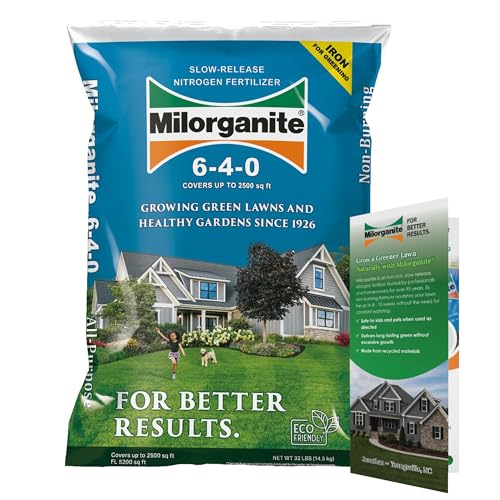
Milorganite Slow-Release Nitrogen Fertilizer
A documented slow-release option when its nitrogen and phosphorus contribution fits the lawn’s needs. It is not a zero-risk fertilizer or a complete potassium source, and its biosolids origin deserves an explicit buying decision.
- A good fit for
- An actively growing lawn with a nutrient plan that accommodates this 6-4-0 formula, where the buyer accepts a biosolids-derived product and follows the applicable regional directions.
- The tradeoff
- The 32-pound bag covers 2,500 square feet only at the standard rate. Current maker guidance includes lower rates in named states, and the product contains phosphorus even though it is marketed as slow-release nitrogen.
We may earn a commission from purchases through our links. How this works
Buy on AmazonResearch-based review · Updated
Identify the 32-pound fertilizer and brochure bundle
The linked retail product is a 32-pound bag of Milorganite 6-4-0 with a bonus feeding brochure. The bundle’s retail identifier differs from the standard bag SKU on Milorganite’s manufacturer page. That difference should not be treated as evidence of a different fertilizer formula.
The manufacturer identifies the nutrient source as biosolids: material produced through wastewater treatment. Its analysis lists 6% total nitrogen, 4% available phosphate, 2.5% iron and 1.2% calcium. The zero in 6-4-0 means this formula does not provide a guaranteed potash contribution.
Read the full analysis against the lawn’s needs rather than choosing from the phrase nitrogen fertilizer alone. A soil recommendation calling for potassium will not be satisfied by assuming every lawn fertilizer contains it. Likewise, the brochure in the bundle does not change the bag weight, formulation or applicable use restrictions.[1][4][3]
Slow release describes part of the nitrogen
Milorganite lists four percentage points of water-insoluble, slowly available nitrogen and two percentage points of water-soluble nitrogen, totaling 6%. In other words, two-thirds of the guaranteed nitrogen is in the slow-release portion. It is not correct to describe all of the nitrogen as slowly released.
The maker says a standard application feeds for up to eight to ten weeks. Its application guidance explains that water and temperature conditions affect microbial breakdown and nutrient availability. That is a reason to consider the lawn’s active growth and conditions, not a promise of identical feeding duration in every season.
The old catalog’s claims that overapplication was harmless and that more product would simply feed longer were not appropriate. A slow-release component does not remove the need to measure the area and follow directions. The bag still contributes nitrogen and phosphorus, and the manufacturer safety sheet contains handling and environmental precautions.[4][5][7]
Understand the standard quantity before applying exceptions
- Standard established-lawn amount
- Manufacturer standard: 32 lb per 2,500 sq ft, equivalent to 12.8 lb of product per 1,000 sq ft.[5]
- Nutrient contribution at that amount
- Calculated from 6-4-0: 0.768 lb nitrogen and 0.512 lb P2O5 per 1,000 sq ft at the standard rate.[4][5][3]
- Regional and new-lawn instructions
- The current manufacturer page gives exceptions; establish the applicable rate before using the standard coverage calculation.[5]
Read the regional-rate caveat
The standard established-lawn amount is 32 pounds per 2,500 square feet, equal to 12.8 pounds of product per 1,000 square feet. With the 6-4-0 analysis, that nominal rate supplies 0.768 pound of nitrogen and 0.512 pound of phosphate expressed as P2O5 per 1,000 square feet. A 5,000-square-foot area would use two 32-pound bags at that rate.
These calculations explain the standard coverage; they do not override regional directions. The manufacturer’s current page specifies lower rates and limited annual applications for several named states, plus local blackout-date checks. Its new-lawn rates also differ and include their own exceptions.
Before buying enough material for an entire season, identify the instructions that apply to your location and grass. Do not replace the current label with a nationwide four-application calendar or assume that a standard bag covers the same area for establishment and routine feeding.[5][4][3]
Match timing to growth rather than holidays alone
Milorganite publishes a holiday-based schedule as a memory aid, but also gives temperature, growth and regional qualifications. Its warm-season guidance cautions against feeding too late in fall and specifically says centipedegrass and bahia should avoid fall applications. That matters more than following a generic calendar mechanically.
For distribution, the maker recommends measuring the area, choosing suitable spreader settings and applying half the amount in each of two directions. A steady walking pace helps make delivery more consistent. The two passes split the intended amount; they are not two full applications.
The manufacturer says watering immediately after spreading is not necessary, although water can help contact and release. That does not mean an establishing seedbed can be left dry. If the product is part of a seeding project, retain the seed’s moisture requirements and use the appropriate new-lawn nutrient instructions instead of the maintenance schedule.[5]
Make the biosolids decision with the uncertainty visible
Milorganite reports testing and compliance information, including detection of PFOA and PFOS in its 2026 testing. Its published average for those chemicals is 5.1 parts per billion. This manufacturer-reported figure is not a result for the particular retail bag, a measurement of every PFAS compound or proof that the product is PFAS-free.
EPA’s current biosolids page describes ongoing work on PFAS and a July 2026 draft guidance process. Draft guidance should not be presented as a finalized universal safety threshold for household fertilizer use. Nor does the existence of a broad biosolids assessment establish a measured risk for a specific lawn application.
The practical buying choice is whether a biosolids-derived fertilizer fits your preferences and local guidance. A buyer who wishes to avoid that source can choose a different nutrient product after checking its own formulation and restrictions. Comparisons with unrelated household PFAS concentrations do not resolve that lawn-specific decision.[6][8][4]
Handle the product carefully and compare nutrient needs
The manufacturer-linked safety sheet warns about skin, eye and respiratory irritation and aquatic toxicity. It advises avoiding dust, using appropriate hand and eye protection, washing after handling and preventing environmental release. Those directions are incompatible with describing the product as harmless to people, pets and waterways under every condition.
Use the current package instructions, store material securely and keep it where the intended treatment belongs. A fertilizer’s brand reputation or long history does not replace measured application. If the lawn needs no additional phosphorus, that is also a reason to reconsider a 6-4-0 product rather than treating it as an automatic base layer.
For a new-lawn project with a justified starter need, The Andersons 20-27-5 is a different formulation to compare, with its own phosphorus and regional rate notices. It is not a pound-for-pound substitute. When the nutrient need is unknown, a laboratory soil test can help decide what belongs in the plan before choosing a brand.[7][3][9][10][2]
When to choose something else
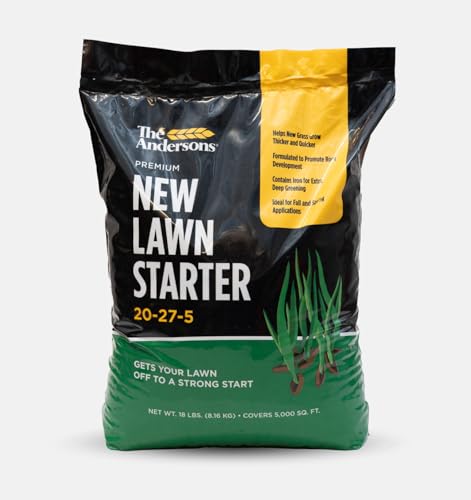
The Andersons New Lawn Starter 20-27-5
For a new-grass project with a justified starter need, compare the 18-pound 20-27-5 formula and its own label restrictions. It is not a maintenance substitute at the same product rate.
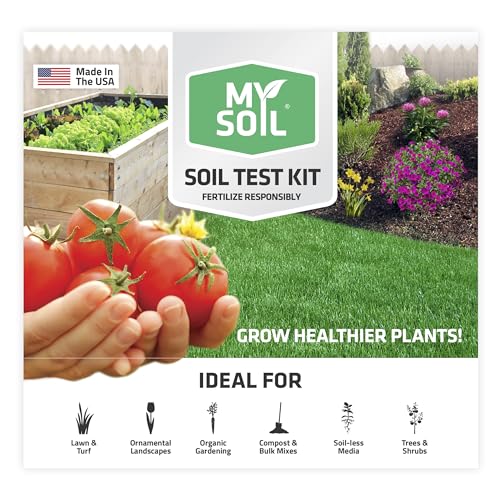
MySoil Soil Test Kit
For nutrient and pH information before deciding whether the phosphorus-containing 6-4-0 formula fits.
Sources & research notes
This review draws on published product information and relevant care or operating guidance. We have not conducted a hands-on trial of this product. General guidance explains the intended task; it does not establish this product’s performance.
Amazon: current linked product identity and photograph
Commerce identity only; not evidence of product performance.
Buy on AmazonRead 2026-09-23
- MySoil: mail-in laboratory soil test kit
Read 2026-09-23
- Penn State Extension: turfgrass fertilization, soil testing and fertilizer grades
Read 2026-09-23
- Milorganite: products and guaranteed analysis
Read 2026-09-23
- Milorganite: lawn rates, regional exceptions and timing
Read 2026-09-23
- Milorganite: safety and reported PFAS testing
Read 2026-09-23
- Milorganite: manufacturer-linked safety sheet (2015)
Read 2026-09-23
- US EPA: PFAS in sewage sludge; updated August26,2026
Read 2026-09-23
- Manufacturer: current starter product information
Read 2026-09-23
- The Andersons: matching package label
Read 2026-09-23
Check the product before ordering
Check the package size, formulation and current label directions.