
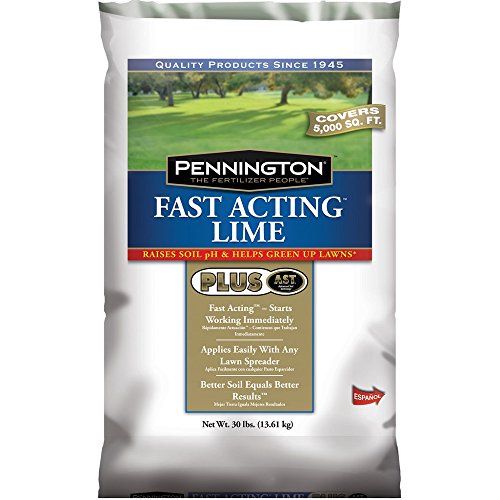
Pennington Fast Acting Lime
A lime candidate to investigate when acidic soil also needs magnesium. The available detailed artwork is dated 2012, so it supports a careful product comparison rather than an unqualified current-formula recommendation.
- A good fit for
- A buyer with a confirmed lime requirement who can verify the current bag’s composition and directions, especially when the soil report also identifies low magnesium.
- The tradeoff
- The current manufacturer page offers only brief directions. The detailed label recovered for this review is older; neither its rate chart nor its fast-action language proves the right treatment or response time for your soil.
We may earn a commission from purchases through our links. How this works
Buy on AmazonProduct profile · Updated
What is verified about this 30-pound product
The current retail identity and photograph show Pennington Fast Acting Lime in a 30-pound bag. Pennington’s current product page describes lime with Advanced Soil Technology, or AST, and directs users to the bag for application instructions. That establishes the product family, but leaves the detailed current formula and rate table to the package.
A manufacturer artwork file hosted by a distributor supplies more information. Dated October 2012, it shows a matching 30-pound format and the UPC appearing among the current identity data. It lists dolomitic limestone, 24% calcium, 6% magnesium and 90% calcium carbonate equivalent.
This is useful historical label evidence, not confirmation that every bag now sold has an unchanged analysis. Obtain a legible photograph of the actual back panel before ordering for a specific soil correction. This details page retains the age of the evidence instead of quietly treating an old PDF as a fresh label.[1][4][5]
- Low pH and low magnesium
- Penn State identifies dolomitic limestone as an appropriate type to consider when soil testing shows both conditions.[3]
- Low pH without low magnesium
- Compare the soil recommendation with a calcium-carbonate product such as Lightning Lime, which lists 0.4% magnesium.[3][6]
- Unknown cause of weak growth
- Establish whether a lime requirement exists before choosing a bag.[3]
Read the magnesium distinction
Dolomitic limestone supplies magnesium as well as calcium. Penn State recommends that type where a soil test shows both low pH and deficient magnesium. If that is the situation on the lawn, the archived Pennington formula is a relevant candidate to verify.
A low pH result alone does not establish a magnesium deficiency. Espoma Lightning Lime, for example, lists only 0.4% magnesium in its current factsheet and represents a different composition choice. Comparing the products against the soil recommendation is more useful than assuming that more ingredients must be better.
The archived Pennington label also says the product is not a fertilizer substitute. It is a liming material, not a replacement for nitrogen or other nutrients when those are needed. Conversely, a pale or thin lawn does not automatically need lime. Keep the acidity diagnosis separate from choosing a lawn fertilizer.[5][3][6]
Why nominal coverage is not the full quantity plan
The archived front shows 5,000 square feet from 30 pounds, equivalent to six pounds per 1,000 square feet. Its base lawn table uses that rate, while a separate pH chart gives larger amounts for more acidic soil. The file itself first recommends soil analysis and warns that its chart may not apply to every soil type.
Penn State’s lime-requirement approach explains the problem with shopping from pH alone. Soils have different resistance to pH change, so the amount needed is not determined simply by the difference between the measured number and a desired target. The product’s neutralizing capacity also belongs in the calculation.
Treat the front coverage as an identity and planning clue. Verify the current label, obtain the soil recommendation and reconcile the two before buying multiple bags. The old chart is not a reason to prescribe a high rate from a single home pH reading.[1][5][3]
Fast acting does not guarantee a seeding deadline
Pennington describes the product as starting to work when it contacts water. The archived artwork also makes claims about AST helping retain calcium. Those are manufacturer statements; no current comparative lawn trial was verified for this exact retail package.
Penn State distinguishes particle fineness and neutralizing capacity from the convenience of pelletized material. A soluble binder can release ground limestone particles after wetting, but that does not mean an entire soil profile has reached its target pH immediately. Soil buffering still matters.
For a planned seeding date, do not turn the product name into a promise that acidity will be corrected within a few weeks. Coordinate the soil work with suitable local guidance and use follow-up testing to assess progress. A clearly identified bag is only one part of a correction plan.[4][5][3]
Check the actual directions before loading a spreader
The archived artwork illustrates spreading followed by watering and describes spreader settings as approximate. Equipment, walking pace and terrain can change delivery. Its separate farm-and-garden note about wetting before tilling is not an instruction to till an established lawn.
The same artwork cautions that the product can be slippery when wet, can irritate eyes and should be kept out of children’s reach. It calls for washing after handling. Verify the delivered package’s current precautions rather than assuming a mineral amendment needs no handling care.
If a supplier cannot provide a readable current label, Lightning Lime has a current public factsheet that makes its composition and two lawn rates easier to examine. That transparency is a comparison advantage, not proof of better performance. If the need for lime is still unknown, soil testing is the more useful first purchase.[5][6][3]
When to choose something else
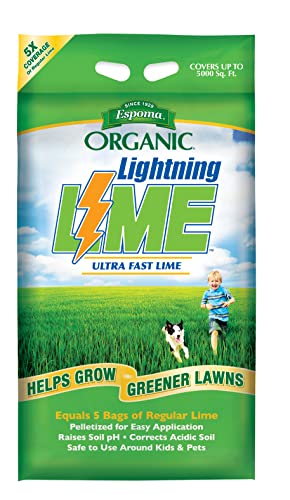
Espoma Organic Lightning Lime
For a calcium-carbonate lime with a current public factsheet and separate maintenance and raising-pH rates. Its low magnesium content makes it a different soil-composition choice.
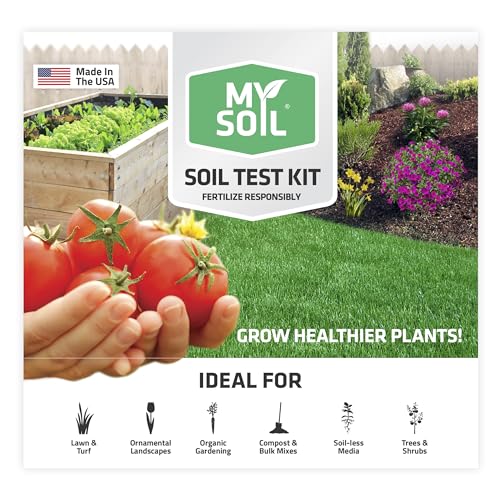
MySoil Soil Test Kit
For nutrient and pH information before selecting an amendment. Seek a lime-requirement recommendation for the actual correction.
Sources & research notes
This profile draws on published product information and relevant care or operating guidance. We have not conducted a hands-on trial of this product. General guidance explains the intended task; it does not establish this product’s performance.
Amazon: linked product identity, verified through Creators API
Commerce identity only; not evidence of product performance.
Buy on AmazonRead 2026-09-23
- MySoil: mail-in laboratory soil test kit
Read 2026-09-23
- Penn State Extension: Liming Turfgrass Areas
Read 2026-09-23
- Manufacturer: penlime product information
Read 2026-09-23
- Manufacturer: penlime factsheet or package label (2012 archived artwork)
Read 2026-09-23
- Alternative lime: manufacturer composition and rates
Read 2026-09-23
Check the product before ordering
Check the package size, formulation and current label directions.