
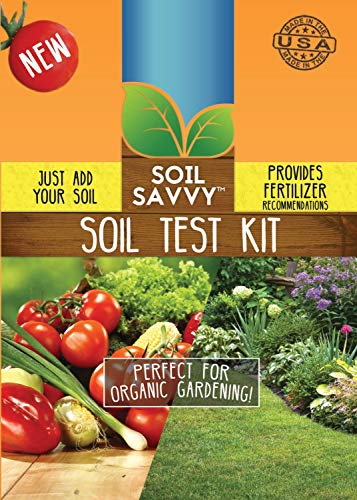
Soil Savvy Soil Test Kit
A useful option when you want a supplied collection kit and laboratory recommendations for a clearly defined lawn or garden area.
- A good fit for
- A homeowner willing to collect several subsamples, combine them and mail one representative sample for nutrient planning.
- The tradeoff
- Its nutrient report is not a diagnosis of every lawn problem. The current workflow confirms email and website access; a mailed printed report is not established.
We may earn a commission from purchases through our links. How this works
Buy on AmazonResearch-based review · Updated
The service behind the small box
The linked Soil Savvy kit is a UNIBEST mail-in analysis service. You collect soil, send the prepared sample in its prepaid envelope and receive a report after laboratory analysis. The kit supplies a sample jar, soil scoop, laboratory submission card and customer card. It is not a reusable field meter.
The current instructions say results are emailed and accessible on the website. That matters if you are comparing it with MySoil: the buying distinction should not be a promise that Soil Savvy mails a printed report. Older distributor material describes a physical copy, but the current manufacturer workflow does not establish that as a service commitment.
Treat the box as a way to submit a useful sample. The result becomes valuable when it answers a defined question about the area you are planting or maintaining, rather than when its measurement count is used as a general quality ranking.[3][1][4][6]
Fourteen nutrient forms, with a specific method
- What the kit reports
- pH and fourteen nutrient forms, including separate nitrate and ammonium measurements.[3]
- How the maker describes it
- Ion-exchange resins are used to monitor plant-available nutrients; this is the manufacturer’s method explanation.[3]
Read the method and scope
Soil Savvy lists nitrate and ammonium separately, along with phosphorus, potassium, sulfur, calcium, magnesium, sodium, iron, manganese, boron, copper, zinc and aluminum. Its fourteen measurements therefore include different forms of nitrogen, not fourteen distinct nutrient elements. The report also provides soil pH.
UNIBEST describes its ion-exchange resin system as simulating nutrient uptake by plant roots. That explains the method the company uses; it does not establish superior field results over every other laboratory method. We have not independently compared the service's accuracy or fertilizer outcomes.
MySoil advertises thirteen nutrient forms and pH, without aluminum in its listed panel. An extra measured constituent is only useful if it helps answer your question. Neither nutrient count alone nor an artificial-root description establishes that one kit will produce a better lawn. Compare the scope, interpretation and collection workflow you actually need.[3][2]
Keep unlike areas out of the same sample
Soil Savvy recommends taking three to six samples from different locations within the intended test area. It describes the effective rooting zone as the target depth, which varies with the plants. Remove plant material and other debris, combine the soil in a large plastic bag and mix thoroughly.
Define that area before collecting. A garden bed, a separately managed lawn and a localized problem patch can represent different conditions. Combining unlike areas may make the report harder to use because the final jar represents the mixture rather than each original location. Maryland's laboratory guidance similarly calls for separate samples from distinct areas.
Follow the kit's own final preparation and shipping instructions after mixing. Do not borrow MySoil's scoop-and-jar directions or a conventional lab's dry-soil mailing requirement simply because all three services analyze soil. The supplied components and laboratory protocol are part of the method you purchased.[3][4]
Preserve the information that links sample and report
Collect and combine
Take three to six subsamples within the chosen area; remove debris and mix thoroughly.[3]
Complete the cards
Send the laboratory card with the sample and retain the customer card for result access.[3]
Use the returned guidance
Read the emailed or online report against the area and plants represented by the sample.[3]
Read the submission sequence
The laboratory submission card tells the lab who you are, your email address and what you are growing. The customer card is retained for access to results. Complete those details as carefully as the sample itself; they connect the analysis to the intended use and recipient.
Use the provided sample jar and prepaid mailer according to the kit instructions. The current manufacturer page confirms those components and the email/website reporting route. It does not establish a guaranteed end-to-end turnaround in the material reviewed here, so avoid scheduling an imminent fertilizer application around an assumed delivery date.
Keep the customer card and a record of the sampled area's boundaries. When the report arrives, those records help you apply its recommendation to the correct area and make a future repeat sample comparable. They also give customer support a clearer starting point if the result or sample status needs clarification.[3][4]
Separate nutrient advice from a complete soil diagnosis
The maker says each report includes custom synthetic and organic fertilizer recommendations, including a product and application rate. That is useful when the task is nutrient management. It should not be expanded into a promise that the report diagnoses drainage, compaction, disease or every reason for poor growth.
The advertised panel does not establish that this kit includes organic matter, texture or a full contamination screen. Minnesota's regular laboratory service, for comparison, explicitly lists organic matter, estimated texture and lime requirement alongside its basic nutrient testing. If one of those is the decision you need to make, compare services first.
Maryland Extension also cautions that laboratories use different extractants, units and reporting bases. Keep repeat tests with the same service when possible and read the recommendations in their own context. A fertilizer report is a plan to interpret, not a reason to add every nutrient shown in the results.[3][5][4]
Choose the workflow you will actually complete
MySoil offers another integrated mail-in route, with thirteen nutrient forms plus pH and an online account. Soil Savvy's current email and website access means the choice is not simply paper versus digital. Review the different sampling requirements and report scope, then choose the service that fits your question.
A local or extension-associated laboratory is another useful comparison, particularly when its standard package includes an analysis you need or offers relevant interpretive help. Maryland recommends laboratory testing over basic home kits for more complete and accurate information. Home collection for a laboratory is different from performing a color reaction yourself.
Soil Savvy is a reasonable fit when you want its supplied sampling components and recommendation service. The limiting factor is often whether you submit a representative, properly identified sample in time to use the answer. We do not have evidence here for an accuracy winner, a guaranteed turnaround or a universal diagnosis.[2][3][4][5]
When to choose something else
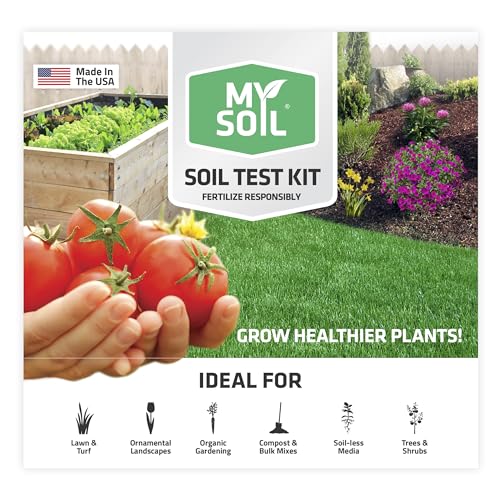
MySoil Soil Test Kit
Compare its thirteen-form nutrient panel, online account and own sampling protocol with Soil Savvy’s service.
Sources & research notes
This review draws on published product information and relevant care or operating guidance. We have not conducted a hands-on trial of this product. General guidance explains the intended task; it does not establish this product’s performance.
Amazon: linked product identity and features
Commerce identity only; not evidence of product performance.
Buy on AmazonRead 2026-09-23
- MySoil: current kit and analysis scope
Read 2026-09-23
- Soil Savvy: sampling, report access and test scope
Read 2026-09-23
- University of Maryland: choosing and using a soil-testing laboratory
Read 2026-09-23
- University of Minnesota: lawn and garden laboratory services
Read 2026-09-23
- UNIBEST: older distributor-hosted Soil Savvy overview
Read 2026-09-23
Check the product before ordering
Check the exact model, included parts and compatibility.