Best Grass Seed for New Lawns (2026)
Starting from bare dirt? These seeds establish fast, fill in thick, and give you a lawn worth bragging about within the first growing season.
Spring Timing
It's spring -- the ideal window for cool-season overseeding and new lawn establishment. Soil temps are rising and moisture is plentiful. Get seed down before the heat arrives.
Read our seeding guideBuilding a new lawn is the one time you get to do everything right from the start — soil prep, seed selection, watering, the whole process. The seeds below were chosen for their ability to establish quickly from bare soil, develop dense root systems, and produce a thick, uniform stand within the first growing season.
For new lawns, we prioritize seeds with strong germination rates, good seedling vigor, and the ability to fill in without leaving gaps for weeds. You want something that goes from seed to mowable lawn as fast as possible. These are the products our team would choose if we were starting from scratch.
Our Top Picks for New Lawns
Grass SeedEditor's PickOutsidepride
Outsidepride Midnight Kentucky Bluegrass Seed
Serious lawn enthusiasts in northern climates who want the best-looking lawn on the block and are willing to invest the time and money to achieve it.
Grass SeedEditor's PickJonathan Green
Jonathan Green Black Beauty Ultra
Lawn enthusiasts who want the darkest, most drought-tolerant cool-season lawn possible — the internet's most recommended grass seed for a reason.
Grass SeedEditor's PickBarenbrug
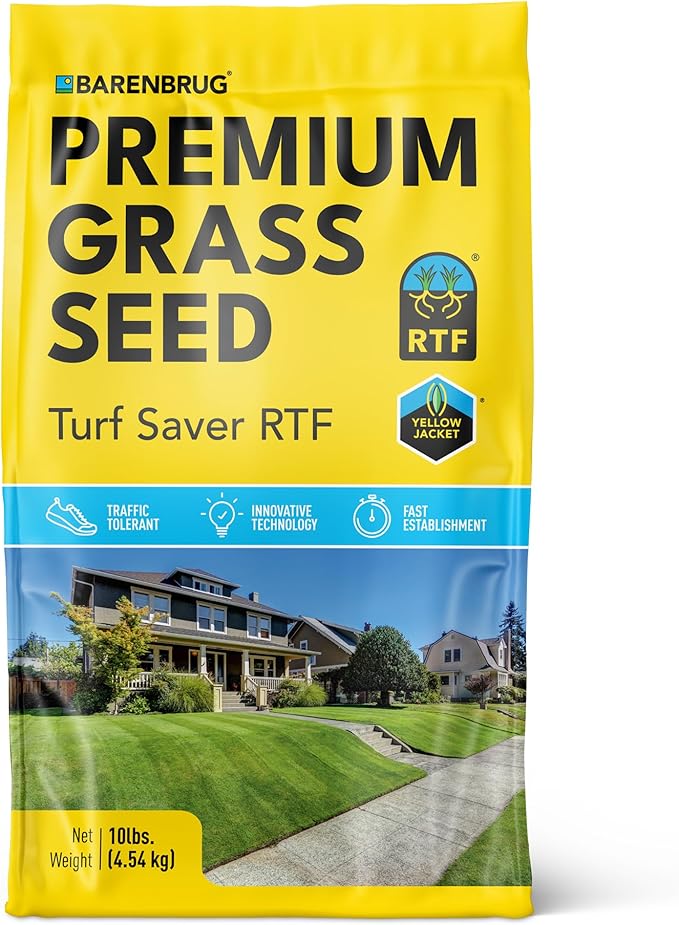
Barenbrug RTF Water Saver
Lawn enthusiasts in zones 4-7 who want the best possible tall fescue and are willing to invest in long-term lawn quality.
Grass SeedEditor's PickPennington
Pennington Smart Seed Sun & Shade
Budget-conscious homeowners in zones 3-8 with mixed sun/shade conditions who want reliable results without premium pricing.
Grass SeedTwin City Seed
Twin City Seed Blue Resilience
Lawn enthusiasts in zones 3-7 who value seed genetics transparency and want a professional-grade fescue/KBG blend.
New Lawn Establishment Tips
- Soil prep is everything: Grade the area, remove debris, and get a soil test. Amend soil pH and add starter fertilizer before seeding.
- Use the new-lawn seeding rate: This is typically double the overseeding rate. Check the bag — for tall fescue, aim for 6-8 lbs per 1,000 sq ft.
- Starter fertilizer: Apply a phosphorus-rich starter fertilizer at seeding time. It makes a measurable difference in root development. See our starter fertilizer guide.
- First mow at 3 inches: Do not mow until the grass reaches about 3.5-4 inches. Then cut to 3 inches. Never remove more than 1/3 of the blade at once.