
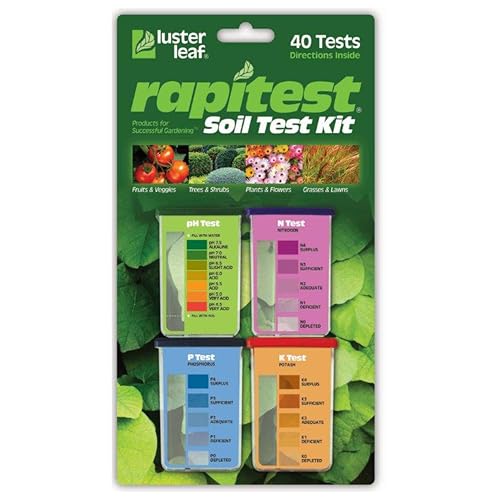
Luster Leaf Rapitest 1601 Soil Test Kit
Choose it for basic home checks, while using a suitable laboratory for a substantial renovation or amendment decision.
- A good fit for
- A gardener who wants to compare basic soil readings at home and can follow separate pH and nutrient procedures.
- The tradeoff
- Forty tests means ten of each measurement, not forty complete four-part panels. Nutrient samples may need thirty minutes to twenty-four hours to settle before testing.
We may earn a commission from purchases through our links. How this works
Buy on AmazonResearch-based review · Updated
What the forty-test package actually buys
The linked Luster Leaf model 1601 contains supplies for ten pH tests, ten nitrogen tests, ten phosphorus tests and ten potash tests. Four color comparators correspond to those measurements. If every sample receives the full four-part panel, the included capsules cover ten samples rather than forty. Repeats consume additional capsules.
This is a chemical color-comparison kit, not a probe that returns a digital reading when pushed into soil. The comparators have removable color charts and matching colored caps; the capsules are also color-coded. A supplied dropper transfers liquid into the small chambers.
That arrangement is useful for someone who wants to carry out a limited set of home measurements. It does not provide the broader range of nutrient measurements or laboratory interpretation offered by the mail-in services in this catalog. The distinction is the work and information involved, not a quality score assigned to a box.[1][6][2]
The pH and nutrient tests use different preparation
Two procedures sit inside the same package.[6]
- pH
- Soil, the green capsule and water go into the pH comparator; allow about a minute for color development.[6]
- Nutrients
- Prepare a one-part-soil/five-parts-water mixture and allow thirty minutes to twenty-four hours for settling.[6]
- Read in suitable light
- Compare colors in daylight, avoiding direct sunlight.[6]
Read the preparation differences
For pH, the instructions put soil directly into the green comparator to its soil line, add the green capsule powder, then add water to the water line. Distilled water is preferred. After shaking and roughly a minute for settling and color development, compare the liquid with the chart in daylight rather than direct sun.
Nitrogen, phosphorus and potash require a separate soil-and-water mixture. Use one part soil to five parts water, shake or stir for at least a minute and let the sediment settle. The stated settling interval ranges from thirty minutes to twenty-four hours, with fine clay taking longer than coarse sandy soil.
That preparation is why “instant results” is a poor description of the whole kit. The pH reaction is quick, but the nutrient procedure can extend into the following day. Set aside the appropriate preparation time instead of treating cloudy, freshly mixed soil as ready to transfer.[6]
Make the comparison without disturbing sediment
Transfer liquid
Fill the reference and test chambers without disturbing the sediment.[6]
Use the matching capsule
Add powder to the test chamber and keep the matching chart and cap together.[6]
Time the reaction
Read nutrient colors after ten minutes; do not extend development beyond the specified interval.[6]
Follow the nutrient-test sequence
For a nutrient test, transfer only liquid from the settled sample. Fill both the test and reference chambers to their marked level. The reference liquid compensates for discoloration from the soil; it is not a spare chamber to leave empty. Add the matching capsule powder only to the test chamber, close the cap and shake as directed.
The nutrient color develops for ten minutes, and the instructions say not to let development run longer. If blue flakes settle during the phosphorus test, shake the comparator to suspend them again before comparing. Keep the film chart with its matching comparator rather than interchanging colors.
Those small procedural details create real operating burden. A buyer who wants numerical laboratory results without judging a color match may prefer a mail-in kit. We have not performed a repeatability study on this model and do not translate its color categories into a laboratory-accuracy claim.[6][2]
Sample the area you mean to understand
Luster Leaf's instructions call for lawn samples roughly two to three inches below the surface and a different depth for some other plants. They favor individual tests from different areas over combining unlike locations. Remove stones, roots and other coarse material; finely crumble and mix each prepared sample.
A mail-in laboratory may instead request a composite of several subsamples from one defined area. Follow the protocol of the test being used. Sampling instructions are not interchangeable simply because both methods examine pH or phosphorus.
Record the location and procedure with the result. That makes a later check more useful than an unlabeled color impression. A laboratory is the stronger next step when a major fertilizer or pH-correction purchase depends on the answer. Maryland Extension explicitly describes laboratory testing as more complete and accurate than basic do-it-yourself kits; it does not endorse this brand as a substitute.[6][4][3]
Keep the reusable parts clean
The comparators and caps are reused, while capsules are consumed. The manufacturer directs washing the chambers and caps in warm soapy water after use, removing sediment and staining, rinsing and drying them, and returning each color chart to the appropriate comparator. This is part of preparing for the next reading.
Avoid handling the powders and wash your hands after testing. Keep the reagents away from food, drink and animal feed, and follow the supplied safety and storage instructions. The kit is a small chemical test system, even though it is intended for home gardeners.
The manual includes amendment and fertilizer tables, but a color result should not become a reason to apply an arbitrary bag rate. The chosen fertilizer's analysis, the lawn area and appropriate regional guidance still matter. For an important pH adjustment, obtaining laboratory advice is a more useful next step than repeatedly dosing until a color appears desirable.[6][4]
Use it for screening, choose a lab for a plan
Rapitest's advantage is that you can perform its four kinds of tests at home without mailing a sample. Its limits are equally concrete: consumable capsules, sample preparation, reaction timing and visual comparison. It does not add micronutrient measurements or a personalized online fertilizer plan.
MySoil offers a different workflow: collect and mail a sample for laboratory analysis of pH and thirteen nutrient forms, then access recommendations online. Soil Savvy similarly provides a laboratory report and fertilizer guidance, with its own fourteen-form panel. Neither alternative is an instant field test.
Choose Rapitest when the narrow measurements and hands-on procedure fit your question. Choose a suitable laboratory before an expensive renovation, when results are difficult to interpret or when you need a measurement outside this kit's scope. Its usefulness does not require a claim that extension offices universally recommend this particular product.[6][2][3][4]
When to choose something else
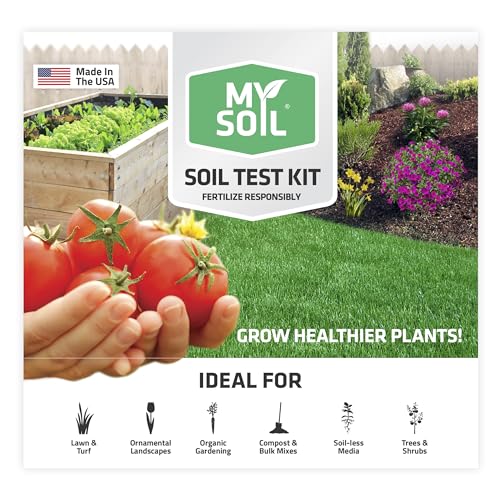
MySoil Soil Test Kit
For laboratory nutrient and pH analysis with an online recommendation workflow, rather than home color matching.

Soil Savvy Soil Test Kit
Another mail-in laboratory route with fourteen nutrient forms and email/online results.
Sources & research notes
This review draws on published product information and relevant care or operating guidance. We have not conducted a hands-on trial of this product. General guidance explains the intended task; it does not establish this product’s performance.
Amazon: linked product identity and features
Commerce identity only; not evidence of product performance.
Buy on AmazonRead 2026-09-23
- MySoil: current kit and analysis scope
Read 2026-09-23
- Soil Savvy: sampling, report access and test scope
Read 2026-09-23
- University of Maryland: choosing and using a soil-testing laboratory
Read 2026-09-23
- University of Minnesota: lawn and garden laboratory services
Read 2026-09-23
- Luster Leaf: model 1601 manufacturer instructions
Read 2026-09-23
Check the product before ordering
Check the exact model, included parts and compatibility.