
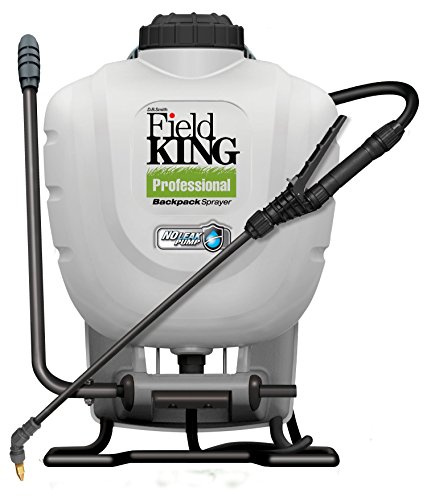
Field King 190328 Backpack Sprayer (4 Gallon)
Consider it when a larger compatible application justifies carrying a backpack and doing the calibration, pumping and cleanup yourself.
- A good fit for
- A homeowner with a defined area-based treatment who can carry the loaded tank and maintain consistent spraying technique.
- The tradeoff
- The advertised 150 PSI is an upper pump capability, not a universal application setting. The internal pump does not remove inspection, maintenance or exposure precautions.
We may earn a commission from purchases through our links. How this works
Buy on AmazonResearch-based review · Updated
Understand the internal-pump design
Field King 190328 is a four-gallon manual backpack with an internal piston pump, a twenty-one-inch poly wand, a lockable shutoff and an inline filter. The current manufacturer page also lists a reinforced fifty-inch hose. The internal pump is the feature behind the product's No Leak name: the mechanism sits inside the tank rather than hanging outside it.
That design is relevant to buying, but the name is not a guarantee that no component can leak or that chemicals can never reach the wearer. The manual still requires inspecting hoses and connections and using protective equipment. We have not measured long-term leakage or comfort against competing backpacks. The case for this model is its documented layout and serviceability, not an invented field trial.[2][6][5]
Choose a nozzle by the job, not its color alone
Read the nozzle-version distinction
The current listing and manufacturer page describe six supplied nozzle options: an adjustable brass nozzle, several fan patterns, a jet stream and a foaming nozzle. They also state compatibility with TeeJet nozzles. The older manual linked by the manufacturer illustrates a different selection and labels red as high volume, while the current six-nozzle list calls red low volume.
Use the instructions and identification for the tips actually supplied with your unit. Do not transfer a color-based flow assumption from the older diagram without checking it. Nozzle choice affects the pattern and output you must calibrate. The best tip is the one compatible with the intended application and label, not automatically the narrowest stream or the highest advertised pressure.[2][6][5][3]
Treat capacity and pressure as separate specifications
Four gallons is a reservoir size. It does not establish that a typical lawn takes one or two fills, because solution volume per area changes with the nozzle, pressure and application technique. The current listing advertises a pump capability up to 150 PSI. That figure is not a treatment recommendation or a promise of even coverage at every pressure.
Penn State's calibration method measures output with water while maintaining the same speed and pressure used for the real application. A nozzle change or a different pace changes the relationship between tank volume and treated area. Plan the amount to mix from the product label and that measured output. The backpack's capacity is useful only after those quantities are understood.[2][3][5]
Set up and calibrate before adding treatment
Assemble and inspect
Fit the supplied parts and inspect hose, filters and straps before a water-only test.[5]
Calibrate with water
Measure output over a known area using the intended nozzle, pressure and walking technique.[3]
Mix for the job
Follow the treatment label and use the measured output to plan the required solution.[5][3]
Read the preparation sequence
The manufacturer-linked manual describes mounting the pump handle on either side and fitting the wand, shutoff and selected nozzle. Some illustrated features vary by model, so check the supplied parts rather than assuming every drawing describes your package. Inspect the hose, seals, filter basket and harness before use, and conduct the initial test with cool, clean water.
A measured water trial lets you practice steady pumping and a consistent walking pattern without treatment in the tank. Keep the same nozzle and technique for calibration and application. The manual requires ongoing pumping as needed to maintain pressure; this is not a battery sprayer that controls the work for you. A full reservoir also means carrying more liquid, so choose a fill quantity that you can manage while maintaining control.[5][3][2]
Keep chemical compatibility narrower than the advertising
The retail listing describes use with liquids and wettable powders. The manual is more specific about exclusions: no flammable liquids, caustics, acids or hot water. It calls for goggles, gloves and protective clothing, calm-air spraying and following the label on the material being applied. Broad phrases about doing all applications should not override those limits.
Do not assume a pre-seeding herbicide or a post-germination feed is suitable just because the backpack can spray it. The treatment label determines the target, rate and timing. The internal pump does not establish compatibility with every mixture, remove drift concerns or eliminate the need to prevent cross-contamination between different treatments.[2][5]
Allow time for maintenance and drying
The manual requires cleaning the tank and flushing the pump system, hose, shutoff and nozzle after use. It also identifies the filter basket, gasket, shutoff filter and straps as inspection or maintenance points. Before servicing, release pressure as instructed. Store the sprayer dry, without liquid or pressure left in it, and keep the equipment and chemicals out of children's reach.
The older linked manual includes a generic instruction to empty rinse contents onto gravel or bare soil. Do not treat that as blanket permission for pesticide waste: EPA says disposal must follow the pesticide label and applicable local guidance, and pesticides must not enter household or street drains. A larger tank is worthwhile only when its spraying capacity fits the job and you can complete this cleanup responsibly.[5][4]
When to choose something else
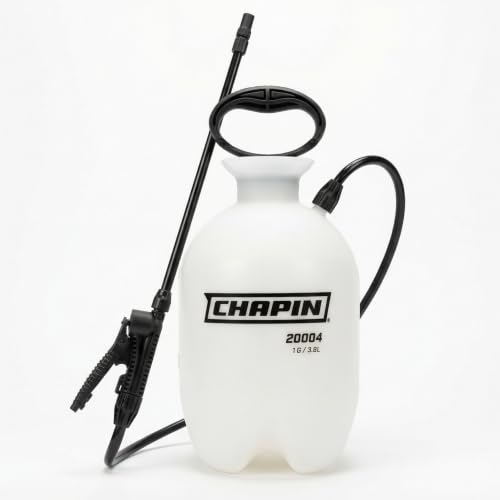
Chapin 20004 1-Gallon Pump Sprayer
For a smaller compatible task when carrying and refilling a one-gallon hand sprayer is preferable to wearing a backpack.
Sources & research notes
This review draws on published product information and relevant care or operating guidance. We have not conducted a hands-on trial of this product. General guidance explains the intended task; it does not establish this product’s performance.
Amazon: current Chapin 20004 1-Gallon Pump Sprayer identity
Commerce identity only; not evidence of product performance.
Buy on AmazonRead 2026-09-23
Amazon: current Field King 190328 Backpack Sprayer (4 Gallon) identity
Commerce identity only; not evidence of product performance.
Buy on AmazonRead 2026-09-23
- Penn State: backpack sprayer calibration
Read 2026-09-23
- EPA: safe pesticide disposal, June2026
Read 2026-09-23
- Field King: current-linked manual181702 RevG, safety and operation
Read 2026-09-23
- Fountainhead:190328 current product specifications
Read 2026-09-23
Check the product before ordering
Check the exact model, included parts and compatibility.