

Outsidepride Combat Extreme Northern Zone
A fescue-and-bluegrass option when you want both growth habits and can give the slower bluegrass time to establish.
- A good fit for
- Cool-season lawns where tall fescue and Kentucky bluegrass both fit the local conditions.
- The tradeoff
- The blend needs care for both grasses, and the manufacturer gives conflicting planting details.
We may earn a commission from purchases through our links. How this works
Buy on AmazonResearch-based review · Updated
What 90-to-10 actually means
- By weight
- 90% turf-type fescue and 10% Kentucky bluegrass is the manufacturer’s stated formula.[1]
- By seed count
- Outsidepride says the blend is nearly 50/50 because bluegrass seed is much smaller.[1]
Read the composition details
Outsidepride describes Combat Extreme Northern Zone as 90% turf-type fescue and 10% Kentucky bluegrass by weight, with Midnight named for the bluegrass component. It also says the much smaller bluegrass seeds make the blend nearly half-and-half by seed count. Both statements can be true: one describes mass, while the other describes the number of seeds.
That difference matters when deciding whether this is essentially a tall-fescue-only lawn. Bluegrass is an intentional part of the mixture, not an incidental trace. Its smaller seed size gives it a larger share of the seed count than the weight percentage suggests. Neither number predicts the exact proportion of mature plants; germination and growing conditions intervene between the bag and the finished lawn.
Outsidepride currently sells this Northern version as pure, raw seed; the OptiGrowth coating appears on its separately named Transition and Southern versions, not this one. Read the delivered analysis tag for named varieties, purity, germination and inert matter. The public formula does not supply a fixed list of tall fescue cultivars. It also does not authorize substituting the separately named Transition or Southern versions. Compare the exact Northern product when you compare rates and bags.[1][6]
Two grasses, two contributions
- Tall fescue contribution
- Useful drought and wear tolerance, provided the soil allows roots to develop.[4]
- Bluegrass contribution
- Underground rhizomes help the species form sod and recover after wear.[4]
Read how the species work together
The attraction of this mixture is the combination of tall fescue's rooting and Kentucky bluegrass's spreading habit. Colorado State describes turf-type tall fescue as deeply rooted, drought-resistant and tolerant of wear. It describes Kentucky bluegrass as a sod-forming grass that produces underground rhizomes and can recover from wear. Those are useful species traits, not a measured repair speed for a bag of Combat Extreme.
There are limits on both sides. Tall fescue's rooting advantage depends on soil that lets roots grow deeply; CSU warns that restricted rooting can leave it using as much water as bluegrass, or more. Bluegrass can require more nitrogen and other maintenance, and its spreading habit can take it into planting beds. A mixture combines management obligations as well as appealing traits.
Consider Combat Extreme if you deliberately want both species. If you are trying to keep an existing lawn entirely tall fescue, a tall-fescue blend is the more direct comparison. If you want a single named bluegrass, Midnight answers that different question. A mixture can be useful without being the best answer to every bare spot, shade problem or summer watering constraint.[4][1][2][7]
Choose Northern by site, not just a zone number
Outsidepride's Northern product prose emphasizes USDA Zones 4–5, but its planting guide lists Zones 3–8. The page also says the named regional zones are optimal guidelines rather than fixed rules. That is a reason to keep the product identity clear and seek local guidance, not to treat either range as an independently verified map of suitability.
The planting guide specifies full sun to partial shade. That should not become a promise for a densely shaded lawn. CSU rates bluegrass shade tolerance as poor to fair and describes tall fescue as a reasonable choice for shady areas, while Minnesota guidance cautions that conditions still determine which grass to select. The darker end of a yard may need a different solution from its open center.
Also think beyond winter minimum temperatures. Minnesota Extension warns against tall fescue where winter ice accumulates. CSU highlights soil depth and summer water demand. Before buying, identify the actual reason the lawn is thinning: shade, compaction, drought, mowing or pests can require changes that another bag will not provide. The Northern name is a starting point for comparison, not a substitute for that diagnosis.[1][4][3][5]
Separate new-lawn and overseeding quantities
- 2,000 sq ft of new turf
- 12–16 lb, calculated from 6–8 lb per 1,000 sq ft.[1]
- 2,000 sq ft to overseed
- 6–8 lb, calculated from 3–4 lb per 1,000 sq ft.[1]
- 5 lb on new turf
- About 625–833 sq ft at the stated new-lawn rate.[1]
- 5 lb for overseeding
- About 1,250–1,667 sq ft at the stated overseeding rate.[1]
Read the quantity calculation and bag checks
The product's seeding-rate section gives 6–8 pounds per 1,000 square feet for new turf and 3–4 pounds per 1,000 square feet for overseeding. A 2,000-square-foot new lawn therefore takes 12–16 pounds at those published rates. The same measured area under the overseeding range takes 6–8 pounds. Keep the project type attached to the number when comparing bags.
A 5-pound bag represents roughly 625–833 square feet of new turf, or 1,250–1,667 square feet of overseeding, using those rates. These are planning ranges, not successful-lawn guarantees. The amount you need is the area being treated multiplied by the relevant rate, not necessarily the total size of the property.
Use the square-foot directions consistently. The manufacturer also prints rounded acre figures, so converting back and forth can produce different totals. Outsidepride sells this Northern version as raw seed, but the delivered tag is still what states purity and inert matter. UMass explains how purity and germination describe separate aspects of usable seed; neither a brand formula nor gross package weight supplies those current-lot values. Follow the directions on the matching delivered bag if they differ.[1][6]
Give the slower component time
Resolve the directions
Check the Northern bag’s depth instructions; the current web page is inconsistent.[1]
Prepare contact
Diagnose thinning, prepare the surface and give seed contact with soil.[5]
Wait for both grasses
Keep the surface slightly damp until the slowest seed has germinated, not just until the first green appears.[5]
Read the timing and planting-depth limits
The manufacturer's planting panel lists germination in 7–14 days, while nearby prose gives 7–21 days. Minnesota's renovation guidance explains why a mixed stand deserves patience: tall fescue may germinate in about a week, whereas Kentucky bluegrass takes two to three weeks. The first visible seedlings do not show that every component has finished germinating.
Outsidepride calls for soil temperatures of at least 55°F and a minimum six weeks before first frost for fall planting. Choose the local planting window within that guidance. Minnesota prefers late-summer to early-fall renovation in its region; it is not a calendar for every state. Starting late can leave less room for the slower species and subsequent development.
There is a second product-page conflict to resolve before sowing. The planting guide says surface to one-eighth inch deep, while prose says one-quarter to one-half inch. We would not silently choose between those as if the source were consistent. Check the current bag or ask Outsidepride to clarify the matching product directions. Throughout establishment, the extension guidance is clear about good seed-to-soil contact and a slightly damp surface through the slowest germination period. Do not stop that care when the quickest seedlings appear.[1][5]
Maintain the lawn you establish
Outsidepride's planting guide lists a 2.5–3-inch mowing height and 21–30 days to first mowing. Treat the day range as an expectation, not a command to mow undersized seedlings. Its separate prose says to wait until grass reaches 3–4 inches. The useful decision is based on actual growth, the matching package and regional advice, rather than the earliest date on the page.
For water, distinguish a mature lawn's drought tolerance from a seedbed's moisture needs. Deep-rooting tall fescue cannot use that advantage before the young roots develop, and bluegrass in a mixture still needs establishment care. Nor does the blend support a universal weekly irrigation allowance: weather, soil depth and the appearance you want all matter. CSU's species comparisons are useful precisely because they describe those tradeoffs.
Keep fertility tied to a plan as well. Minnesota's renovation guidance uses soil testing to determine additional phosphorus and potassium rather than assuming every lawn needs them. If the lawn thins again, revisit the cause before buying another bag. The blend offers two useful growth habits, but ongoing shade, compaction or poor care can overwhelm either one.[1][5][4]
When to choose something else
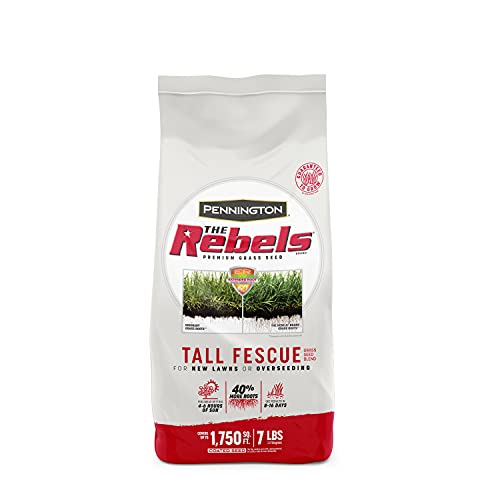
Pennington The Rebels Tall Fescue Mix
Compare The Rebels if you want a tall-fescue blend without intentionally adding Kentucky bluegrass. Pennington specifies 4–6 hours of sun.

Outsidepride Midnight Kentucky Bluegrass
Choose this comparison if you want named Midnight Kentucky bluegrass by itself. Allow for its slower start and regular lawn care.
Sources & research notes
This review draws on published product information and grass-selection guidance. We have not conducted a hands-on trial of this product. Species guidance helps explain the choice; it is not a trial of the bag you buy.
- Outsidepride: Combat Extreme Northern Zone product and planting guide
Read 2026-10-07
- Outsidepride: Midnight Kentucky Bluegrass planting guide
Read 2026-09-23
- University of Minnesota Extension: buying turfgrass seed
Read 2026-09-23
- Colorado State University Extension: turfgrass species selection
Read 2026-09-23
- University of Minnesota Extension: renovating a lawn
Read 2026-09-23
- UMass Extension: understanding the turfgrass seed label
Read 2026-09-23
- Pennington: The Rebels Tall Fescue Grass Seed Blend
Read 2026-09-23
Ready to compare the bag?
Check the package size and seed tag before ordering.