
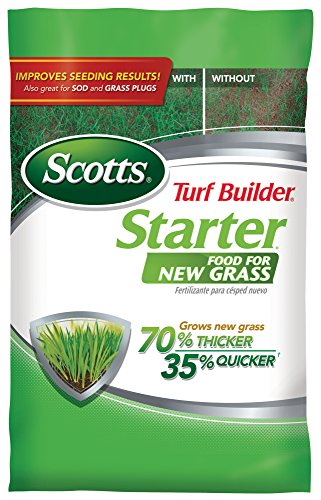
Scotts Turf Builder Starter Food for New Grass
A clearly identified starter option for seed, sod, sprigs or plugs when that nutrient mix is appropriate. Its coverage and application timing are well documented; the thicker-and-quicker advertising compares it with unfed grass, not other starter fertilizers.
- A good fit for
- A new-grass or reseeding project with a justified nutrient need, a measured area and a plan to keep the seedbed moist.
- The tradeoff
- The 24-25-4 grade contains substantial phosphate. New seed does not make every soil deficient, and the product is not an automatic add-on to seed blends that already contain fertilizer.
We may earn a commission from purchases through our links. How this works
Buy on AmazonResearch-based review · Updated
Identify Starter Food, not a weed-and-feed formula
This page covers Scotts Turf Builder Starter Food for New Grass, model 21605, in the 15-pound bag. The current manufacturer page and linked label identify a 24-25-4 fertilizer with 5,000-square-foot coverage. Other Scotts products with similar green packaging can have different purposes and ingredients.
The maker lists planting seed, reseeding an existing lawn, and installing sod, sprigs or plugs as intended uses. It allows application immediately before or after planting. That makes it a possible part of an establishment plan, but the product name alone does not establish what a particular soil needs.
Check the complete name and analysis before purchase, especially beside a weed-control product or a seed-and-fertilizer combination. This Starter Food profile should not be used to infer that another bag is compatible with new seedlings. Keep the seed identity, fertilizer identity and any herbicide directions distinct.[1][4][5]
Translate coverage into product and nutrient quantities
- 1,000 sq ft at nominal rate
- Calculated from 15 lb over 5,000 sq ft: 3 lb of product, containing 0.72 lb nitrogen.[4][3]
- 2,500 sq ft at nominal rate
- Calculated product quantity is 7.5 lb, half of the 15 lb bag.[4]
Read the nutrient calculation and regional caveat
Fifteen pounds spread over 5,000 square feet equals three pounds of product per 1,000 square feet. At that nominal rate, the 24-25-4 analysis supplies 0.72 pound of nitrogen, 0.75 pound of phosphate expressed as P2O5, and 0.12 pound of potash expressed as K2O per 1,000 square feet. These are calculated label quantities, not three pounds of nutrients.
For 2,500 square feet, the same nominal calculation uses 7.5 pounds of product; a 5,000-square-foot area uses the full 15-pound bag. Regional directions on the current package can affect the applicable amount, so use these figures to understand the headline coverage rather than override the label.
Measure the area to be treated before loading the spreader. The fertilizer’s coverage is its own application calculation; it does not have to match the coverage printed on a grass-seed bag. Plan each quantity separately and reconcile any nutrients already included in the selected seed product.[4][5][3]
Let soil need decide whether the phosphate fits
The middle number in 24-25-4 is available phosphate, not a universal measure of starter quality. Penn State’s turf-fertilization guidance uses soil testing to assess phosphorus and potassium needs. A fertilizer can have a clear intended use without being necessary on every new lawn.
That matters for reseeding an existing lawn, where the soil may already have adequate phosphorus, and for products that combine grass seed with fertilizer. Account for the nutrient product already being used before adding another bag. Buying a starter by habit can duplicate a nutrient contribution without establishing a need.
Check applicable local fertilizer restrictions and the actual regional package directions as part of the project. This review does not provide a nationwide legal rate. A suitable soil recommendation, the seed product’s contents and the current label together are more useful than calling one ratio perfectly balanced for every lawn.[4][3][5]
Keep fertilizer timing separate from seed moisture
Scotts allows this Starter Food immediately before or after planting. The current page says watering-in is not required for the fertilizer itself, while emphasizing that moisture is critical for germination. It directs the user to keep the soil surface moist until seedlings reach at least two inches.
That is not a reason to leave newly seeded ground dry. The distinction is between activating a fertilizer and managing the seedbed. Follow the selected grass seed’s own sowing depth, timing and watering directions, adapting irrigation to keep the intended surface condition rather than copying a fixed clock schedule blindly.
The manufacturer page recommends a drop or rotary spreader, appropriate settings and cleanup of stray particles. Avoid water, storm drains and drainage ditches, and do not apply when heavy rain is expected. Sweep or blow misplaced granules back onto the lawn and return unused product to its original container.[4][5]
Read the growth claim as a comparison with unfed grass
The front advertises grass growing seventy percent thicker and thirty-five percent quicker. Its footnote says those are averages compared with unfed lawns. The package also identifies the grass pictures as illustrations of results. This is manufacturer marketing, not a head-to-head result against another starter.
Those percentages do not mean every lawn will gain that amount of density, nor do they establish an exact date when a new lawn will tolerate normal use. Species, seedbed conditions and watering remain part of the establishment problem. Fertilizer is one input, not the entire project.
For a practical decision, the documented product identity, nutrient analysis, compatible planting uses and appropriate quantity are stronger reasons to consider this bag. Keep any follow-up feeding within the nutrient plan instead of treating a promotional growth claim as evidence that another application is needed.[4][5][3]
Compare the actual starter formulas
The Andersons New Lawn Starter is a relevant alternative, but its current verified 18-pound formula is 20-27-5. At its nominal 3.6-pound rate per 1,000 square feet, it also covers 5,000 square feet and supplies 0.72 pound of nitrogen. The bags therefore differ in product weight and phosphate contribution even when their headline coverage matches.
The Andersons label has its own phosphorus-use notice and regional nitrogen restriction language. Similar coverage does not make the directions interchangeable. Choose a formula against the soil need and current label, then calculate the product amount for that specific bag.
If those nutrient needs are unknown, a laboratory soil test may be more useful than choosing between two starter brands immediately. MySoil provides nutrient and pH information with recommendations. Use the result as part of planning, alongside the grass and establishment conditions; the test does not make the watering and seedbed work optional.[6][7][4][3][2]
When to choose something else
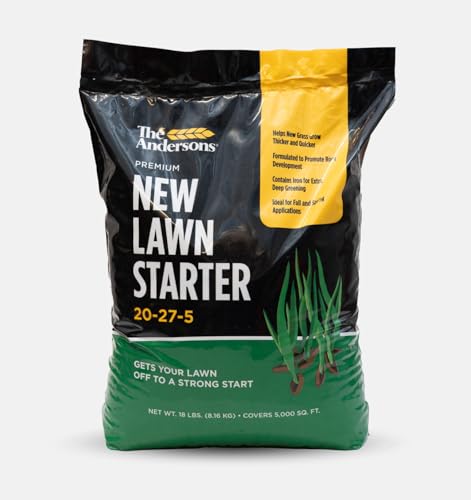
The Andersons New Lawn Starter 20-27-5
Compare the verified 18-pound 20-27-5 starter with its own phosphorus and regional rate notices; equal headline coverage does not mean identical nutrient amounts or directions.
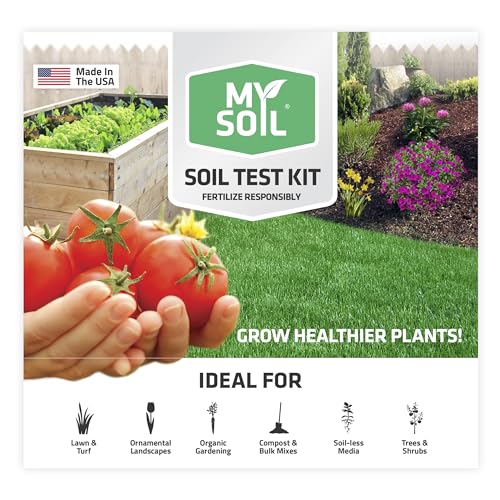
MySoil Soil Test Kit
For nutrient and pH information before deciding whether a phosphorus-rich starter fits the soil.
Sources & research notes
This review draws on published product information and relevant care or operating guidance. We have not conducted a hands-on trial of this product. General guidance explains the intended task; it does not establish this product’s performance.
Amazon: current linked product identity and photograph
Commerce identity only; not evidence of product performance.
Buy on AmazonRead 2026-09-23
- MySoil: mail-in laboratory soil test kit
Read 2026-09-23
- Penn State Extension: turfgrass fertilization, soil testing and fertilizer grades
Read 2026-09-23
- Scotts: current21605 Starter Food product page
Read 2026-09-23
- Scotts: 15-pound Starter Food package artwork, 2015
Read 2026-09-23
- Manufacturer: current starter product information
Read 2026-09-23
- The Andersons: matching package label
Read 2026-09-23
Check the product before ordering
Check the package size, formulation and current label directions.