
Outsidepride Yukon Bermudagrass
Compare Yukon when you want an identifiable seeded bermudagrass and winter hardiness matters within a locally suitable climate.
- A good fit for
- Sunny bermudagrass sites where seeded establishment and cultivar identity matter.
- The tradeoff
- Regular mowing and fertility, poor shade tolerance and no guarantee against winter injury.
We may earn a commission from purchases through our links. How this works
Buy on AmazonResearch-based review · Updated
A seeded cultivar, not a replacement for every hybrid lawn
Yukon is identifiable beyond a generic bermudagrass label. Oklahoma State lists it as the seeded cultivar OKS 91-11, released by OSU in 1999. Outsidepride describes a synthetic variety developed by intercrossing five parental plants. For a buyer choosing seed, that named identity is more useful than a broad promise of premium turf.
The word hybrid can cause confusion in bermudagrass shopping. Texas A&M distinguishes seeded common-bermudagrass cultivars from interspecific hybrids that are generally sterile and established with sod or sprigs. Yukon appears in its seeded Cynodon dactylon list. Do not assume that seed advertised with hybrid language will reproduce an existing Tifway or another vegetatively propagated lawn.
That distinction matters most for repairs. Identify the grass you already have before sowing a different cultivar into a visible patch. If maintaining a uniform sod cultivar is the goal, obtaining matching planting material is a different purchase from buying Yukon seed. If you are starting or deliberately renovating a sunny lawn, the named seeded route can be a sensible choice without pretending it is identical to every bermudagrass sold as sod.[5][1][2]
Read the cold-hardiness evidence in context
- Winter hardiness
- Yukon is rated very good.[5]
- Spring green-up
- The guide rates Yukon early.[5]
- Traffic and recovery
- Traffic tolerance is fair; recovery rate is good.[5]
- Fall color
- Fall-color retention is rated fair.[5]
Read the evidence and its regional limits
Outsidepride emphasizes cold tolerance and promotes Yukon for transition-zone use. Independent context supports taking winter performance seriously: Oklahoma State's athletic-field comparison rates Yukon very good for winter hardiness and early for spring green-up. Its table draws on published NTEP information and additional OSU research, giving the buyer more than an unnamed marketing claim.
The same table is more measured about other traits. It rates Yukon's traffic tolerance fair and recovery good, with fair fall-color retention. Those are comparisons within the guide's Oklahoma athletic-field context, not a national home-lawn guarantee or a prediction of the exact color of your yard. They also show why general bermudagrass durability should not become a claim that Yukon leads every modern cultivar under heavy use.
We do not turn this evidence into a promise of zero winter damage, a fixed extension of bermudagrass territory or a percentage reduction in irrigation. Local climate, shade and management still matter. Choose Yukon because a named seeded cultivar with relevant winter-hardiness information suits the project, then verify that bermudagrass itself is a sensible local choice.[1][5][2]
Full sun and the mower are part of the purchase
Yukon remains a warm-season bermudagrass. Outsidepride specifies full sun and lists zones 6–10, while Texas A&M identifies shade tolerance as a weakness of bermudagrass generally. A zone number is only an initial climate screen; it does not describe shade cast by buildings, trees or the local length of the growing season.
Mowing expectations also deserve a decision before seeding. Outsidepride's panel gives a half-inch to one-inch mowing range. Texas A&M's broader guidance places home lawns at one to two inches with a rotary mower and golf or athletic turf around three-quarters to one inch with a reel mower. Those are different maintenance settings, so the product's low-cut marketing should not be read as a promise that an ordinary lawn automatically becomes a putting green.
Texas A&M also lists frequent mowing and moderate to high fertility as species weaknesses. Bermuda's lateral growth through stolons and rhizomes contributes to recovery, but it is an actively managed turf choice. If the objective is the least mowing and feeding possible, compare the maintenance pattern of another locally suitable species before choosing on seed price or winter-hardiness language alone.[1][2]
Plan quantities for coated seed
- 5 lb bag
- About 1,667–2,500 sq ft of new turf.[1]
- 2,000 sq ft project
- 4–6 lb; one 5 lb bag falls short at the upper rate.[1]
- Existing lawn
- No separate overseeding rate is stated on the cited product page.[1]
Read the quantity and coating details
Outsidepride's establishment instructions specify two to three pounds of coated Yukon seed per 1,000 square feet for new turf. A five-pound bag therefore represents about 1,667–2,500 square feet. A measured 2,000-square-foot project requires four to six pounds at that range; the five-pound bag does not cover the upper application rate for that whole area.
The coating is part of the product weight. The cited page describes a coated product but does not supply the current lot's coating percentage, purity or germination analysis. Check the delivered label for those details, and do not convert these bag pounds into a pure-live-seed amount without the necessary analysis. Nor should a raw-seed rate from another supplier be transferred automatically to this coated bag.
The manufacturer clearly labels the new-turf rate, but the cited page does not give a separate overseeding rate. We therefore do not invent a lighter rate for repairs or existing turf. Establish the job first, measure the actual area and use the matching bag directions. A range is useful planning information, not permission to stretch a bag until the spreader is empty.[1][4]
Separate emergence, coverage and limited use
14–21 days
Seedling emergence estimate in the establishment section.[1]
30–60 days
Manufacturer’s full-coverage estimate.[1]
60–90 days
Manufacturer’s first limited-use estimate.[1]
Read the timeline and conflicting planting details
Outsidepride's establishment section gives three milestones: seedling emergence at 14–21 days, full coverage at 30–60 days and first limited use at 60–90 days. These are supplier estimates under suitable conditions, not a schedule a newly seeded lawn must meet. Keeping the stages separate is more useful than calling the lawn established as soon as green shoots appear.
The same page contains discrepancies. Its planting panel gives a wider five-to-28-day germination range and surface-to-one-eighth-inch depth, while the promotional prose says one-eighth to one-quarter inch. Follow the supplied bag's planting directions and clarify the depth with the supplier if needed. The page calls for soil at least 65°F and a window leaving roughly six weeks before frost; local guidance may require a more conservative schedule.
Prepare a firm, suitable seedbed and check the seeding restrictions on any weed-control product used beforehand. Maintain moisture through germination, then adjust watering as seedlings establish and according to weather and soil. A warm-season seed purchase does not eliminate the need for early water access. Protect the area from use while the developing stand gains density and strength.[1][3]
Choose the long-term maintenance pattern
After establishment, use soil testing and locally appropriate bermudagrass guidance for fertility and irrigation. Clemson's maintenance calendar ties timing to weather and growth, rather than treating calendar dates as universal. Drought tolerance should be part of a water-management plan, not a reason to disregard seedlings or assume the lawn will maintain the same appearance under every condition.
The cultivar decision does not end the species decision. Bermuda's spreading habit, sun requirement and regular mowing are characteristics you will continue to manage. Yukon is a stronger shopping proposition when you deliberately want those characteristics and have selected a seeded cultivar for a suitable site. It is less persuasive as an impulse patch for shade or as a shortcut to an entirely different lawn style.
For a sunny site where lower ongoing inputs matter more than concentrated traffic, Sharp's Improved II buffalograss is a useful comparison where locally adapted. Sharp supplies a named turf-type selection, while CSU stresses buffalograss's shorter green season and its own need for establishment water. That alternative changes the appearance and use expectations as well as the maintenance workload; it is not simply another bag of interchangeable warm-season seed.[3][2][6][7]
When to choose something else
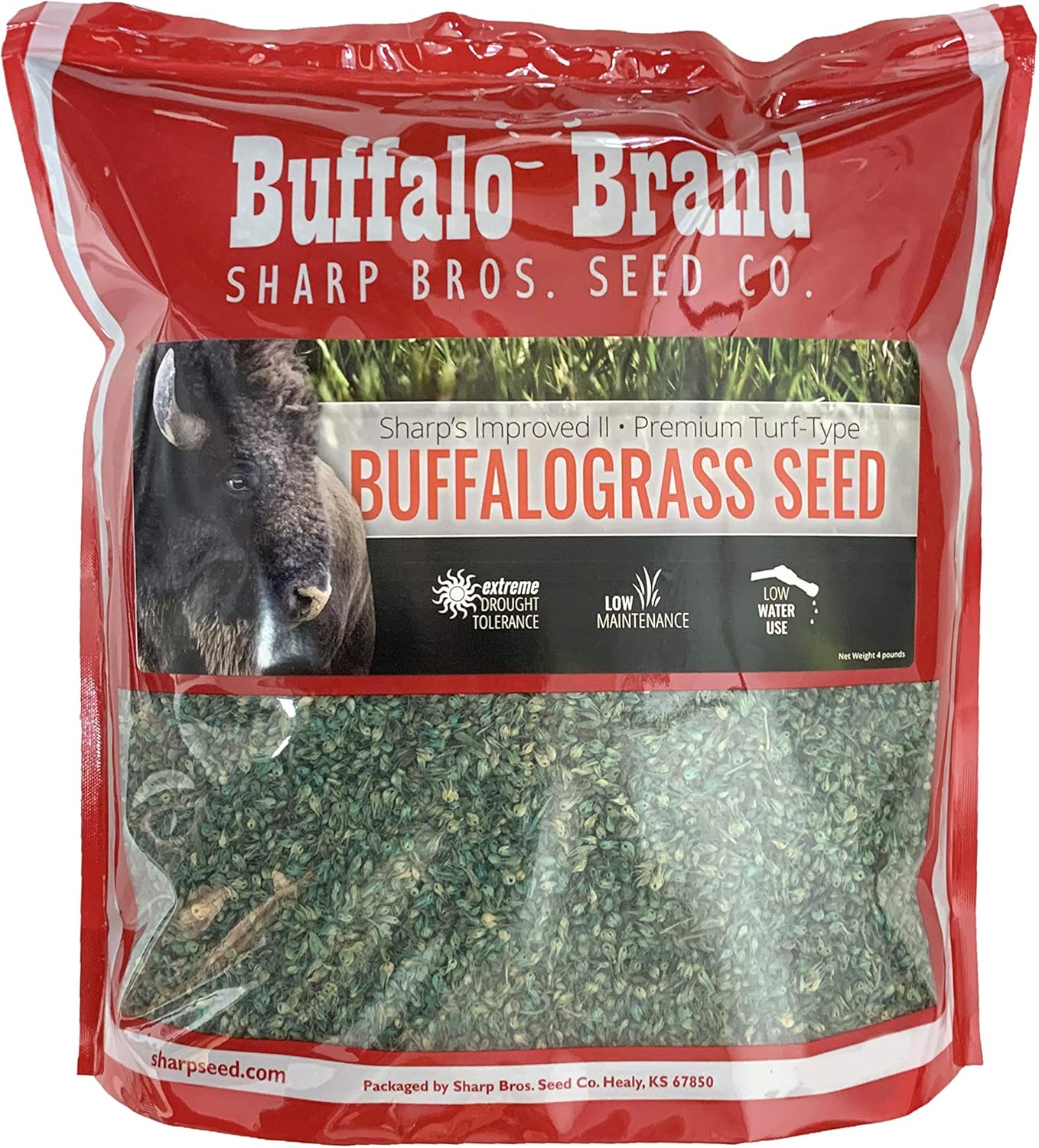
Sharp's Improved II Buffalo Grass
Compare Sharp’s Improved II where a lower-input buffalograss lawn fits the climate and use. Accept its shorter green season, establishment watering and limits under concentrated traffic.
Sources & research notes
This review draws on published product information and grass-selection guidance. We have not conducted a hands-on trial of this product. Species guidance helps explain the choice; it is not a trial of the bag you buy.
- Outsidepride: Yukon Bermuda product and planting guide
Read 2026-09-23
- Texas A&M AggieTurf: Bermudagrass
Read 2026-09-23
- Clemson Extension: Bermudagrass Yearly Maintenance Program
Read 2026-09-23
- UMass Extension: understanding the turfgrass seed label
Read 2026-09-23
- Oklahoma State Extension: bermudagrass cultivar comparison for Oklahoma athletic fields
Read 2026-09-23
- Sharp Seed: Sharp’s Improved II Turf-Type Buffalograss
Read 2026-09-23
- Colorado State Extension: Buffalograss Lawns
Read 2026-09-23
Ready to compare the bag?
Check the package size and seed tag before ordering.