
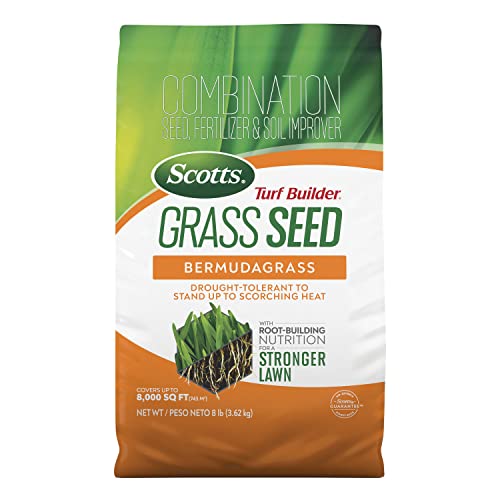
Scotts Turf Builder Bermudagrass
A combined seed-and-feeding option for a sunny bermudagrass project when the package format fits your plan.
- A good fit for
- Full-sun southern lawns being started or thickened during warm soil conditions.
- The tradeoff
- It needs establishment water and regular bermudagrass care; it is a poor choice for shade.
We may earn a commission from purchases through our links. How this works
Buy on AmazonResearch-based review · Updated
Three ingredients, one application
- Included
- Grass seed, fertilizer and soil improver are identified on the 8 lb package.[2]
Read about the combination format
The 8-pound Turf Builder Bermudagrass package combines grass seed, fertilizer and soil improver. Scotts calls the approach Root-Building Nutrition. For the shopper, the practical attraction is a combined application rather than buying plain seed and selecting every accompanying input separately. It does not mean that all eight pounds are grass seed.
That format changes how to compare products. A pound of this combination and a pound of another bermudagrass seed product can cover different areas. Use the matching package's project coverage, then check its analysis and directions. Do not treat bag weight as a direct measure of seed value, or add a separate feeding program without accounting for what is already included.
The public artwork does not fill in its lot-specific seed analysis panel. We therefore do not assign a particular bermudagrass cultivar to the bag or publish seed percentages from an old photo. UMass explains that the analysis tag supplies variety, purity and germination information for the lot. The brand name describes a product family; the delivered tag describes the seed you will actually spread.[2][1][6]
Sun and maintenance are the real fit tests
- Open, sunny ground
- Scotts specifies full sun and says the product will not perform well in shade.[1]
- An active lawn
- Bermudagrass offers useful wear tolerance and recovery once established.[3]
Read the climate and maintenance tradeoffs
Scotts positions this product for southern lawns with full sun and explicitly excludes shady spots. That requirement comes before the appeal of heat and drought tolerance. If tree canopy or a building has reduced the light on an existing lawn, another application of full-sun bermudagrass may repeat the same problem.
Texas A&M describes bermudagrass as a warm-season species that spreads through underground rhizomes and above-ground stolons. Its durability and recuperative potential make it useful where active use matters. Those are established-turf traits, however; they do not make a newly seeded area ready for play as soon as green shoots appear.
The same species guidance lists frequent mowing and moderate-to-high fertilization needs among its weaknesses. This is a grass to choose when its summer growth and spreading habit suit both the site and your willingness to maintain it. Winter dormancy also belongs in the decision. Clemson's South Carolina calendar describes a seasonal transition into and out of dormancy, with timing varying by local conditions. A warm-season lawn is not a promise of green color throughout every month.[1][3][4]
The 8 lb bag has two coverage figures
- One bag, new lawn
- Up to 2,665 sq ft using the package’s new-lawn directions.[2]
- One bag, overseeding
- Up to 8,000 sq ft for an existing lawn; this is the front-of-bag headline.[2]
- 2,000 sq ft, new lawn
- About 6 lb calculated from the 8 lb/2,665 sq ft coverage.[2]
- 2,000 sq ft, overseeding
- 2 lb calculated from the 8 lb/8,000 sq ft coverage.[2]
Read the quantity calculation and size conflict
The manufacturer package states 2,665 square feet for a new lawn and 8,000 square feet for overseeding. The large number on the front belongs to overseeding an existing stand. Planning a bare lawn from that headline would spread the combination much more thinly than the package's new-lawn directions intend.
For a measured 2,000-square-foot project, those coverage figures imply approximately six pounds for a new lawn or two pounds for overseeding. The new-lawn figure is approximate because the package coverage itself is rounded. It is a planning calculation, not a replacement for calibrated application or the directions on the actual bag.
There is a size inconsistency on the current webpage: the product-information field says four pounds, while the FAQ identifies the eight-pound bag and repeats its 8,000-square-foot overseeding coverage. The linked 18053-1 package artwork clearly says eight pounds and supplies both coverage figures. This review uses that identified package rather than applying its coverage to a four-pound bag. Check the size and format of the listing you select, particularly if a retailer offers several variants on one page.[2][1]
Wait for warm soil, then stay with the seedlings
Prepare
Clear debris and create contact between seed and soil, using the directions for your project type.[2]
Apply and rake
Use the matching spreader setting, then lightly rake so seed sits just below the surface.[2]
Maintain moisture
Arrange dependable watering before sowing and continue through the developing seedling stage.[2][1]
Read the planting and germination details
The package recommends late spring or early summer, with daily average soil temperatures consistently between 65°F and 80°F. It also gives an air-temperature range, but air and soil are not interchangeable measurements. For the planting decision, pay attention to the stated soil condition and your region rather than importing a fall cool-season seeding calendar.
Scotts' current webpage says bermudagrass typically germinates in 7–14 days in suitable warm conditions. The package's care instructions continue beyond the first sprouts: keep the soil surface moist for at least three weeks or until seedlings reach two inches. It is easy to notice green growth and reduce attention too early. Germination, the first mowing height and a stand ready for regular use are different milestones.
Start by creating seed-to-soil contact. The package distinguishes preparing bare ground from mowing and clearing an existing lawn for overseeding, then calls for light raking so seed sits just beneath the surface. Plan the watering access before opening the bag and avoid applying ahead of heavy rain that could move the seed. Combining ingredients simplifies the material list; it does not remove seedbed preparation or moisture management.[2][1]
Account for feeding and treated seed
Because fertilizer is already part of this product, do not assume the next step is another full starter-fertilizer application. The manufacturer's format is the starting point for your nutrient plan. For an established South Carolina bermudagrass lawn, Clemson ties fertilizer and pH amendments to soil testing and adjusts timing to the growing season. That regional approach is more useful than assuming every lawn needs every additional input.
The package also identifies treated seed: mefenoxam is included to help protect seedlings from disease. It says the seed must not be used for food, feed or oil and should be stored away from food and feeds, out of children's reach. These are handling directions for the product, not evidence that it will prevent every lawn disease or that it can be used interchangeably with untreated seed.
Keep application on the intended lawn area. The label says to sweep material from pavement back onto the lawn, avoid water and storm drains and not apply ahead of heavy rain. Retain the original package so the exact instructions and seed-lot details stay available. That is especially helpful with a combination product whose seed and accompanying materials cannot be evaluated by weight alone.[2][1][4][6]
Know the existing turf before overseeding
Scotts labels this product for overseeding, but first identify the lawn being thickened. Texas A&M distinguishes seeded common and improved bermudagrasses from interspecific hybrids that are established vegetatively by sod or sprigs. A generic bermudagrass seed product should not be assumed to reproduce the exact grass in a named hybrid-sod lawn.
If maintaining a particular cultivar is the priority, use that identity to guide the purchase. Outsidepride Yukon is a named seeded bermudagrass comparison; its coating, rates and establishment expectations are its own. A named seed option is not automatically the right repair material for every existing bermudagrass lawn either.
After establishment, mowing and thatch management remain part of ownership. Texas A&M gives a one-to-two-inch home-lawn mowing range, and Clemson explains why the practical setting depends on the site and equipment. Its guidance also addresses compaction and excess thatch. Buy this Scotts combination for the convenience of the format and the fit of bermudagrass, with a maintenance plan that continues after the initial application.[1][3][5][4]
When to choose something else
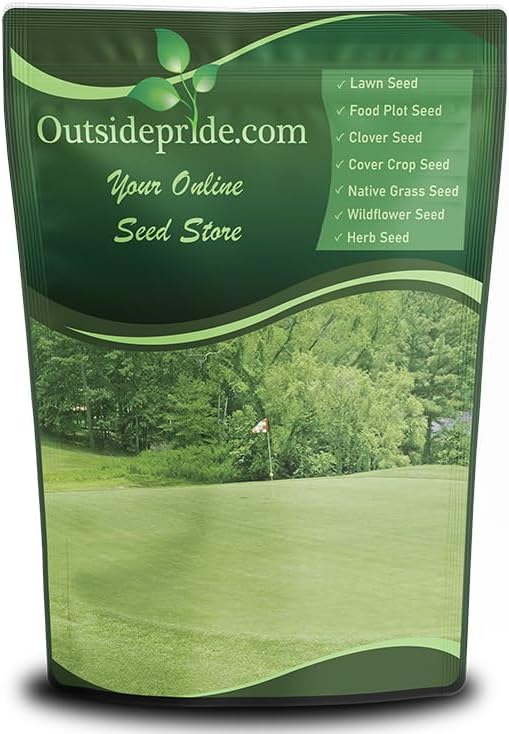
Outsidepride Yukon Bermudagrass
Compare Yukon if buying a named seeded bermudagrass is more important than the Scotts combination format. Use Yukon’s own coated-seed directions rather than transferring these coverage figures.
Sources & research notes
This review draws on published product information and grass-selection guidance. We have not conducted a hands-on trial of this product. Species guidance helps explain the choice; it is not a trial of the bag you buy.
- Scotts: Turf Builder Grass Seed Bermudagrass, model18053
Read 2026-09-23
- Scotts: 8lb Bermudagrass package artwork,18053-1/BG9437
Read 2026-09-23
- Texas A&M AggieTurf: Bermudagrass
Read 2026-09-23
- Clemson Extension: Bermudagrass Yearly Maintenance Program
Read 2026-09-23
- Outsidepride: Yukon Bermudagrass seed
Read 2026-09-23
- UMass Extension: understanding the turfgrass seed label
Read 2026-09-23
Ready to compare the bag?
Check the package size and seed tag before ordering.