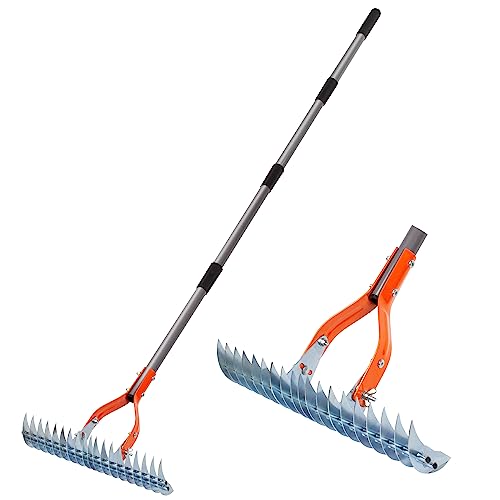
Walensee 15-Inch Thatch Rake
Consider it for a small area of excess thatch or light surface preparation, after confirming that removal is actually needed.
- A good fit for
- A homeowner working a small affected area who prefers a manual tool and can manage the physical raking.
- The tradeoff
- A long adjustable handle does not remove the physical effort. The rake works the surface; it does not extract soil cores or make aggressive annual dethatching necessary.
We may earn a commission from purchases through our links. How this works
Buy on AmazonResearch-based review · Updated
Start with the actual rake
The linked Walensee rake has a fifteen-inch head with nineteen curved steel tines and a sectional handle extending to about seventy inches. The current retail description gives shorter configurations around forty and fifty-five inches. Manufacturer artwork also shows an adjustable head angle, a stainless steel handle and a rubber grip.
These features let you compare its size and working method with a powered machine. The adjustable handle changes reach, while the head angle changes the orientation of the working edge. Neither is a measured guarantee of back comfort or a particular amount of work per hour.
The retail description identifies two working sides for lifting surface material and loosening the topsoil. This is a manual surface tool, not a plug aerator. A photograph of a greener lawn after use is marketing context rather than a controlled test of this rake.[1][6][2]
Check whether the brown layer is a problem
Maryland Extension describes thatch as a mixture of living and dead plant material between the soil and top growth. A thin layer has useful cushioning and temperature-moderating effects. Removing everything brown is therefore not a sensible universal target.
The need also differs by grass. Bluegrass, zoysia and bermudagrass can produce substantial thatch, while fescues and perennial ryegrass usually build it slowly. Inspect the layer and the reason for the work rather than automatically including aggressive raking in every overseeding project.
A sturdy steel rake can remove thatch from a small area, according to the extension guidance. That supports the Walensee's general role, but it does not establish that this brand removes more material or causes less damage than another rake. The review is based on the documented design and the job it fits.[2][6]
Separate surface cleanup from compaction relief
- Excess surface layer
- A sturdy thatch rake can remove material by hand from small areas.[2]
Read the job comparison
If the main problem is an excessive organic layer, a thatch rake addresses that layer. If the issue is compressed soil below it, core aeration is a different operation. Maryland describes core aerators removing plugs and leaving channels for air and water. Scratching the topsoil with a rake does not reproduce that process.
Likewise, smoothing a shallow low spot requires moving suitable topdressing, which is what a leveling rake is designed to do. Choosing the correct tool begins with identifying which of these problems is present.
The Walensee is useful when you need direct manual surface work over a manageable area. It should not be presented as a way to perform every renovation operation with one inexpensive implement. We have not verified a universal lawn-size cutoff at which hand work becomes impractical; the effort depends on the layer and the operator.[1][2][4][3]
Fit the handle and check the connections
The current listing describes twist-lock handle sections and asks users to confirm that supplied parts and fasteners are present and secure before use. It also calls for checking the connections during longer sessions. A detachable handle is convenient for storage, but its joints are still part of the working tool.
Choose the handle configuration that gives you useful reach and control. The manufacturer's artwork shows the head-angle adjustment, but it does not establish a universal angle for every lawn or operator. Follow the instructions supplied with the exact package rather than assuming a photograph provides a complete setup procedure.
We have not verified a detailed torque specification or a full maintenance schedule for this model. That absence should not be turned into a claim that assembly is difficult or that joints are unreliable. It simply limits how specific this review can be about setup beyond the documented checks.[1][6]
Inspect
Confirm excess thatch rather than treating all brown material as waste.[2]
Set up
Choose the handle length and check the supplied connections and fasteners.[1]
Work and reassess
Use manageable sections during suitable recovery conditions and evaluate the lawn’s response.[1][2]
Read the preparation and work sequence
The current retail instructions acknowledge the physical effort and recommend manageable sections. That is a better planning assumption than treating the adjustable handle as a promise of effortless dethatching. Match the amount of work to the affected area and your ability to control the rake.
Maryland recommends disruptive thatch removal during active grass growth so the lawn can recover. Its examples differ for zoysia and bluegrass, which is why one national calendar date would be misleading. Raking can temporarily damage turf, especially if the goal becomes removing as much material as possible.
Choose a suitable growth window, inspect the layer and work deliberately. If the problem is extensive, a powered or professional approach may be more practical. The amount of debris collected is not, by itself, a measure of how much the lawn benefited.[1][2]
Compare powered removal and surface leveling
The Sun Joe AJ805E is the relevant catalog alternative when the area calls for powered surface work. It offers separate raking and scarifying cylinders, but brings electrical, depth-selection and cleanup requirements. Moving to a motor changes the workflow rather than making the diagnosis unnecessary.
Landzie's thirty-six-inch leveling rake is an alternative only when the task itself is different: distributing topdressing into shallow uneven areas. Its broad plate does not replace a thatching comb, just as the Walensee does not become a leveling tool because its head can loosen surface soil.
Choose the Walensee for a modest, justified hand-raking job. Its documented dimensions and adjustments explain that fit without a claim that it is the cheapest option, the tool we personally use or a proven route to a greener lawn.[9][4][6][2]
When to choose something else
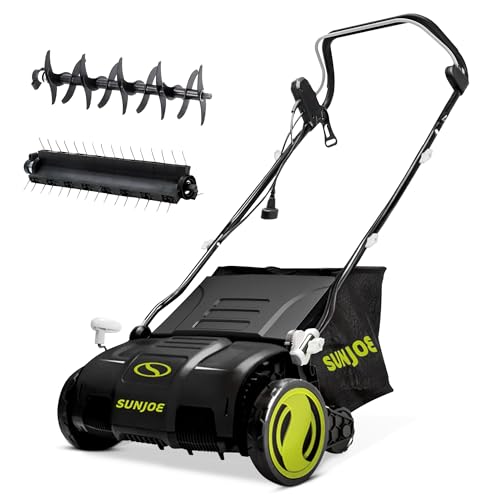
Sun Joe AJ805E 15-Inch Electric Dethatcher & Scarifier
For powered raking and scarifying when a larger affected area warrants the cord, cylinder and collection workflow.
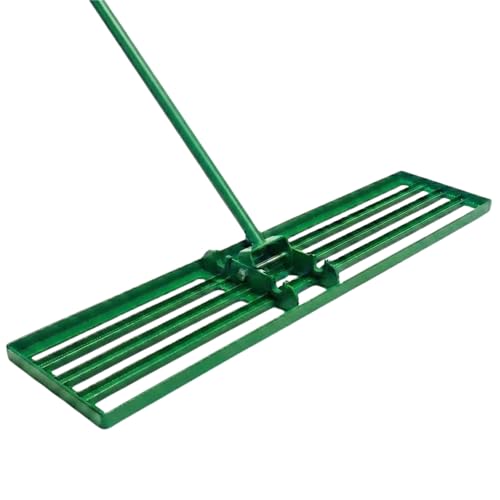
Landzie 36-Inch Lawn Leveling Rake
For distributing topdressing and smoothing shallow unevenness, a different task from removing thatch.
Sources & research notes
This review draws on published product information and relevant care or operating guidance. We have not conducted a hands-on trial of this product. General guidance explains the intended task; it does not establish this product’s performance.
Amazon: current linked product identity and photograph
Commerce identity only; not evidence of product performance.
Buy on AmazonRead 2026-09-23
- University of Maryland: established-lawn aeration and thatch guidance
Read 2026-09-23
- Clemson: topdressing a home lawn, September2020
Read 2026-09-23
- Landzie: model36-inch lawn leveling rake
Read 2026-09-23
- Rocklin:30-inch leveling rake and handle specifications
Read 2026-09-23
- Walensee:15-inch rake and visually reviewed product artwork
Read 2026-09-23
- Greenworks Canada: DT13B00 page and conflicting specifications
Read 2026-09-23
- Agri-Fab: current45-0299 aerator page
Read 2026-09-23
- Sun Joe: AJ805E electrical specifications and cylinder/depth table
Read 2026-09-23
Check the product before ordering
Check the exact model, included parts and compatibility.