
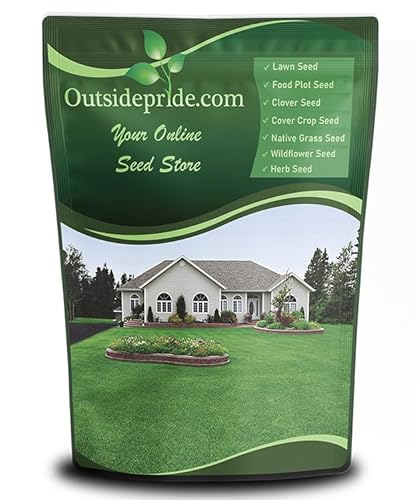
Outsidepride Sundancer Buffalograss Seed (2 lb)
Consider this for a suitable sunny buffalograss conversion, after confirming the bag’s cultivar analysis and accepting the shorter green season and establishment work.
- A good fit for
- A sunny, well-drained site with limited concentrated traffic, where a natural lawn and seasonal dormancy suit the owner’s expectations.
- The tradeoff
- Low maintenance comes after establishment; the seedbed still needs water and weed management, and the current sources do not verify a pure-Sundancer lot.
We may earn a commission from purchases through our links. How this works
Buy on AmazonResearch-based review · Updated
Read Sundancer and Supreme as descriptions to verify
The existing purchase link selects two pounds of Outsidepride buffalo grass seed. Its current feature text explicitly mentions Sundancer, so the name is not merely an inference from an old catalog entry. However, the same listing calls it a blend, and Outsidepride's current Buffalo Supreme page describes Sundancer and Cody together.
Those sources support discussing the product family, but they do not establish a pure-Sundancer lot or fixed cultivar proportions. Look for the actual analysis and certification information on the offered bag. The generic front-package photograph cannot answer those questions.
The manufacturer also discusses cultivar trial performance. We do not turn that marketing summary into a current-bag ranking or a promise of the same result in your yard. A named cultivar, a retail blend and the conditions of a research trial are different things. The practical buying decision should begin with the grass's fit, then the verified contents of the package.[6][4][2][5]
Decide whether the shorter green season is acceptable
- Sun and soil
- Choose a sunny, well-drained site; shade and very dry sandy soil are meaningful limits.[5][3]
- Concentrated daily traffic
- A small, heavily used lawn is a poor fit in CSU’s guidance.[5]
Read the fit boundaries
Buffalograss is a warm-season native prairie grass. Colorado State explains that it greens later in spring than cool-season lawns and becomes brown after a hard fall frost. That shorter green season is a normal characteristic, not evidence that the seed was defective.
It also does not belong in every yard. CSU advises against moderate-to-heavy shade, very droughty sandy soil without irrigation, and small lawns with concentrated, constant traffic. K-State similarly emphasizes full sun, drainage and realistic expectations about its natural appearance. The low-input appeal is strongest when the site already suits those needs.
Think about the lawn's actual job. An open area used occasionally is different from the only route between a back door and a gate. A homeowner who values lower inputs and accepts dormancy may make a different choice from someone who wants a uniformly green play lawn for much of the year. Neither preference should be hidden behind a drought-tolerant label.[5][3]
Plan the two-pound quantity and resolve depth differences
- 1,500 sq ft conversion
- 3–4.5 lb at the manufacturer’s 2–3 lb/1,000 sq ft rate.[4]
Read the quantity and depth guidance
Outsidepride gives two to three pounds per 1,000 square feet. At that range, a two-pound bag covers about 667 to 1,000 square feet. A 1,500-square-foot conversion needs three to four-and-a-half pounds; one bag is too small at either end of the range.
CSU's general buffalograss guidance uses three to five pounds per 1,000 square feet. That is regional species guidance, not an instruction printed for this retail lot. Confirm the actual product directions and appropriate local advice rather than silently mixing the lowest rate from one source with expectations from another.
Depth needs similar attention. Outsidepride's establishment text says a quarter- to half-inch, but its planting panel says a half- to one-inch. CSU recommends a half-inch when drilling, or a quarter- to half-inch covering after broadcast seeding. Check the actual bag and your seeding method before burying seed according to the deepest number in a generic panel.[4][6][5]
Expect the establishment phase to take work
CSU is explicit that a low-maintenance mature buffalograss lawn can still be labor-intensive to establish from seed. Early water demand may equal or exceed that of a bluegrass or tall-fescue project. Do not use the eventual drought tolerance as a reason to leave the seedbed without irrigation.
Outsidepride recommends planting when soil is consistently around 60°F and leaving eight to twelve weeks before frost. Its public germination descriptions are roughly two to three weeks, and its panel gives thirty to forty-five days to first mowing. Those are planning estimates rather than a guaranteed date for complete coverage.
Start with a prepared, firm seedbed and inspect it through emergence. Protect young growth and allow the stand time to fill. CSU discusses seed, plugs and sod separately; establishment times for one method should not be borrowed to promise a faster result for another. If immediate cover is essential, that requirement belongs in the method decision before you buy seed.[5][4][3]
Keep later care from creating a weed problem
After establishment, less input does not mean that every reduction is beneficial in every situation. CSU distinguishes surviving without irrigation from maintaining an acceptably green lawn. K-State recommends adjusting water to weather, soil and the desired appearance rather than following a rigid schedule.
Too much water and fertilizer can also work against the reason for choosing this grass. Both extension sources discuss weed invasion and the problems of overmanagement. Use a soil test and local guidance when planning nutrients, rather than assuming a program intended for a different lawn should continue unchanged.
Weed-control products need particular care around new seed and buffalograss. CSU separates established-turf options from seeding and notes that some common lawn herbicides can injure actively growing buffalograss. Check the actual label for the grass, growth stage and timing. A general manufacturer webpage is not a substitute for those product-specific directions.[5][3][4]
Compare another buffalograss product on its own directions
Sharp's Improved II is a useful comparison if buffalograss itself fits the site but you want a different named seed product. Its manufacturer publishes a different establishment-rate approach, including separate planning for quicker and slower coverage. Do not assume two buffalograss bags with the same weight have identical buying instructions.
The comparison is about documented identity and the establishment plan, not an independently established winner. We have not conducted a side-by-side test of current Outsidepride and Sharp bags. Nor does broad cultivar praise establish that the exact retail lot will outperform another under your soil and management.
Our purchase decision would come back to three questions: does the site fit buffalograss, will the owner accept its seasonal appearance, and can the establishment phase receive the care it needs? Once those answers are clear, check the actual bag analysis and quantity. The cultivar name becomes useful evidence only within that larger decision.[1][2][5][3][4]
When to choose something else
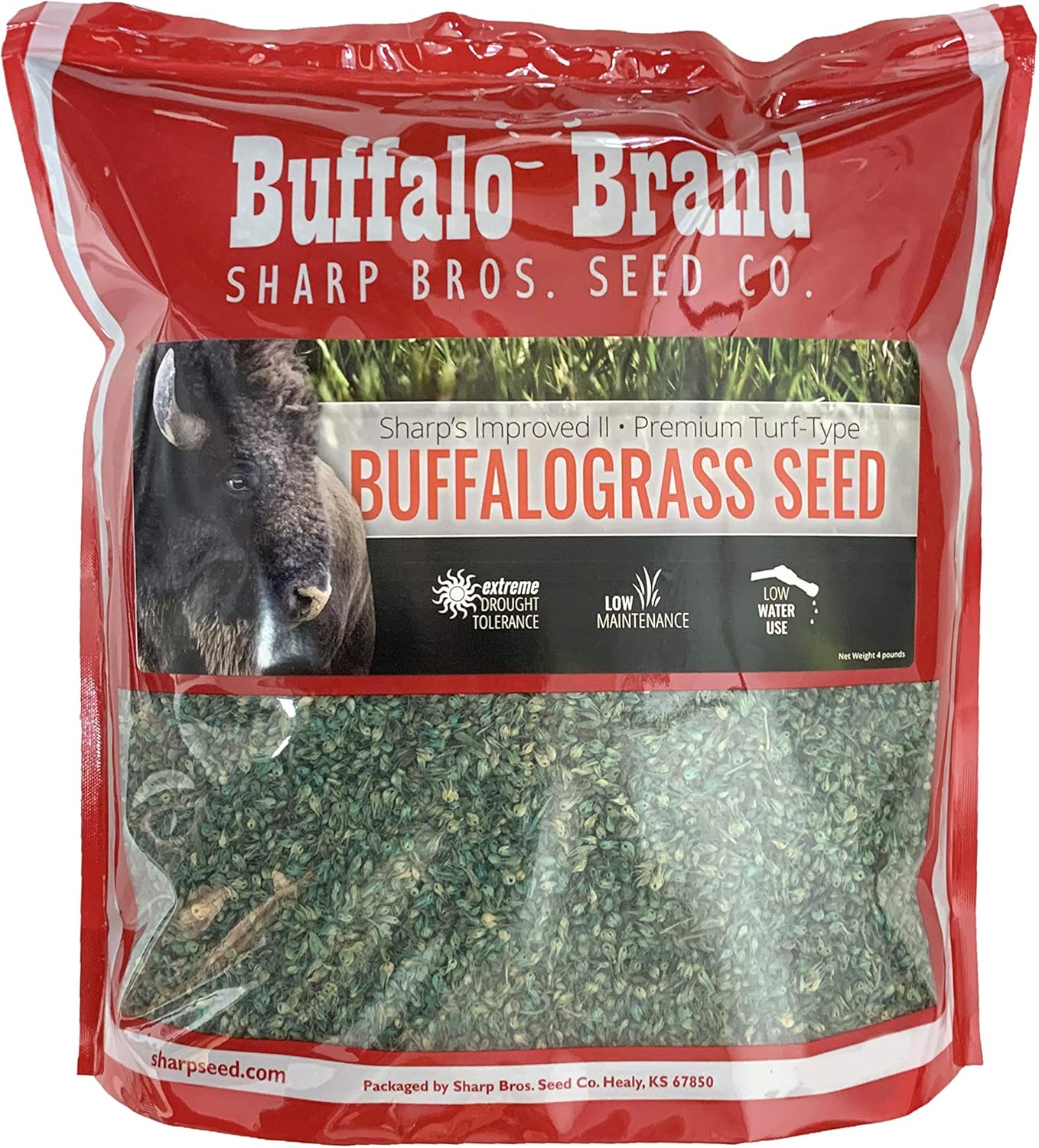
Sharp's Improved II Buffalo Grass
Compare Sharp’s Improved II as another documented buffalograss seed option with its own establishment-rate guidance. No current-bag performance winner is established.
Sources & research notes
This review draws on published product information and grass-selection guidance. We have not conducted a hands-on trial of this product. Species guidance helps explain the choice; it is not a trial of the bag you buy.
- Sharp Seed: Sharp’s Improved II Turf-Type Buffalograss
Read 2026-09-23
- UMass Extension: understanding the turfgrass seed label
Read 2026-09-23
- K-State Extension: Buffalograss Lawns, MF658
Read 2026-09-23
- Outsidepride: Buffalo Supreme, Sundancer and Cody product description and planting guide
Read 2026-09-23
- Colorado State University Extension: Buffalograss Lawns, reviewed August 2025
Read 2026-09-23
Amazon product identity: Outsidepride two-pound buffalo grass seed, B004MN8YX6
Commerce identity only; not evidence of product performance.
Buy on AmazonRead 2026-09-23
Ready to compare the bag?
Check the package size and seed tag before ordering.