
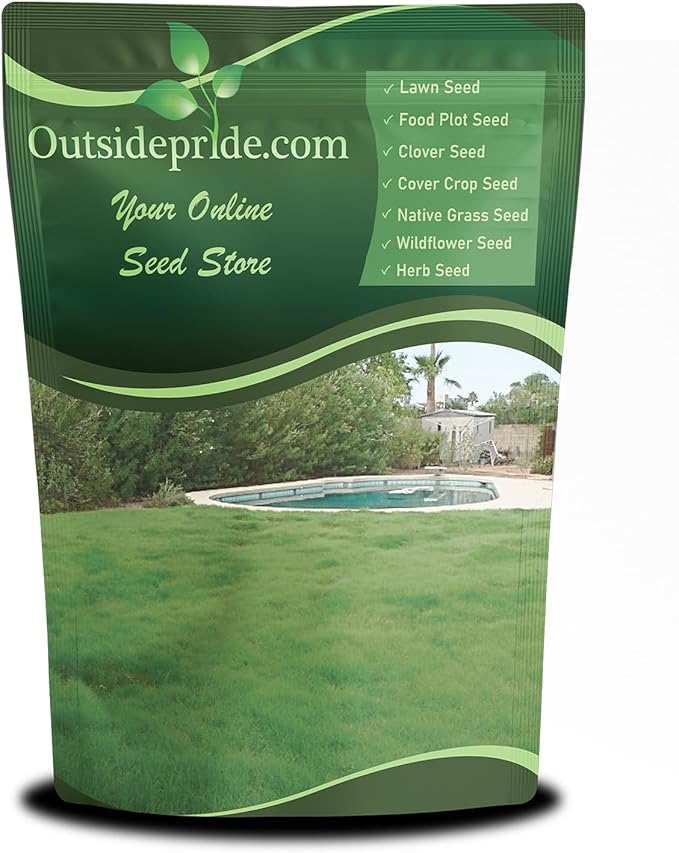
Outsidepride Xeriscape Native Prairie Grass Mix
Consider it for a sunny, regionally suitable grass landscape when seasonal variation and a less uniform appearance fit your plans.
- A good fit for
- Sunny, drier sites within the supplier’s regional and elevation guidance, with time and water available for establishment.
- The tradeoff
- A mixed warm- and cool-season stand is different from a uniform lawn or a locally native restoration planting.
We may earn a commission from purchases through our links. How this works
Buy on AmazonResearch-based review · Updated
Three grasses, with different roles
- Blue grama
- A warm-season component of this drier-site blend.[4]
- Sheep fescue
- A cool-season bunchgrass with a tufted growth habit.[6]
Read how the mixture affects appearance
This blend combines buffalograss, blue grama and sheep fescue. The first two are warm-season grasses; sheep fescue is a cool-season bunchgrass. That mix is the main reason to consider the product, and also the reason to expect a different result from a lawn planted with one selected turf cultivar.
Buffalograss can form a spreading turf, while sheep fescue grows in distinct tufts. Growth, color and texture can therefore vary through the season and across the planting. Outsidepride describes an ornamental or rangeland-style use as well as lawn use. Choose the blend because that kind of landscape fits the space, rather than expecting the grasses to behave like an identical, tightly mown carpet.
The current supplier description names the three species but does not establish the delivered lot's proportions or cultivars. We do not turn the ingredient list into a composition chart. Nor do we use the four-to-eight-inch leaf height of sheep fescue as the height of the entire blend: Outsidepride gives broader mixed-stand height descriptions of six to twelve inches in its text and eight to twelve in its overview.[4][6][3][8]
Native in the name does not mean native-only
Outsidepride markets the product as a native prairie grass mix. That wording needs a qualification for buyers whose main objective is a native planting. The USDA NRCS plant guide identifies sheep fescue, Festuca ovina, as native to Europe. It also explains that this name has historically been applied inconsistently to other fine-leaved fescues. The retail species name alone cannot establish local ecological provenance.
For a water-conscious ornamental grass area, the blend's suitability may matter more to you than the origin of every ingredient. For a restoration project, locally native meadow or planting tied to a conservation specification, origin and seed source are central requirements. Do not assume this ready-made bag meets them because two components are associated with the Great Plains.
If native-only is your goal, ask for the actual species, cultivar or ecotype, source region and current seed analysis before ordering. A locally appropriate seed selection may be a better match. That is a different buying objective from finding a convenient blend for a lower-input landscape, and it deserves a separate decision.[4][6][2]
Choose the site before choosing the bag size
The supplier's more specific guidance centers on drier regions, elevations below 6,000 feet and a full-sun area with roughly fifteen to thirty inches of annual rainfall. Its overview also advertises a broad hardiness-zone range and partial shade. Those broad labels should not replace checking the actual site and the needs of each component.
Buffalograss is a particular reason to favor sun. Colorado State's guidance identifies shade, concentrated traffic and certain soil conditions as limitations for that species. A fescue component does not establish that the entire mix will remain balanced or attractive under trees. Similarly, a location's annual rainfall total does not tell you whether moisture arrives during the weeks when new seed needs it.
Good drainage and the intended use also matter. USDA notes sheep fescue's intolerance of high water tables or flooding. Consider this blend for an open grass landscape with a natural appearance, not as a guaranteed answer for a wet corner, heavily worn play route or rapidly stabilized slope. Outsidepride specifically says the mix is not intended for fast soil stabilization.[4][3][6]
- 1 lb of mix
- Approximately 250–333 sq ft.[4]
- 5 lb of mix
- Approximately 1,250–1,667 sq ft.[4]
- 2,000 sq ft project
- Plan for 6–8 lb of mix.[4]
Read the bulk-weight and seed-label explanation
Outsidepride currently specifies three to four pounds per 1,000 square feet for lawn or ornamental planting. At that rate, one pound covers about 250 to 333 square feet; five pounds covers about 1,250 to 1,667. A measured 2,000-square-foot area needs six to eight pounds. These are arithmetic estimates from the current product rate, not a promise that every seed becomes a plant.
The supplier distinguishes bulk seed weight from pure live seed, or PLS. PLS accounts for purity and germination together. Its explanatory example uses ninety-five percent purity and eighty-five percent germination, but those are illustrative values, not the analysis of your delivered bag. Do not apply them as if this product had a verified current PLS percentage.
Use the bulk rate for this blend and read the actual lot label. A generic buffalograss rate, a sheep-fescue rate expressed in pounds per acre, or a restoration specification based on PLS answers a different question. The product directions do not give a separate overseeding rate, so we do not invent one or describe the larger coverage estimate as an overseeding claim.[4][2]
Establishment still needs preparation and water
The product's directions call for sustained soil temperatures of sixty degrees Fahrenheit and at least eight to twelve weeks before frost. Those are more useful planning conditions than a nationwide calendar date. Local extension advice can narrow the window further; Colorado State, for example, recommends seeding warm-season buffalograss and blue grama from April through July rather than carrying the project into late summer.
Start with a prepared seedbed. Outsidepride's native-grass guide emphasizes removing competing vegetation and debris, creating a firm surface and pressing seed into contact with soil. Spread the measured quantity evenly and follow the supplied planting directions. We do not assign the whole blend a precise burial depth borrowed from a single component.
Keep the surface appropriately moist while seedlings establish, then adjust irrigation as roots develop. Mature drought tolerance is not permission to leave new seed dry. Watch weeds and identify the developing grasses before treating the area; any herbicide must suit the species and seedling stage on its label. Colorado State also advises limiting traffic while a renovated lawn matures. This is a growing project, not a one-pass route to an immediately usable lawn.[4][5][7][3]
Plan the conversion and the mature landscape
Scattering this mix into an existing cool-season lawn is not a reliable shortcut to conversion. Colorado State specifically advises against seeding buffalograss into bluegrass, ryegrass or tall fescue. Diagnose the current lawn and plan removal or renovation appropriate to the site, rather than assuming the new grasses will simply replace the old ones.
Once established, observe the mixed stand and adapt care to local conditions. Warm-season dormancy and cool-season growth differ; a single species' fertilizer calendar is not automatically a complete program for the blend. Colorado State's fine-fescue guidance also cautions that these grasses still need supplemental irrigation in Colorado. Lower water demand is a relative benefit, not a universal rainfall-only guarantee.
Sharp's Improved II is a meaningful comparison if you want a named, seeded buffalograss selection for a suitable sunny lawn instead of this three-species landscape. It has its own planting rates and regional limitations. Conversely, if ecological provenance is the priority, investigate locally appropriate native seed. The right alternative depends on whether you want selected turf, a mixed ornamental grass area or a native restoration.[7][8][3][1][6]
When to choose something else
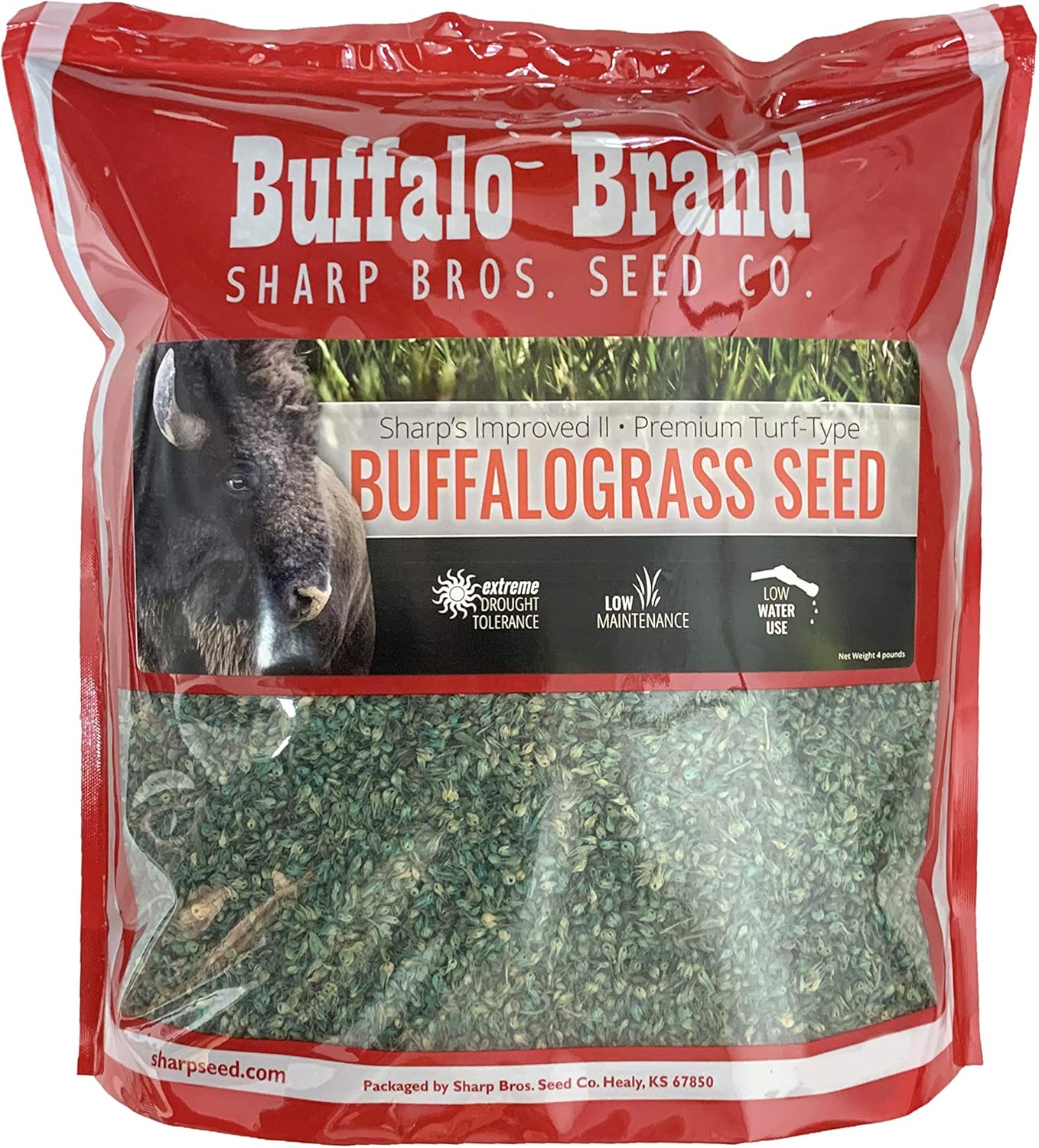
Sharp's Improved II Buffalo Grass
Compare this named seeded buffalograss selection if a sunny turf lawn is the goal and you prefer one grass type to a three-species landscape.
Sources & research notes
This review draws on published product information and grass-selection guidance. We have not conducted a hands-on trial of this product. Species guidance helps explain the choice; it is not a trial of the bag you buy.
- Sharp Seed: Sharp’s Improved II Turf-Type Buffalograss
Read 2026-09-23
- UMass Extension: understanding the turfgrass seed label
Read 2026-09-23
- Colorado State Extension: Buffalograss Lawns
Read 2026-09-23
- Outsidepride: Xeriscape Native Prairie Grass Mix
Read 2026-09-23
- Outsidepride: Native grasses planting guide
Read 2026-09-23
- USDA NRCS: Sheep fescue plant guide
Read 2026-09-23
- Colorado State University: Renovating the home lawn
Read 2026-09-23
- Colorado State University: Fine fescues for lawns
Read 2026-09-23
Ready to compare the bag?
Check the package size and seed tag before ordering.