
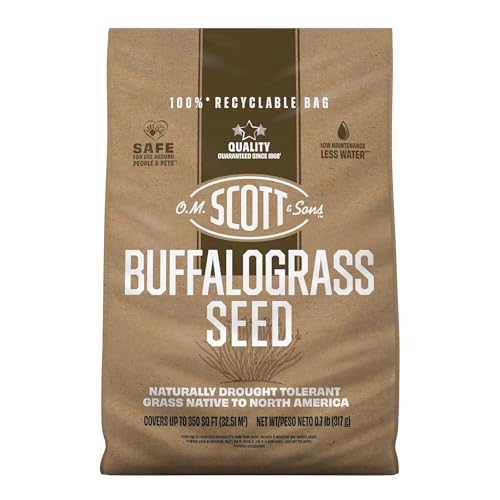
O.M. Scott and Sons Buffalograss Seed (Native, 0.7 lb)
Consider a small planting only after confirming that your site, traffic and expectations fit buffalograss. The compact bag can suit a limited area, but its size does not remove the establishment work.
- A good fit for
- A sunny, well-drained, lightly used area where a shorter green season and a natural buffalograss appearance are acceptable.
- The tradeoff
- Low input describes the established lawn. Seed establishment still needs water and weed management, and the 350-square-foot figure is only for overseeding existing buffalograss.
We may earn a commission from purchases through our links. How this works
Buy on AmazonResearch-based review · Updated
Use the small bag for a small, suitable planting
The existing purchase link selects O.M. Scott & Sons Buffalograss Seed in a 0.7-pound bag. The manufacturer gives 175 square feet of new-lawn coverage and 350 square feet for overseeding existing buffalograss. That is a limited area, which can be useful when starting with a small section rather than converting an entire yard at once.
The current product page identifies buffalograss, but not the cultivar composition of the lot you will receive. The brand name and front artwork should not be used to infer a particular named cultivar or its research performance. Check the actual seed analysis if that distinction matters to the project.
This is also a different buying decision from simply thickening a fescue or bluegrass lawn. Scotts explicitly says not to mix the product with other grass types. Choose a dedicated buffalograss area, or an existing buffalograss stand, rather than scattering it into an incompatible lawn and expecting the product to change the site on its own.[2][3][4][1]
Accept the season and the traffic limits before seeding
- Seasonal appearance
- Later spring green-up and brown color after a hard fall frost are normal for buffalograss.[7][5]
- Repeated concentrated traffic
- CSU cautions against small areas with constant concentrated use.[7]
Read the fit and season guidance
Colorado State describes buffalograss as a warm-season native prairie grass with a shorter green season than cool-season lawns. It greens later in spring and turns brown after a hard fall frost. That appearance is a normal characteristic of the species, not a defect to solve with a different brand of seed.
The site matters just as much. CSU advises against moderate-to-heavy shade, very droughty sandy soil without irrigation, and small lawns with concentrated, constant traffic. K-State likewise emphasizes full sun, drainage and realistic expectations. Native to North America does not mean suited to every North American yard.
A sunny area with occasional use can be a more sensible setting than a narrow path repeatedly crossed by people or pets. Decide whether you want a seasonal, lower-input grass and can tolerate its dormant color. If a uniformly green, heavily used play lawn is the main requirement, those expectations should be addressed before the seed purchase.[7][5][2]
A new 350-square-foot area needs two bags
Read the small-project calculation
The two coverage figures are easy to confuse. One 0.7-pound bag covers 175 square feet when starting a new buffalograss area, or 350 square feet when overseeding existing buffalograss. A new 350-square-foot planting therefore requires 1.4 pounds at the stated coverage: two of these bags.
Expressed per 1,000 square feet, the maker's figures equal four pounds for new lawn and two pounds for overseeding. These are calculations from this package's directions, not an assumption that every buffalograss product has the same rate. A different supplier may publish another rate or a different establishment approach.
Measure the intended planting area before choosing how many bags to buy. If the small area is a trial before a larger conversion, assess its establishment and seasonal appearance before extrapolating your expectations. The package's compact size can make a limited planting convenient, but it is not evidence that the grass will suit the rest of the property.[2][3][4][7]
Plant into warm conditions and keep watering after sprouts
Scotts directs planting in late spring or early summer, after average daily air temperature has reached around 70°F for two weeks. This is an air-temperature instruction, not a soil-temperature threshold, and it asks for a sustained period rather than one warm day.
Prepare a new area by loosening roughly the top two inches of soil and removing debris. Apply evenly, then lightly rake so the seed is slightly covered. The two-inch step concerns preparation; it does not tell you to bury the seed that deeply. The package includes spreader settings for new planting and for overseeding, which should be matched to the actual tool and project.
The most consequential watering detail comes after emergence. Scotts asks for light daily watering to keep the surface moist, continuing for two weeks after the seed begins to sprout. Do not stop because the first green shoots appear. Those seedlings still need the establishment care that the low-maintenance mature-lawn claim does not describe.[2][3]
Treat emergence, establishment and later care separately
The manufacturer artwork estimates fourteen to twenty-one days to sprouting, while the current webpage says fourteen to thirty days. Both are emergence estimates; neither verifies a date for full lawn coverage. The disagreement is a reason to allow a realistic establishment window and follow the current bag, not to promise the shortest number.
CSU cautions that establishing buffalograss from seed can require substantial labor, water and weed management. Early irrigation demand may equal or exceed that of a cool-season lawn project. The eventual appeal of reduced inputs therefore needs to be balanced against the work required to obtain a healthy stand.
After establishment, CSU and K-State distinguish survival with little water from maintaining the desired green appearance. Excessive watering and fertilization can also encourage weeds. Use regional advice and the lawn's needs when planning care. The package identifies potassium-nitrate-treated seed to enhance germination and says it is not for food, feed or oil purposes; follow its handling directions.[2][3][7][5]
Compare another buffalograss offer before scaling up
Outsidepride's current Buffalo Supreme page describes Sundancer and Cody. That is a useful alternative to investigate if you want a larger seed package or a different documented cultivar description. It is not evidence that the particular retail lot is pure Sundancer, nor a basis for declaring it superior to this O.M. Scott & Sons bag.
Outsidepride also publishes its own seeding-rate range. Compare the actual amount required for the measured area, the offered seed analysis and the establishment directions. Equal package weights do not necessarily represent the same coverage, and older cultivar trial results should not be treated as a test of either current bag.
The larger decision remains the species choice. If a small planting confirms that the site and seasonal appearance suit you, review the options for a broader conversion using local guidance. If shade, traffic or expectations make the small area a poor fit, a bulk purchase of another buffalograss product is unlikely to address the underlying mismatch.[6][1][7][5][2]
When to choose something else
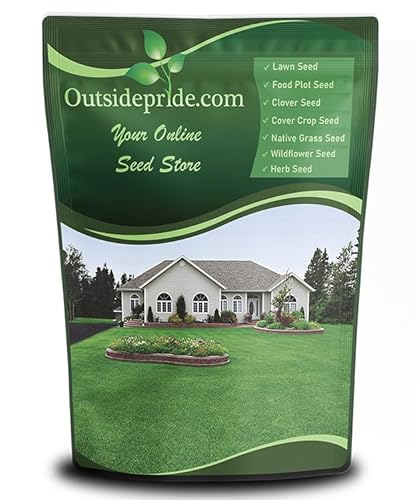
Outsidepride Sundancer Buffalograss Seed (2 lb)
Compare Outsidepride’s current Buffalo Supreme description and its own rate when considering a larger seed purchase; verify the actual cultivar analysis rather than assuming pure Sundancer.
Sources & research notes
This review draws on published product information and grass-selection guidance. We have not conducted a hands-on trial of this product. Species guidance helps explain the choice; it is not a trial of the bag you buy.
- UMass Extension: understanding the turfgrass seed label
Read 2026-09-23
- Scotts: current product description and package-specific directions
Read 2026-09-23
- Scotts manufacturer package artwork and use directions
Read 2026-09-23
Amazon product identity: O.M. Scott & Sons Buffalograss Seed, 0.7 lb.
Commerce identity only; not evidence of product performance.
Buy on AmazonRead 2026-09-23
- K-State Extension: Buffalograss Lawns, MF658
Read 2026-09-23
- Outsidepride: Buffalo Supreme, Sundancer and Cody product description and planting guide
Read 2026-09-23
- Colorado State University Extension: Buffalograss Lawns, reviewed August 2025
Read 2026-09-23
Ready to compare the bag?
Check the package size and seed tag before ordering.