
Fall seeding kit
Overseeding weekend
Thickening a lawn that is still alive
A thin but living lawn, one weekend, and the parts an overseeding pass actually needs. Nothing here proves a result in your yard — verify the package you receive and the guidance for your area before buying.
Use this kit when
- Before your seeding window opens
- Inside your primary seeding window
Not sure which of those describes you? Check your fall seeding window.
What being in this kit does and does not mean
An item is here because of the job it does in this project. That is not proof it fits your yard and not a performance claim. Before you order anything, verify the exact product name, the package you are actually buying, the seed tag or guaranteed analysis, and the seller on the retailer page.
What this kit is made of
The retailer links below are affiliate links, and this site may earn a commission when you buy through one. Being in a kit is not proof that an item fits your yard or performs a certain way — confirm the product name, package, seed tag, and seller on the retailer page before you order.
Required
The project does not work without these.
- Buy on AmazonRequiredJonathan Green
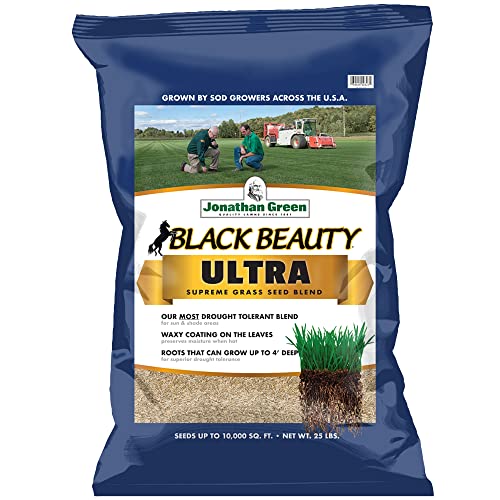
Jonathan Green Black Beauty Ultra
The seed the pass puts down. Read the bag's guaranteed analysis and confirm the species suit your area before buying.
Alternatives: Pennington The Rebels Tall Fescue Mix, Scotts Turf Builder Thick'R Lawn Tall Fescue
- Buy on AmazonRequiredScotts
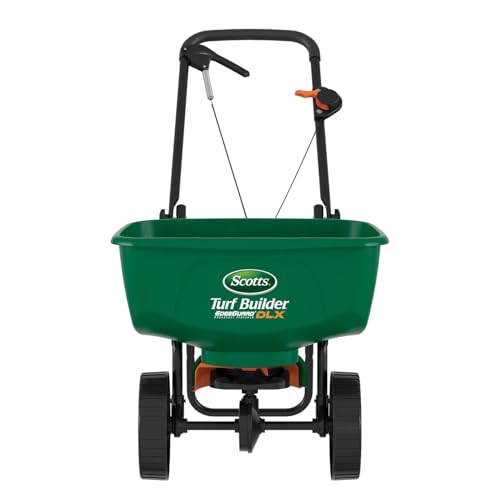
Scotts Turf Builder EdgeGuard DLX Broadcast Spreader
Puts seed down at a set rate across the lawn instead of in stripes. The side barrier keeps seed off driveways and beds.
Alternatives: Scotts Whirl Hand-Powered Spreader, Scotts Elite Spreader
- Buy on AmazonRequiredScotts
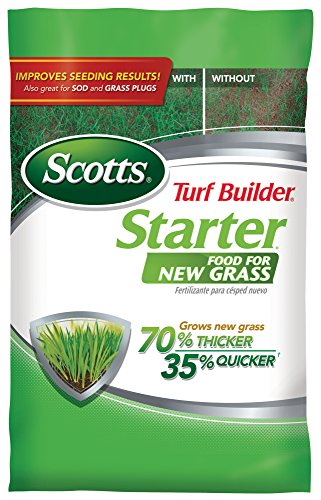
Scotts Turf Builder Starter Food for New Grass
Starter fertilizer supplies phosphorus, which seedlings use for root development.
Alternatives: The Andersons New Lawn Starter 20-27-5
Optional
These improve the odds. They are not load-bearing.
- Buy on AmazonOptionalWalensee
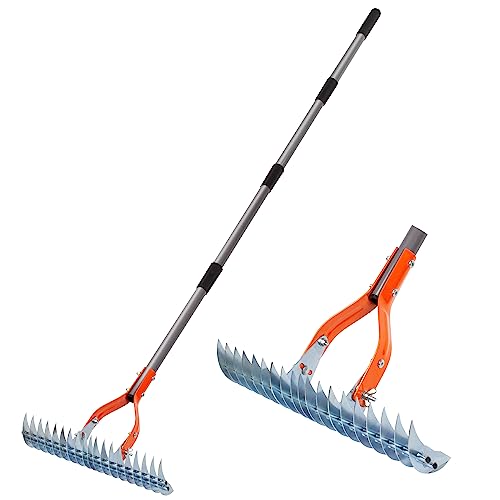
Walensee 15-Inch Thatch Rake
Opens the thatch layer so seed reaches soil rather than resting on dead material.
Alternatives: Sun Joe AJ805E 15-Inch Electric Dethatcher & Scarifier, Greenworks 14-Inch Corded Dethatcher & Scarifier
Skip when
Buy these only if the condition listed on the item does NOT already describe your yard.
- Buy on AmazonSkip whenMySoil
MySoil Soil Test Kit
A soil test shows whether pH or a nutrient shortfall is the real limit before you spend on seed.
Skip it when you have already tested this soil within the last two years.
Alternatives: Luster Leaf Rapitest 1601 Soil Test Kit, Soil Savvy Soil Test Kit

Read before you start
Why these projects are timed to fall
These sources support the broad principles this page reasons from, and the specific regional examples they are named against. They are not a forecast and not a reading of your yard. Extension guidance is written for a particular state or region, so a document from one state supports the principle rather than your local timing. The last call belongs to conditions on the ground where you are and to the label on the product you actually buy.
University Extension · AY-20: Seeding a Turf Area in the Spring — Purdue University Extension
Zac Reicher and Clark Throssell, Purdue University Turfgrass Specialists. Supports the site's core fall-versus-spring stance in the source's own words: the best time to seed a lawn is in the fall, mid-August to mid-September, and seeding in spring is very difficult and often unsuccessful. It then lists the narrow circumstances that do warrant a spring seeding, such as winter damage or poor recovery from a previous year's problems. Also the definition this site uses for dormant seeding — seed put down before the frost leaves the ground, lying dormant until soil temperatures warm in spring, with winter heaving and cracking opening crevices that improve seed-to-soil contact. In Indiana the publication puts that practice anywhere from late November through March. Supports the concept and Indiana's own timing; it is not a procedure for another state.
University Extension · Lawn Establishment — Penn State Extension
Carries a 2025 revision date. Supports why the fall window is worth protecting rather than merely convenient: cool-season seeding can run from mid-spring to early fall, but late summer is the optimum in most areas of Pennsylvania, because a late-summer seeding gets two cool growing seasons — that fall and the following spring — to establish, while a spring seeding is driven straight into summer heat and drought. Also notes that weed pressure is lower than in spring, and that higher seeding rates are sometimes used past the optimum late-summer window precisely because cold temperatures reduce germination. That last point is the agronomic reason a late seeding is a worse bet rather than simply a later one.
University Extension · Lawn care calendar — University of Minnesota Extension
Reviewed in 2024. Supports the underlying reason fall is the cool-season window rather than a preference: these grasses grow rapidly in spring and fall and go inactive through summer heat and drought, so autumn is when shoot growth resumes and nutrients are stored in the roots for winter. Gives the temperature ranges that make the window a biological one — optimal shoot growth at air temperatures in the mid-fifties to mid-seventies Fahrenheit, and cool-season root growth stimulated above freezing soil temperature and optimal in the low-fifties to mid-sixties. Its Minnesota calendar lists seeding as best from early August to late September, with a separate mid-November entry for dormant seeding. Supports the seasonal principle and Minnesota's own dates only; it is not evidence for any other state.